

How to Interpret Salivary Bacterial Test Results for Periodontal Disease
11-Microbes™ Result Reports
How to Read and Use Your Periodontal Pathogen Report
Understanding salivary bacterial test results allows clinicians to identify periodontal pathogens earlier, personalize treatment planning, and better communicate oral-systemic risk with patients
-
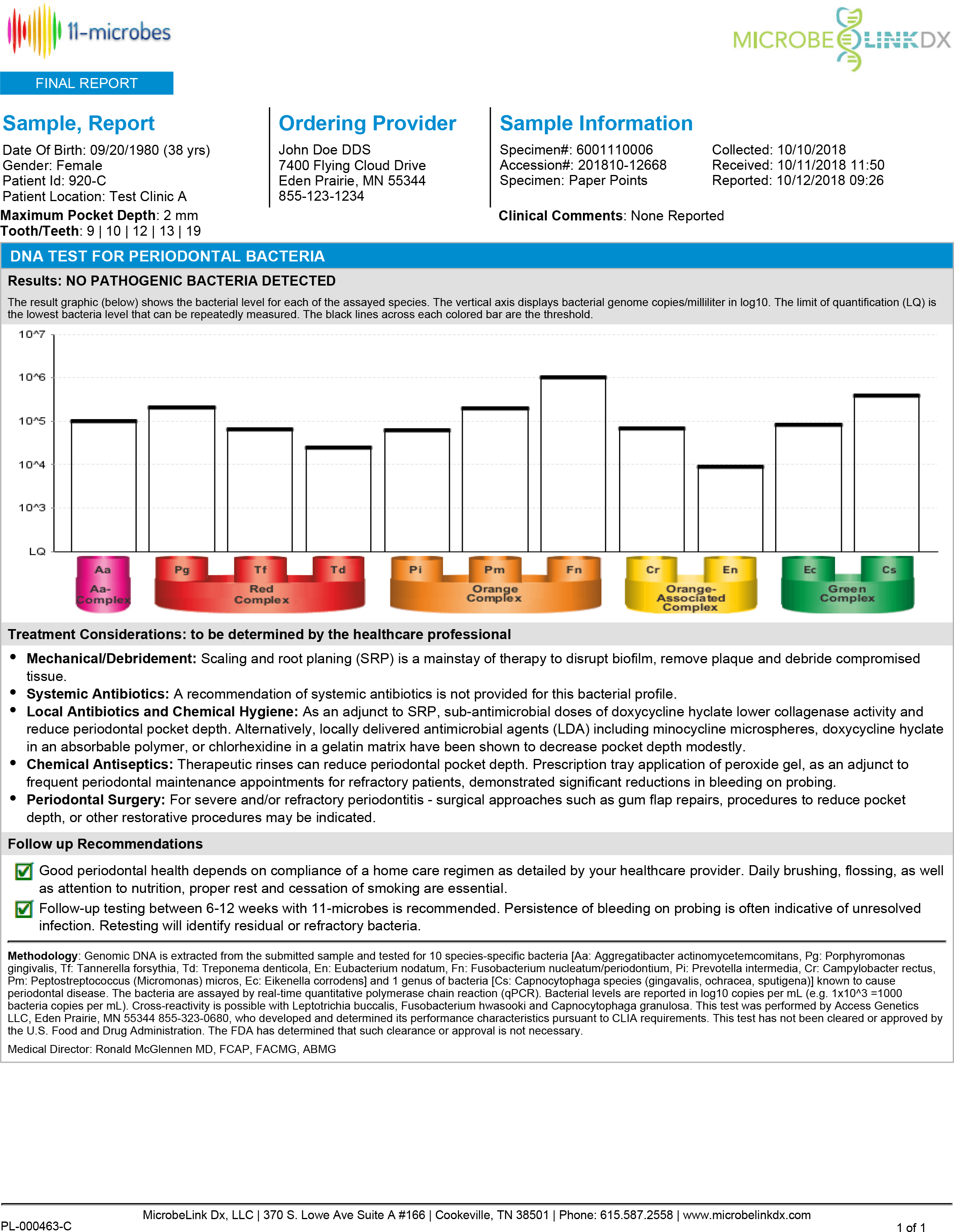
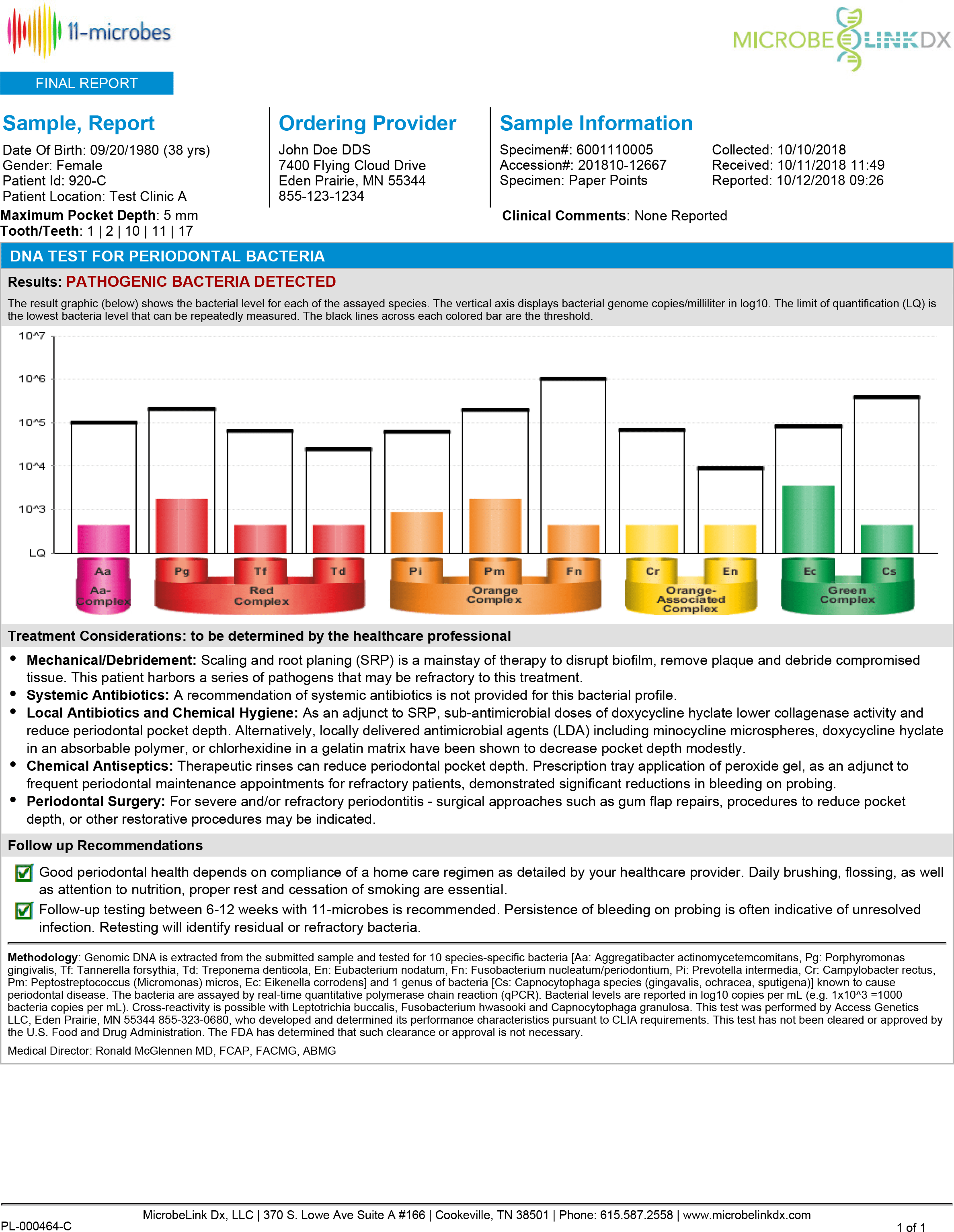
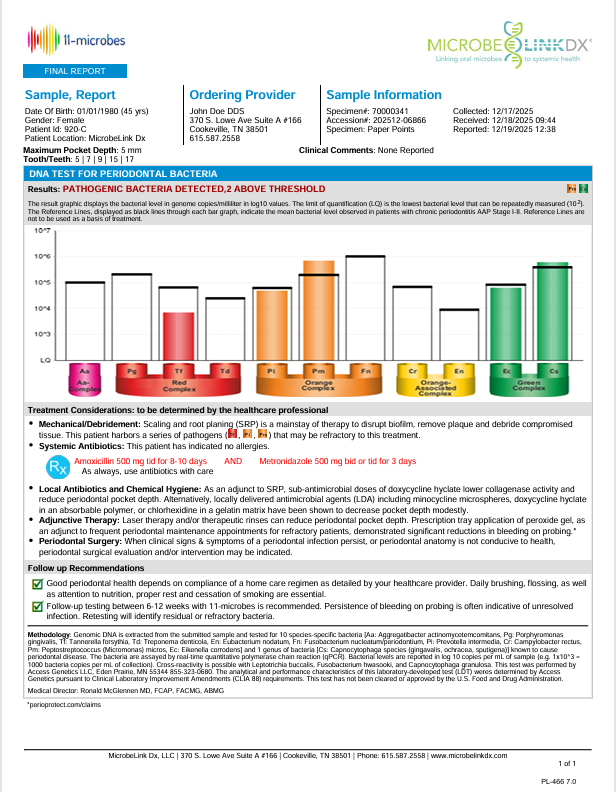
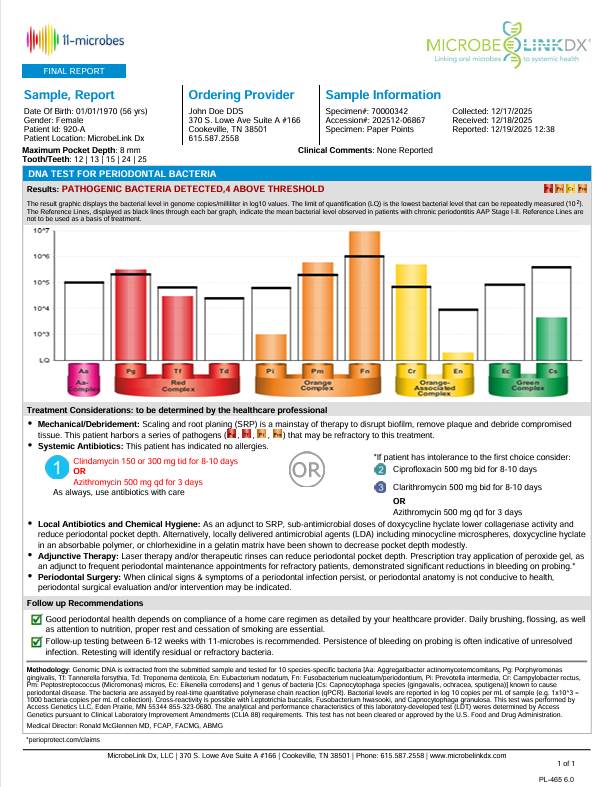
Color-coded results: Each pathogen will be highlighted based on its relative burden. Higher risk bacteria appear with a distinct visual cue to indicate priority.
-
Clinical interpretation: A pathogen identified at elevated levels signals the need for targeted periodontal evaluation and can justify adjunctive therapies or monitoring strategies.
-
Risk stratification: The report organizes bacteria into risk categories, helping clinicians see which microbes may be driving disease processes.
-
Actionable insight: Rather than guessing, clinicians can align therapy intensity with microbial burden, improving communication and case acceptance.
The goal of interpreting a salivary bacterial test report is not simply to see which pathogens are present, but to integrate that information into periodontal assessment and therapy planning. For example, a high burden of Porphyromonas gingivalis or Tannerella forsythia may suggest persistent subgingival biofilm that warrants more aggressive or targeted intervention. This clinical context reinforces decisions on re-evaluation timelines, localized vs generalized therapy, and communication with patients about disease etiology.
Pathogenic Bacteria
Detected – None
If you have questions about interpreting your report or integrating results into clinical protocols, contact our support team or explore our Clinical Education pages.
Understanding Your Periodontal Pathogen Report
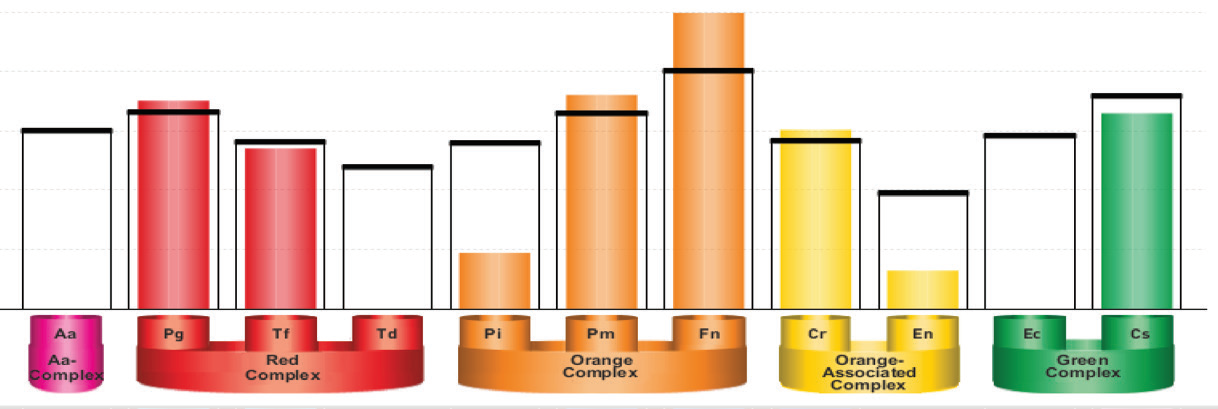
Aa. Aggregatibacter actinomycetemcomitans
Aggressive disease pathogen
Aa is linked to more aggressive forms of gum disease and can cause rapid bone loss around teeth. It produces toxins that damage immune cells, allowing infection to progress more quickly. Aa may be clinically important even at lower levels and is sometimes seen in younger patients with periodontal concerns.





Pg. Porphyromonas gingivalis
Keystone pathogen
Pg is one of the most well-known bacteria associated with gum disease and bone loss. It can weaken the body’s immune response, allowing inflammation to continue even after routine cleanings. Pg is often found in more advanced periodontal disease and around dental implants when inflammation is present, making infections harder to control without targeted care.


Pi. Prevatella intermedia
Inflammation-associated pathogen
Pi is associated with swollen, bleeding gums and active inflammation. Its levels may increase during hormonal changes, such as pregnancy. Pi is commonly found in inflamed gum tissue and can contribute to ongoing irritation around teeth or implants.
En. Eubacterium nodatum
Advanced disease marker
En is typically found in more advanced gum disease and is often present with other high-risk bacteria. Its presence may indicate a more severe or long-standing infection that requires closer monitoring and targeted care.
Ec. Eikenella corrodens
Opportunistic pathogen
Ec is usually found alongside other bacteria and may be more significant in patients with medical conditions or immune challenges. It can contribute to persistent gum inflammation and is sometimes associated with mixed infections involving implants.

Tf. Tannerella forsythia
Red complex pathogen
Tf is commonly found in deeper gum pockets and usually appears with other harmful bacteria. When present at higher levels, it is associated with more advanced gum inflammation and tissue breakdown. Tf is also frequently detected in peri-implant disease, where gum tissues are inflamed around implants.
Pm. Parvimonas micra
Anaerobic inflammatory pathogen
Pm is linked to deeper gum infections and periodontal abscesses. It is often found in advanced or persistent gum disease and may indicate a higher level of inflammation. Pm is increasingly recognized in peri-implant infections and harder-to-treat cases.
Cr. Campylobacter rectus
Motile periodontal pathogen
Cr is associated with ongoing gum inflammation and disease progression and is more commonly detected in advanced periodontal disease. It has been linked to inflammation around dental implants and may contribute to tissue breakdown when left untreated. The presence of Cr can help explain why some infections persist or do not respond as expected to standard periodontal care.
Cs. Capnocythophaga sp.
Immune-response associated
(The species C. sputigena, C. gingivalis and C. ochracea, which have similar properties, are grouped together.)
Cs bacteria are associated with gum inflammation and are often more relevant in patients with changes in immune response. While commonly present at low levels, elevated amounts may contribute to ongoing gum irritation or difficulty healing.
Td. Treponema denticola
Tissue-invasive spirochete
Td is a highly mobile, tissue-invasive bacteria that can move into gum tissue and contribute to bleeding, deep pockets, and rapid disease progression. It is often seen in cases where gum disease does not improve as expected with routine treatment and is commonly found in peri-implant infections.
Fn. Fusobacterium nucleatum
Bridge organism
Fn plays a key role in helping other bacteria stick together, allowing more complex and severe infections to form. It is commonly found in advanced gum disease and is frequently associated with inflammation around dental implants. Fn is often considered a “bridge” bacteria that helps infections grow and spread.
Systemic Conditions Linked to Periodontal Pathogens
 Diabetes
 Respiratory Diseases
 Certain Caners
 Implant complications
 Cardiovascular Disease
 Adverse pregnancy outcomes (preterm birth, low birth weight)
 Alzheimer’s Disease
 Autoimmune & Inflammatory condtions
Interpreting My Results
Aa. Aggregatibacter actinomycetemcomitans
Oral: Tissue invasive. Associated with refractory periodontal disease. Initial colonizer for juvenile and progressive periodontitis.
Therapy: Active periodontal treatment as prescribed by your doctor, plus amoxicillin.
Systemic: Risk factor for Cardiovascular Disease, Pregnancy Complications, Diabetes
Pg. Porphyromonas gingivalis
Oral: Initial colonizer for aggressive and chronic periodontitis, peri-implantitis, and recurrence.
Therapy: Active periodontal treatment as prescribed by your doctor, plus metronidazole or clindamycin.
Systemic: Risk factor for Cardiovascular Disease, Alzheimer’s Disease, Pregnancy Complications, Diabetes, Esophageal Cancer, and Kidney Diseases.
Tf. Tannerella forsythia
Oral: Found in periodontitis, chronic periodontitis and peri-implantitis.
Therapy: Active periodontal treatment as prescribed by your doctor, plus metronidazole or, clindamycin.
Systemic: Risk factor for Alzheimer’s Disease, Cardiovascular Disease, Pregnancy Complications and Diabetes.
Td. Treponema denticola
Oral: Initial colonizer for acute necrotizing ulcerative gingivitis. Tissue-invasive, therefore danger of recurrence.
Therapy: Active periodontal treatment as prescribed by your doctor plus metronidazole or, clindamycin.
Systemic: Risk factor for Cardiovascular Disease, and Diabetes.
Pi. Prevatella intermedia
Therapy: Active periodontal treatment as prescribed by your doctor plus metronidazole or clindamycin.
Systemic: Risk factor for Cardiovascular Disease.
Pm. Parvimonas micra
Oral: Component of destructive periodontal consortia. “Bridge species” – link to early colonizers and to red complex bacteria.
Therapy: Active periodontal treatment as prescribed by your doctor.
Systemic: Risk factor for Cardiovascular Disease.
Fn. Fusobacterium nucleatum
Oral: Component of destructive periodontal consortia. “Bridge species” – link to early colonizers and to red complex bacteria.
Therapy: Active periodontal treatment as prescribed by your doctor.
Systemic: Risk factor for Cardiovascular Disease, Pregnancy Complications and Diabetes.
En. Eubacterium nodatum
Oral: Early colonizer of gingival pockets.
Therapy: Active periodontal treatment as prescribed by your doctor.
Systemic: Risk factor for Pregnancy Complications.
Cr. Campylobacter rectus
Oral: Aggressive and refractory periodontitis.
Therapy: Active periodontal treatment as prescribed by your doctor.
Systemic: Risk factor for Cardiovascular Disease.
Ec. Eikenella corrodens
Oral: Early colonizer of pockets, plaque, and recurrent infections.
Therapy: Active periodontal treatment as prescribed by your doctor.
Systemic: Risk factor for Respiratory Disease.
Cs. Capnocythophaga sp.
(The species C. sputigena, C. gingivalis and C. ochracea, which have similar properties, are grouped together.)
Oral: Correlation with deep pockets, increase of concentration with increasing probing depth.
Therapy: Active periodontal treatment as prescribed by your doctor.
Systemic: Risk factor for Diabetes complications.
Legend:
Diabetes
Respiratory Diseases
Cardiovascular Disease
Pregnancy
Alzheimer’s Disease