

🔬 Updated Antibiotic Duration Guidance in Periodontal Therapy
As part of our ongoing commitment to evidence-based periodontal care, we have updated the antibiotic section of our clinical guide following a recent clinical and pharmacologic review.
This update reflects current published literature and national antibiotic stewardship guidance, which increasingly supports using the shortest effective antibiotic duration when clinically appropriate.
💊 Specific Update: Metronidazole Duration
The primary refinement within our updated guidance relates to metronidazole when used adjunctively in periodontal therapy.
Two prospective, controlled studies published in the Journal of Clinical Periodontology (Cosgarea et al., 2016; 2022) evaluated 3-day versus 7-day regimens of metronidazole combined with amoxicillin in the treatment of chronic periodontitis.
Both studies concluded that a 3-day regimen was non-inferior, meaning clinical and microbiological outcomes were comparable to longer treatment durations when appropriately prescribed.
These findings support the evolving understanding that longer antibiotic courses are not always necessary when the correct agents are selected and the patient is responding as expected.
Most other antibiotic selections remain consistent with previous guidance, though alternative options have been added where appropriate.
🛡 National Antibiotic Stewardship Guidance
The Centers for Disease Control and Prevention (CDC) and global health organizations encourage clinicians to prescribe the shortest effective duration of antibiotics to help reduce:
-
Antimicrobial resistance
-
Adverse drug reactions
-
Risk of Clostridioides difficile infection
-
Patient non-adherence
Source: CDC Antibiotic Stewardship Guidance
https://www.cdc.gov/antibiotic-use/
⚖ Clinical Judgment Remains Essential
Antibiotic prescribing decisions should always consider:
-
The patient’s medical history
-
Identified bacterial profile
-
Severity of infection
-
Clinical response
-
Drug interactions and contraindications
Certain antibiotics — such as clindamycin — require particular caution due to associated risks, including a black box warning for C. difficile infection. Their use should remain deliberate and clearly justified.
🧬 The Role of Bacterial Testing in Responsible Antibiotic Use
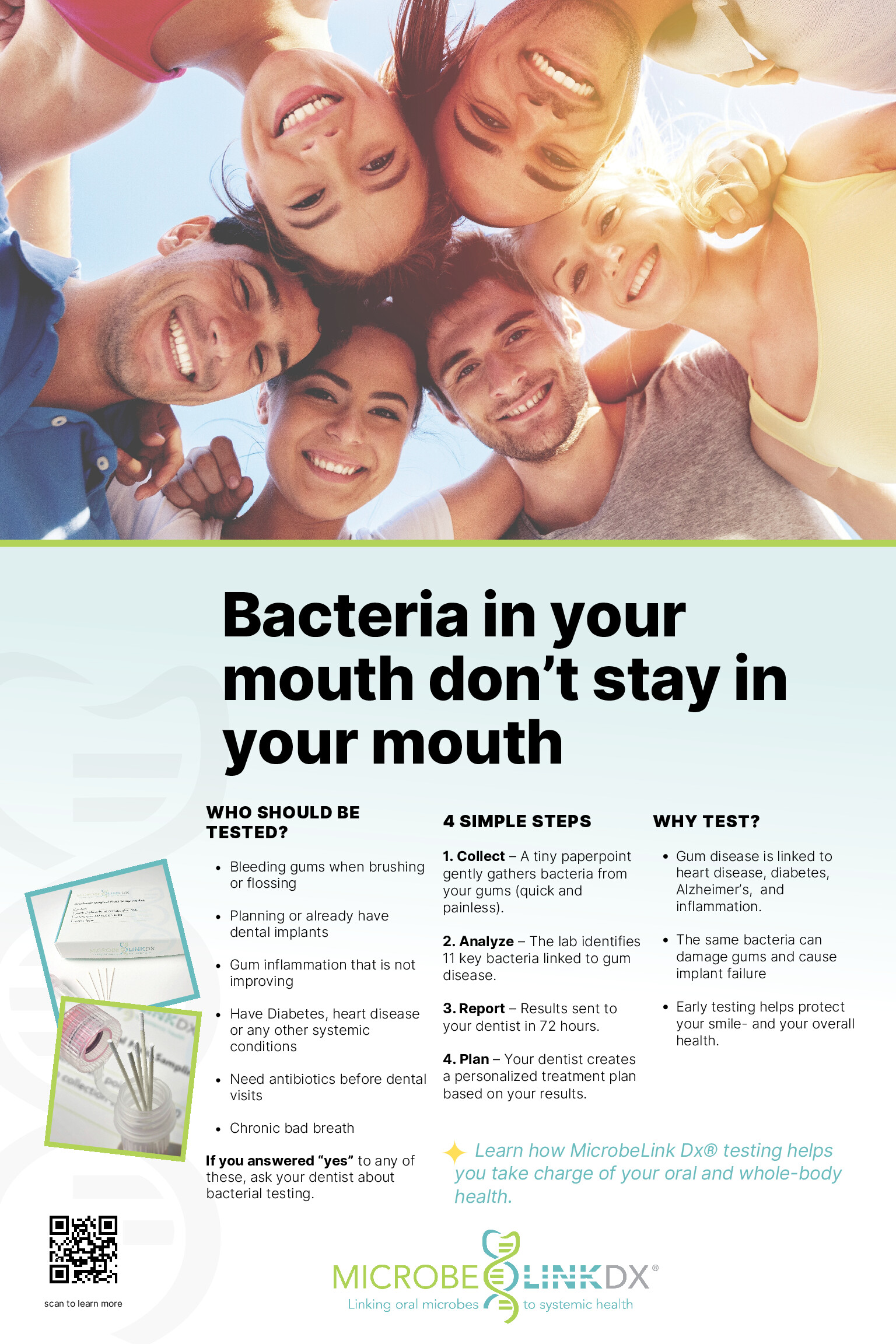
Antibiotic decisions in periodontal therapy should not be one-size-fits-all. Identifying specific periodontal pathogens through bacterial testing helps guide more precise treatment decisions, including whether systemic antibiotics are appropriate.
Targeted salivary-based bacterial testing supports:
-
Evaluation of infection severity
-
Identification of high-risk pathogens
-
Evidence-based prescribing
-
Reduced unnecessary antibiotic exposure
🔗 Updated Antibiotic Options Resource
The MicrobeLink Dx® Antibiotic Options Guide has been updated to reflect these evidence-based refinements in treatment duration and stewardship considerations.
👉 View the Updated Antibiotic Options Guide
📚 References
Cosgarea R, et al. Journal of Clinical Periodontology, 2016.
J Clinic Periodontology – 2022 – Cosgarea – Clinical microbiological and immunological effects of 3 or 7day systemic-1.pdf
CDC Shortest Effective Antibiotic Duration Poster
WHO Antibiotic Stewardship Guidance