

Welcome to the Blog

Updates and News

Clinical Insights Articles

When Should Systemic Antibiotics Be Started During Periodontal Therapy?

When Should Systemic Antibiotics Be Started During Periodontal Therapy?

New Study: When Should You Start Systemic Antibiotics?

One of the questions I hear most often is:

“If I’m going to prescribe systemic antibiotics, when should I start them?”

A newly published study in the Journal of Periodontology looked at exactly that question by comparing patients who started systemic antibiotics during scaling and root planing with those who started after periodontal therapy was completed.

🎥 Watch my quick video below for the highlights.


Study Takeaway

This study found that patients who started systemic antibiotics during active periodontal therapy experienced a faster shift toward a healthier subgingival microbiome, although long-term clinical outcomes were similar between the two groups.


My Clinical Takeaway

I’ve always recommended collecting the bacterial sample first, reviewing the report, and—when systemic antibiotics are indicated—starting the recommended antibiotic during scaling and root planing. As we disrupt the biofilm, the antibiotics have a better opportunity to penetrate the tissues and target the bacteria identified on the report.

Remember, systemic antibiotics are not appropriate for every patient. Mechanical debridement remains the foundation of periodontal therapy, with bacterial testing helping identify the patients who may benefit most from adjunctive therapy.


Patients I Commonly Consider for Bacterial Testing

  • Advanced periodontal disease
  • Refractory periodontal cases
  • Persistent inflammation after therapy
  • Peri-implant disease
  • Patients with significant systemic risk factors

Questions?

I’d be happy to help you determine which patients may benefit from bacterial testing or review reports with you and your team.

📅 Schedule a complimentary Zoom


Reference
Fermiano D, et al. Does timing of systemic antibiotics influence periodontal treatment outcomes? Journal of Periodontology. 2026.

🔥 Inflammation Starts in the Mouth-🎥

🔥 Inflammation Starts in the Mouth-🎥

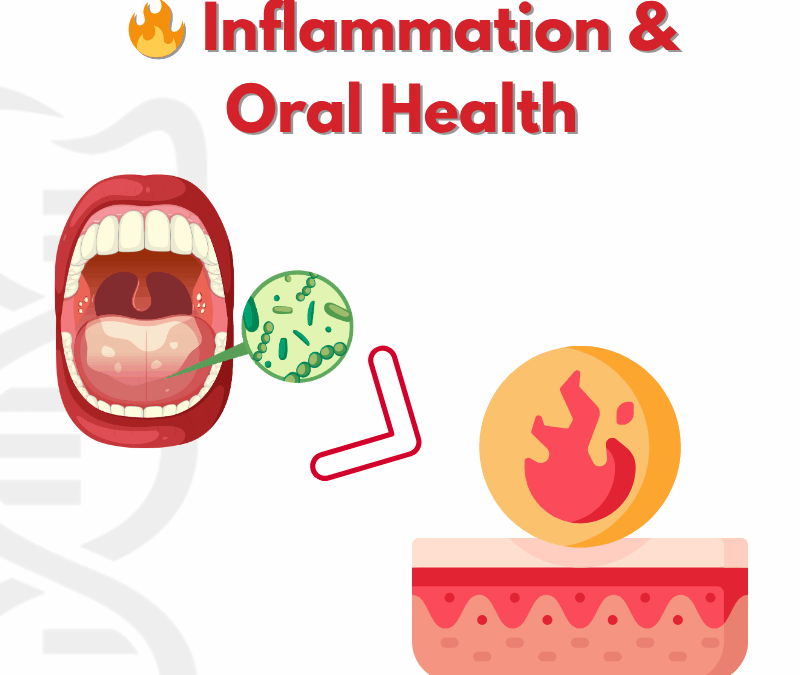
🔥 Inflammation Starts in the Mouth

Featuring medical commentary from Dr. Michael Roizen (Cleveland Clinic) and excerpts from the documentary Say Ahh: A Film About Oral Health

How oral bacteria ignite whole-body inflammation

Chronic inflammation is the hidden driver behind many systemic diseases — including heart disease, stroke, diabetes, preterm birth, and even cognitive decline.
One of the most overlooked sources of this inflammation is oral infection.

High-risk periodontal pathogens living deep in the gum pockets can enter the bloodstream, elevate inflammatory markers, and contribute to systemic illness.

This short medical video explains how inflammation begins, how it spreads, and why controlling inflammatory triggers is essential for long-term health.

🎥 Watch the Inflammation Video

🧬 Evidence: Inflammation & Oral Health Research

Explore three clinically supported inflammation resources:

1️⃣ High-Risk Oral Pathogens & Cardiovascular Inflammation

Bale–Doneen & Vigerust (2016)
https://pubmed.ncbi.nlm.nih.gov/26782880/

2️⃣ Periodontal Inflammation & Preterm Birth Risk

Periodontal disease & pregnancy outcomes
https://pubmed.ncbi.nlm.nih.gov/31606345/

3️⃣ Reducing Oral Infection Lowers Systemic Inflammation

Periodontal therapy reduces CRP
https://pubmed.ncbi.nlm.nih.gov/15153866/

These articles support what we see every day:
👉 inflammation often begins in the mouth — but it doesn’t stay there.


💡 Why This Matters

Identifying high-risk bacteria early with MicrobeLink Dx® allows dental teams to reduce inflammatory load at the source.
This approach strengthens periodontal therapy and supports whole-body health.

👉 Download our free patient inflammation flyer

Peri-Implantitis & Bacteria: Why Implants Fail and How to Protect Them | MicrobeLink Dx®

Peri-Implantitis & Bacteria: Why Implants Fail and How to Protect Them | MicrobeLink Dx®

Implant Failure & Bacterial Testing: What the Latest Research Shows

Dental implants can fail for many reasons — but one of the most overlooked is bacterial imbalance.
New research shows that the same microbes driving gum disease can also cause implant failure, making bacterial testing a key step in prevention.

🧫 The Top 5 Pathogens Linked to Failing Implants

Recent studies have identified five key pathogens that show up again and again in peri-implant infections:
Porphyromonas gingivalis (Pg), Tannerella forsythia (Tf), Prevotella intermedia (Pi), Treponema denticola (Td), and Fusobacterium nucleatum (Fn). These bacteria don’t just live on the surface — they invade tissue, disrupt healing, and trigger inflammation that can lead to bone loss and implant mobility.  If your patient tests positive for one or more of these microbes, it’s important to treat aggressively and early to protect both the implant and surrounding structures.

📚 What the Research Says

Here’s a look at three recent studies confirming the strong link between peri-implantitis and these bacteria:

1️⃣ Meta-Analysis: Key Pathogens in Peri-Implantitis (2022)

Archilla & Palma-Casiano, Journal of Inflammatory Diseases
Read the full study →
This review found peri-implantitis sites were 2–3× more likely to contain Pg, Tf, Pi, Td, and Fn compared to healthy implants.
💡 The same pathogens our MicrobeLink Dx® test identifies.

2️⃣ Systematic Review: Microbial Profile Associated with Peri-Implantitis (Shibli et al., 2019)

Reference: Shibli, J.A. et al. Microbial profile associated with peri-implantitis: A systematic review. Journal of Periodontology, 2019.
Read the abstract on PubMed →

Researchers reviewed dozens of studies to pinpoint which bacteria are most often found around failing implants.
Across every paper, the same pattern appeared — Porphyromonas gingivalis (Pg), Tannerella forsythia (Tf), Treponema denticola (Td), Prevotella intermedia (Pi), and Fusobacterium nucleatum (Fn) were consistently elevated in peri-implantitis compared to healthy sites.

These are the same red-complex and orange-complex pathogens that drive aggressive periodontal disease. Their presence around implants signals active infection, tissue destruction, and risk for early bone loss.

💡 Takeaway: The Shibli review reinforces that identifying these pathogens with bacterial DNA testing helps clinicians act early, personalize therapy, and protect both the implant and surrounding bone before failure occurs.

3️⃣ Longitudinal Study: Microbiome Shifts in Peri-Implantitis (2025)

Anuntakarun et al., Journal of Dentistry
Read the full study →
This six-month study tracked implants before and after treatment. Sites with peri-implantitis showed high levels of Prevotella, Fusobacterium, Pg, Tf, and Td that decreased once therapy began — proving that controlling these pathogens supports healing.
💡 When the bacteria improve, so does the outcome.


💚 How to Sample for Implant Testing

When testing around implants or before placement:
1️⃣ Use our provided paper points for testing
2️⃣ Place them in the deepest pockets, or around the implant in question.
3️⃣ For surgical planning, sample the area where the implant will be placed.
4️⃣ Send the paper points back to the lab using our free UPS 2-Day Air shipping — results are ready in about 72 hours after lab receipt.

Why MicrobeLink Dx®

MicrobeLink Dx® identifies 11 key bacteria linked to periodontal and peri-implant disease.
We provide:

  • Free kits and prepaid shipping
  • Fast turnaround

  • A color-coded, easy-to-read report

  • And personalized customer support — our team walks you through every step

Because the science is powerful — but our support makes it personal. 💚

🔗 Download & Share

📎 Download the “Bacteria Behind Failing Implants” Flyer (PDF)
Use it in your practice, add it to patient education materials, or share it with your implant team.


🧬 MicrobeLink Dx® — The Science Behind the Smile

Learn more at www.microbelinkdx.com

Bad Breath and Gum Disease: How Oral Bacteria Cause Halitosis

Bad Breath and Gum Disease: How Oral Bacteria Cause Halitosis

Bad Breath and Gum Disease: What the Science Says

Why Bad Breath Happens

If you’ve ever worried about bad breath, you’re not alone. It’s one of the most common concerns patients bring up — but it’s also one of the most misunderstood.

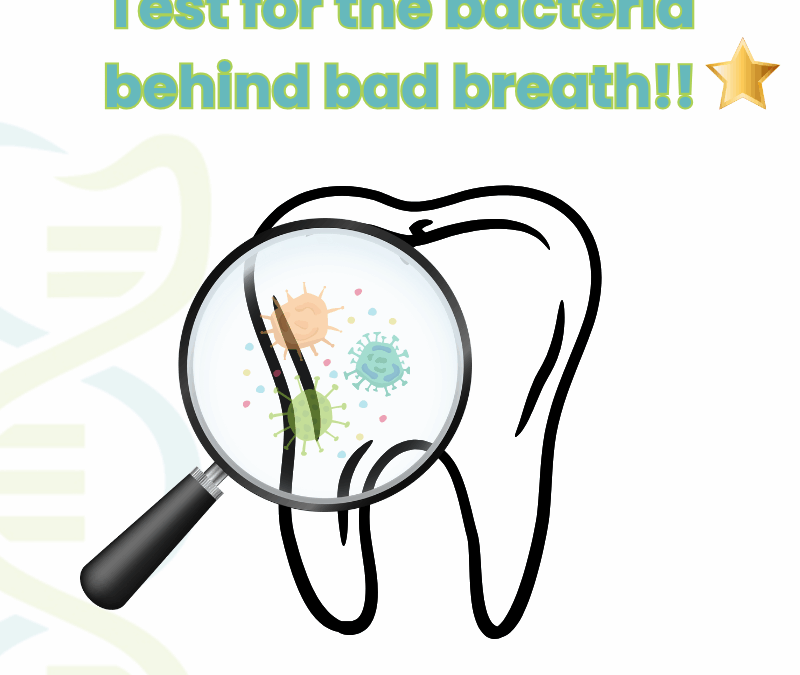
Most people assume bad breath (halitosis) comes from food or poor hygiene, but in reality, it often starts below the gumline. When bacteria build up around the teeth and gums, they release smelly sulfur gases — the same bacteria that cause gum inflammation and periodontal disease.

The Hidden Connection Between Bad Breath and Gum Disease

Research continues to show that bad breath and gum infection share the same bacterial source.

Certain microbes such as Porphyromonas gingivalis, Fusobacterium nucleatum, and Tannerella forsythia not only damage gum tissue — they also create volatile sulfur compounds (VSCs), the primary cause of persistent bad breath.

Over time, these bacteria can damage the soft tissue and bone that support your teeth, while also affecting your confidence and social comfort.

Why Mints and Mouthwash Don’t Work

Breath fresheners only mask the problem — they don’t reach the bacteria deep below the gumline. If you’ve tried rinses, gums, and sprays and still notice odor, that’s your sign to look deeper.

The good news? Modern testing can detect these bacteria early so your dental team can treat the infection at the source.

The Only Way to Know for Sure

Here’s the truth most people never hear:
You can’t see bacteria. You can’t smell which species are there. And you can’t treat what you don’t test.

The only way to identify harmful bacteria is through a bacterial culture or DNA-based test.

That’s exactly what we do at MicrobeLink Dx®.
Our 11-Microbes® Test looks for the most aggressive bacteria that cause bad breath, bleeding gums, and even systemic health risks — so your dental team can treat the actual cause, not just mask the symptoms.

Why This Matters

Bad breath is a sign that something deeper is happening. Ignoring it means the bacteria keep growing — and the infection keeps spreading.
Testing gives you answers.
Treatment gives you relief.

Because fresh breath doesn’t come from a mint.
It comes from a healthy, bacteria-free mouth.

Further Reading & Publications

If you’d like to learn more, here are three excellent studies exploring the connection between oral bacteria, gum disease, and bad breath:

1️⃣ Lee Y-H, Hong J-Y. Oral microbiome as a co-mediator of halitosis and periodontitis: a narrative review. Front Oral Health. 2023;4:1229145.
Read the study here →

2️⃣ Lee Y-H, Shin S-I, Hong J-Y. Investigation of volatile sulfur compound level and halitosis in patients with gingivitis and periodontitis. Sci Rep. 2023;13:13175.
Read the study here →

3️⃣ De Geest S, Quirynen M. Periodontal diseases as a source of halitosis: a review. Periodontol 2000. 2016;70:213–227.
Read the study here →

Collaborating to Reduce Oral Systemic Inflammation

Collaborating to Reduce Oral Systemic Inflammation

Hello MLDx friends,  today I want to share a nice article in Inside Dentistry by our friends Ms. Patti DeMatteis & Dr. Eric Goulder.  I will attach the link to this blog post.

“Heart attacks are still the number one killer in our country! Dental Hygiene Excellence and the Heart Attack and Stroke Prevention Center of Central Ohio are so excited to be published in Inside Dentistry this month and get our message out to more of our dental colleagues! As dental colleagues we have such an opportunity to help our patients reduce some very high risk root causes of heart disease! (ie. oral periodontal pathogens, endodontic pathogens and sleep apnea) We can work together with our medical colleagues and help our patients live an active healthy life without the fear of a heart attack, stroke, diabetes, Alzheimer’s …. the list of inflammatory diseases goes on and on!! The medical community is asking for help from the dental community! ”

We would love to help our medical and dental colleagues learn how to collaborate and achieve optimal oral and vascular health! Check out www.DHEmethod.com to learn how to provide oral systemic care in your practice!

Click here: Collaborating to Reduce Oral-Systemic Inflammation

Also, in this article they mention several bacterial pathogens that are resistant to periodontal therapy…our 11-microbes test will test for those pathogens. https://microbelinkdx.com/frequently-asked-questions/

What is Periodontal Disease?

What is Periodontal Disease?

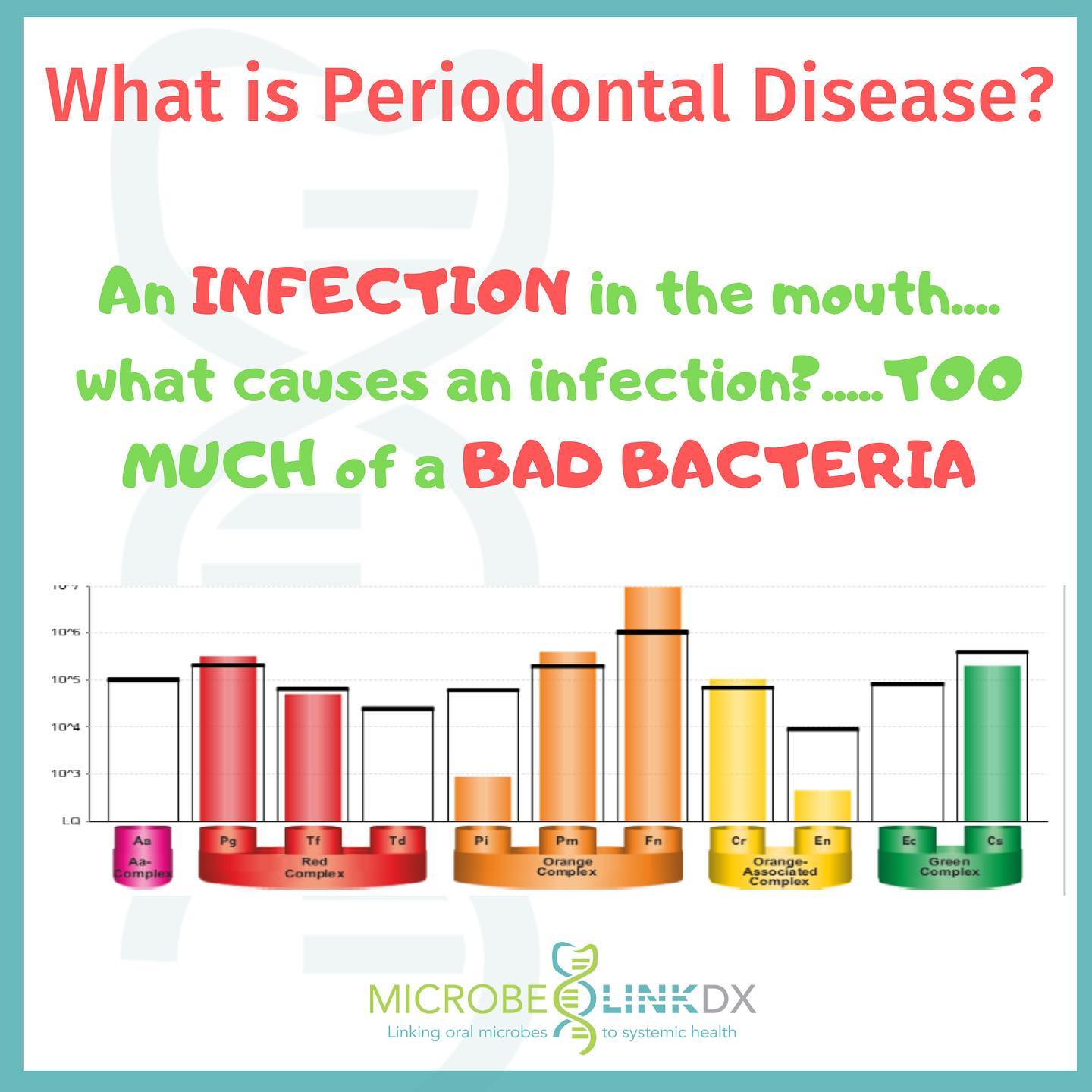
Monday motivation! Periodontal disease is nothing more than an injection in the largest gateway to the rest of the body…the mouth. The bacterial do not just stay in your mouth…they travel to your stomach/lungs n bloodstream…all over. Wouldn’t it be a good idea to do a bacterial test to make sure you/your patients don’t have any of these harmful bugs and to treat them before they cause any damage! This is why we call it #oralsystemiclink #oralsystemichealth #oralsystemicconnection #periodontalhealth #linkingoralmicrobes #thesciencebehindthesmile

The Science Behind the Smile!