
Welcome to the Blog

Updates and News

Oral-Systemic info Articles

Obesity and Your Perio Patients: Three Studies Worth Knowing About

Obesity and Your Perio Patients: Three Studies Worth Knowing About

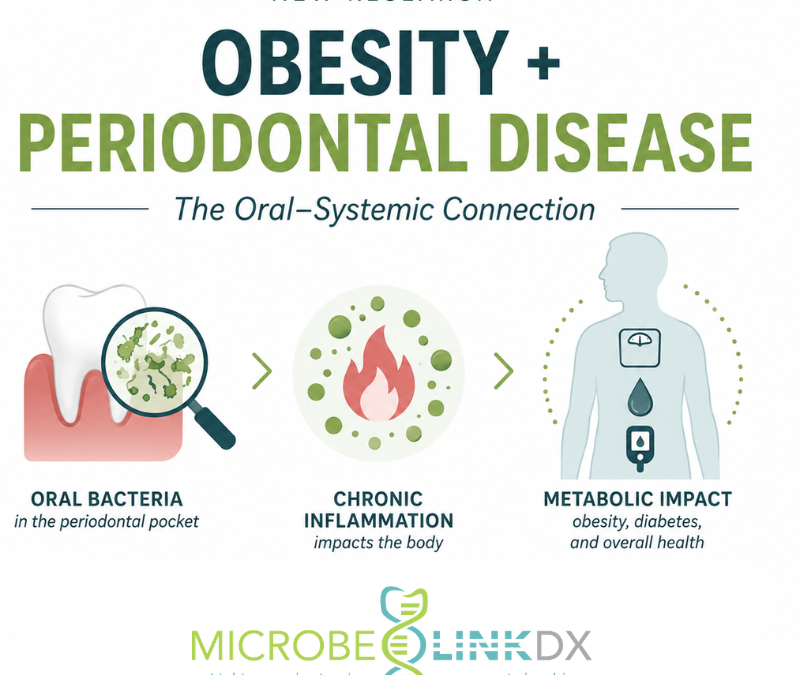
Obesity and periodontal disease may be more closely connected than many patients realize.

Recent research is continuing to uncover relationships among periodontal bacteria, chronic inflammation, obesity, metabolic health and even GLP-1 pathways.

For dental professionals, these findings add another layer to the oral-systemic conversation — and another reason to pay attention to periodontal infection in patients with metabolic risk.

Here are three recent studies worth knowing about.

🦠 Study 1: Periodontal Bacteria, Obesity & Systemic Inflammation

A 2026 study published in The FASEB Journal evaluated patients with severe obesity with and without periodontitis.

Researchers found that patients with periodontitis had oral microbiota dysbiosis, including higher levels of red- and orange-complex periodontal bacteria. Periodontitis was also associated with changes in gut microbiota, inflammatory markers, lipid profiles and inflammation and oxidative stress within visceral adipose tissue.

What caught our attention at MicrobeLink Dx®

Researchers collected periodontal pocket fluid and used qPCR to evaluate periodontal bacteria.

Nine of the pathogens evaluated —

Aa • Pg • Tf • Td • Pi • Fn • Pm • Cr • Ec

— are also included in the MicrobeLink Dx® 11-Microbes™ panel.

That’s especially interesting because the researchers went directly to the periodontal environment to evaluate the bacterial component of disease.

The takeaway: Periodontal infection in patients with obesity may be part of a much larger inflammatory and metabolic picture.

Read the FASEB Journal study

⚖️ Study 2: Obesity Associated With 31% Higher Odds of Periodontitis

Here’s a number worth remembering.

A 2026 systematic review and meta-analysis in Obesity Reviews included 19 studies and more than 41,000 patients.

Researchers found that individuals with obesity had 31% higher odds of periodontitis (OR 1.31; 95% CI 1.22–1.41).

The researchers discussed systemic inflammation — including inflammatory mediators such as IL-6 and TNF — as one potential contributor to the relationship. They also emphasized the need for additional longitudinal and interventional research to better understand causality.

The takeaway: Obesity deserves consideration when we’re looking at a patient’s overall periodontal risk and inflammatory burden.

Read the Obesity Reviews study

💉 Study 3: Periodontitis & GLP-1 — An Emerging Connection to Watch

This one is especially timely.

A 2025 scoping review from researchers at Tufts University examined 52 studies looking at the relationship between periodontal disease and GLP-1 pathways.

The researchers found several potential connections involving inflammation, glucose regulation and periodontal health. Of particular interest, periodontal bacteria including Porphyromonas gingivalis may produce DPP-4-like enzymes capable of degrading GLP-1 and potentially affecting glucose regulation.

The review also found that certain GLP-1 receptor agonists demonstrated anti-inflammatory, bone-protective and regenerative effects in preclinical periodontal research.

This does not mean periodontal disease has been shown to interfere with medications such as Ozempic or Wegovy. Instead, it identifies an emerging biological connection between periodontal disease, GLP-1 signaling, obesity and diabetes that deserves further research.

The takeaway: As GLP-1 medications become increasingly common, the relationship between metabolic health and periodontal inflammation is an important area to watch.

Read the Frontiers GLP-1 review

🔬 What Does This Mean at the Chair?

Taken together, these studies reinforce something dental professionals are seeing more and more:

Periodontal health and systemic health don’t exist in separate silos.

Obesity, metabolic health, inflammation and periodontal disease appear to intersect through multiple pathways — including the microbiome and host inflammatory response.

For practices using bacterial testing, identifying and quantifying periodontal pathogens can provide another piece of information to consider alongside probing depths, bleeding, radiographs, medical history and other clinical findings.

MicrobeLink Dx® uses paper points collected from periodontal pockets and qPCR to identify 11 key periodontal pathogens. Our report identifies and quantifies those organisms to support the clinician’s overall assessment and treatment planning.

Interested in adding bacterial testing to your periodontal workflow?

We’re always happy to help — whether you’re new to testing or simply want a refresher.

Email Jennifer: jennifer@microbelinkdx.com
Or ask us about a complimentary Zoom training.

📚 References

  1. Thouvenot K, et al. Periodontitis in Patients With Severe Obesity: From the Oral and Gut Microbiota Dysregulation to the Visceral Adipose Tissue Inflammatory and Metabolic Disorders. The FASEB Journal. 2026;40(9):e71828. DOI: 10.1096/fj.202600054R.
  2. Esperouz F, et al. Is Obesity a Risk Factor for Periodontitis? A Systematic Review and Meta-Analysis. Obesity Reviews. 2026;27(2):e70020. DOI: 10.1111/obr.70020.
  3. Jeong N, Chuang L-H, Ho Y. Periodontitis and GLP-1 Pathways: A New Frontier in Oral-Systemic Health Connections—A Scoping Review. Frontiers in Clinical Diabetes and Healthcare. 2025;6:1679511. DOI: 10.3389/fcdhc.2025.1679511.
🔗 Oral-Systemic Health: A Medical Perspective

Featuring Dr. Trevor Eason, MD

The oral–systemic connection continues to gain attention across both dental and medical communities. In this educational discussion, Dr. Trevor Eason, MD, joins the conversation to explore how oral infection and inflammation influence whole-body health.

Early in the discussion, the link between periodontal disease and systemic conditions is clearly outlined — reinforcing that oral bacteria and inflammation do not remain confined to the mouth. Instead, they contribute to inflammatory pathways associated with cardiovascular disease, metabolic disorders, and other chronic conditions.

Later in the conversation, the importance of identifying oral pathogens is addressed. Understanding which bacteria are present allows clinicians to move beyond a one-size-fits-all approach and toward more personalized, precision-based care — a key principle in oral–systemic health.

This conversation reflects a growing interdisciplinary shift: dentistry and medicine working together to address inflammation, infection, and long-term health outcomes.

🎥 Watch the Full Discussion

🧬 Why Identifying Oral Pathogens Matters in Oral–Systemic Care

When periodontal disease is linked to systemic inflammation, the specific bacteria involved matter. Different pathogens carry different levels of inflammatory risk and systemic association.

Identifying the bacterial profile allows clinicians to:

  • Understand the systemic inflammatory burden more accurately

  • Personalize periodontal therapy based on risk

  • Monitor response to treatment over time

  • Support interdisciplinary conversations between dental and medical providers

In oral–systemic care, guessing is no longer enough. Precision begins with identifying the pathogens driving infection and inflammation.

Oral Bacteria as a Regulatory Hub: The Missing Link in Systemic Inflammation

Oral Bacteria as a Regulatory Hub: The Missing Link in Systemic Inflammation

For years, oral bacteria were viewed as a localized problem—limited to the gums and supporting structures.

But new research is shifting that perspective.

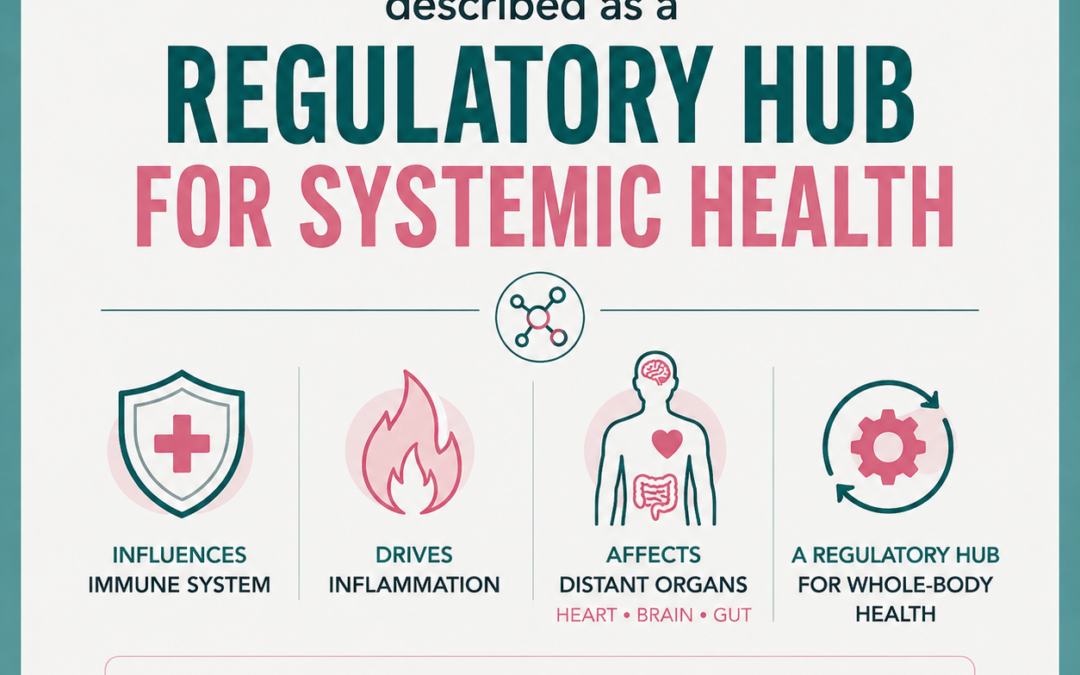
Emerging evidence suggests that periodontal pathogens may act as a “regulatory hub”, influencing inflammation and immune responses throughout the entire body.

🔬 What Is a Regulatory Hub?

A regulatory hub refers to a central point that can influence multiple biological systems at once.

In this context, oral bacteria are not just causing local infection—they may be:

  • Modulating immune responses
  • Amplifying systemic inflammation
  • Influencing disease processes far beyond the oral cavity

🦠 How Oral Bacteria Influence the Body

Periodontal pathogens can:

  • Enter the bloodstream through inflamed gum tissue
  • Release toxins and inflammatory mediators
  • Interact with immune cells and signaling pathways

This creates a ripple effect—impacting systems such as:

  • Cardiovascular health
  • Metabolic function
  • Neurological pathways

🔬 What the Research Shows

A recent study published in Oral Microbiology (2026) highlights the role of oral bacteria as a central regulator of systemic inflammation.

The study suggests that periodontal pathogens:

  • Influence inflammatory signaling pathways
  • Contribute to chronic inflammatory conditions
  • Act as a key link between oral and systemic disease

👉 Read the study:
https://www.tandfonline.com/doi/full/10.1080/20002297.2026.2635233

💡 Why This Matters

This changes how we think about periodontal disease.

It’s no longer just about managing plaque or reducing pocket depths—it’s about understanding how oral bacteria may influence overall health.

When inflammation is driven by infection, identifying the source becomes critical.

🧪 Why Identifying the Bacteria Matters

Not all bacteria behave the same way.

Some act as key drivers of inflammation—while others contribute to disease progression or persistence.

MicrobeLink Dx identifies 11 key periodontal pathogens using qPCR technology from the base of the pocket—where harmful anaerobic bacteria thrive.

This provides clinicians with actionable data to better understand infection and guide treatment decisions.

🔚 Conclusion:

The concept of oral bacteria as a regulatory hub reinforces what research continues to show:

The mouth is not separate from the body.

Understanding the role of bacteria in systemic inflammation is a critical step toward more precise, informed patient care.

📚 Reference:

Oral Dysbiosis Drives Diabetes: Understanding the Inflammatory Connection

Oral Dysbiosis Drives Diabetes: Understanding the Inflammatory Connection

Diabetes and oral health are more connected than most people realize.

New research continues to highlight how oral dysbiosis—an imbalance of bacteria in the mouth—can drive systemic inflammation and contribute to insulin resistance.

This relationship isn’t one-directional.
It’s bidirectional.

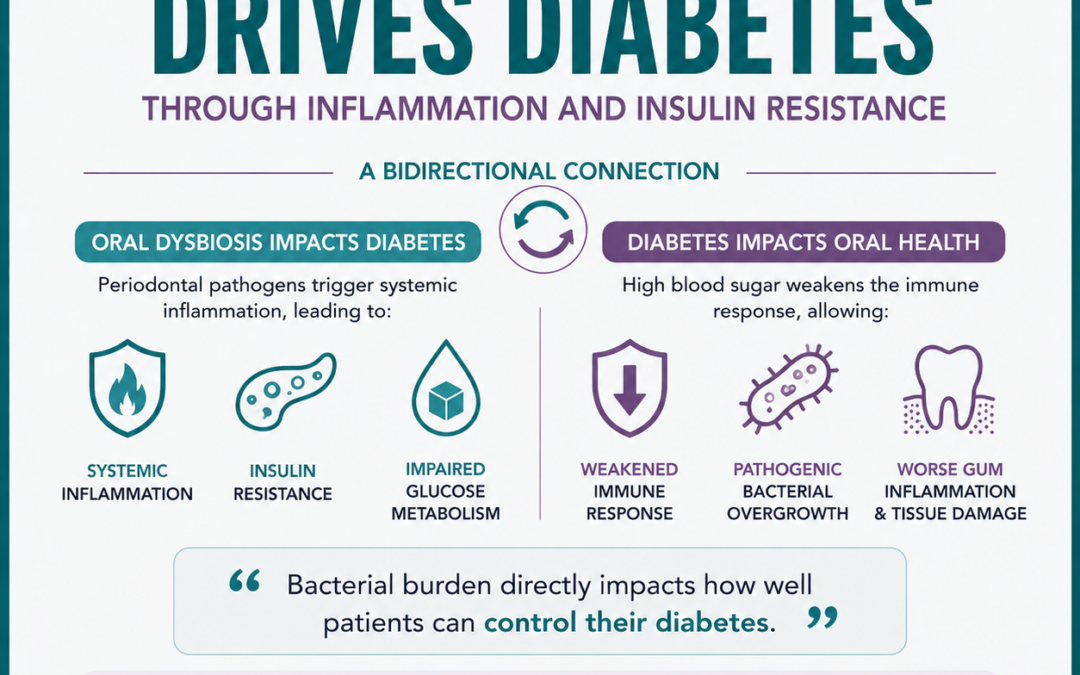
🔄 A Bidirectional Connection

🦠 Oral Dysbiosis Impacts Diabetes

Periodontal pathogens trigger systemic inflammation, leading to:

  • Increased inflammatory burden
  • Insulin resistance
  • Impaired glucose metabolism
🍬 Diabetes Impacts Oral Health

Elevated blood sugar levels weaken the immune response, allowing:

  • Pathogenic bacterial overgrowth
  • Increased inflammation
  • Tissue breakdown in the gums
🔬 Why Inflammation Is the Key

Inflammation is the bridge between oral bacteria and metabolic disease.

When harmful bacteria are present, they stimulate the release of inflammatory mediators that interfere with the body’s ability to regulate blood sugar.

👉 Bacterial burden directly impacts how well patients can control their diabetes.

🧪 Why Identifying the Bacteria Matters

Not all bacteria carry the same level of risk.

Some drive inflammation.
Some enable disease progression.
Others interfere with healing.

MicrobeLink Dx® identifies 11 key periodontal pathogens using qPCR technology from the base of the pocket—where harmful bacteria thrive.

This gives clinicians a clearer picture of infection and helps guide more targeted care.

💡 Clinical Takeaway

When oral bacteria are left unidentified, inflammation continues unchecked.

When we test, identify, and treat, we give patients a better chance at:

  • Reducing inflammation
  • Improving glycemic control
  • Supporting overall health
🔚 Conclusion:

Oral dysbiosis doesn’t just affect the gums.

It plays a measurable role in systemic health—especially in conditions like diabetes.

Understanding the bacteria is the first step toward improving outcomes.

Research continues to support a bidirectional relationship between periodontal disease and diabetes, with inflammation serving as the key link between oral infection and metabolic dysfunction.

The Oral-Systemic Link: How Gum Disease Impacts Heart Health

The Oral-Systemic Link: How Gum Disease Impacts Heart Health

Your Gums and Your Heart Are More Connected Than You Think

For years, gum disease was thought to stay in the mouth.
Today, research continues to show something very different.

Oral bacteria don’t just live in the gums—
they can enter the bloodstream and impact the cardiovascular system.

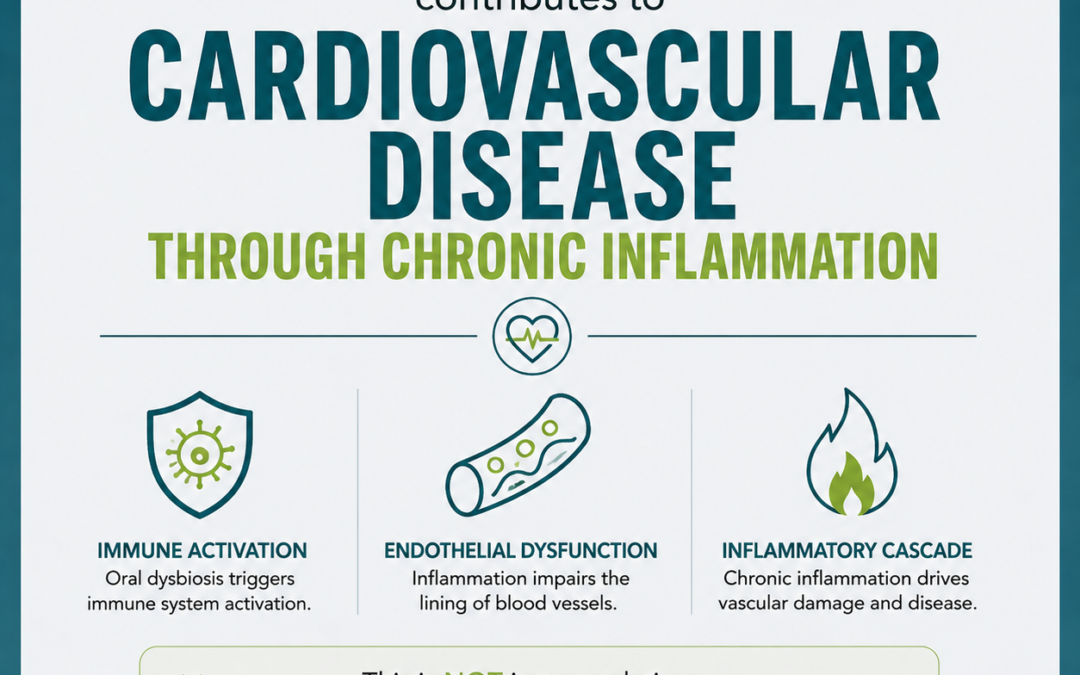
Inflamed gum tissue creates an entry point for bacteria to enter circulation.

Once in the bloodstream, periodontal pathogens can:

  • Attach to arterial walls
  • Contribute to plaque formation
  • Trigger systemic inflammation

This is where oral health becomes whole-body health.

🔬 What the Research Shows

A growing body of research supports the link between periodontal disease and cardiovascular conditions.

Recent findings continue to show that oral pathogens—especially bacteria like:

  • Porphyromonas gingivalis (Pg)
  • Tannerella forsythia (Tf)
  • Treponema denticola (Td)

are associated with inflammation and cardiovascular risk.

👉 A recent study published in PubMed (2025) highlights how periodontal bacteria contribute to systemic inflammation and may play a role in the development and progression of cardiovascular disease:
https://pubmed.ncbi.nlm.nih.gov/41817867/


🔬 Why This Matters

Cardiovascular disease is driven in part by chronic inflammation.

Periodontal infection adds to that inflammatory burden—often silently.

Patients may not feel symptoms in their gums, but the impact can extend far beyond the mouth.

🧪 Why Identifying the Bacteria Matters

Not all bacteria carry the same level of risk.

MicrobeLink Dx® identifies 11 key periodontal pathogens using qPCR technology from the base of the pocket—where harmful anaerobic bacteria thrive.

This allows clinicians to better understand infection and make more informed treatment decisions.

🔚 Conclusion:

The connection between gum disease and heart disease is no longer theoretical—it is supported by growing scientific evidence.

Understanding which bacteria are present is a critical step in reducing inflammation and improving patient outcomes.

📚 References:
  • Bale BF, Doneen AL, Vigerust DJ. High-risk periodontal pathogens contribute to cardiovascular disease. 2016
  • Haraszthy VI et al. Identification of periodontal pathogens in atheromatous plaques. J Periodontol, 2000
  • Recent study: https://pubmed.ncbi.nlm.nih.gov/41817867/
Multiple Sclerosis and Oral Bacteria: What the Research Is Showing

Multiple Sclerosis and Oral Bacteria: What the Research Is Showing

What Do Oral Bacteria Have to Do with Multiple Sclerosis?


For years, gum disease was thought to stay in the mouth.
But research continues to show something very different.

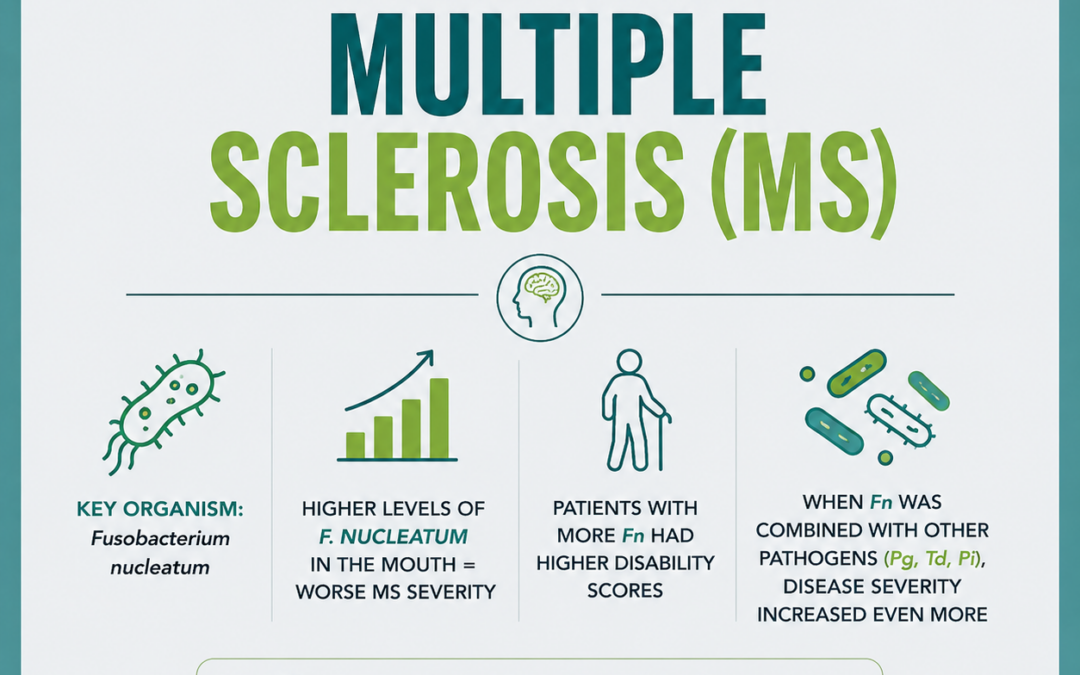
Certain oral bacteria—especially Fusobacterium nucleatum (Fn)—are now being studied for their potential role in neurological inflammation, including conditions like multiple sclerosis.

These bacteria don’t just sit in the gums.
They can enter the bloodstream, travel through the body, and contribute to systemic inflammation.


🔬 Why This Matters

Inflammation is a key driver in many chronic diseases—including MS.
When periodontal pathogens are present, they may:

  • Increase systemic inflammatory burden
  • Disrupt immune regulation
  • Contribute to disease progression

🦠 The Bigger Picture

At MicrobeLink Dx®, we test for 11 key periodontal pathogens using paper point sampling directly from the base of the pocket—where the most harmful bacteria live.

Because understanding which bacteria are present helps guide more targeted care.


📚 Study to Reference:

👉 Hiroshima University Study (2024)

  • Found Fusobacterium nucleatum in higher levels in MS patients
  • Suggested link between oral bacteria and disease severity

You already saved this one 👏
Use this link in your post:
UI study links multiple sclerosis with unique oral microbiome | Department of Pathology – Carver College of Medicine | The University of Iowa