

Welcome to the Blog

Updates and News

Practice Resources Articles

When Should Systemic Antibiotics Be Started During Periodontal Therapy?

When Should Systemic Antibiotics Be Started During Periodontal Therapy?

New Study: When Should You Start Systemic Antibiotics?

One of the questions I hear most often is:

“If I’m going to prescribe systemic antibiotics, when should I start them?”

A newly published study in the Journal of Periodontology looked at exactly that question by comparing patients who started systemic antibiotics during scaling and root planing with those who started after periodontal therapy was completed.

🎥 Watch my quick video below for the highlights.


Study Takeaway

This study found that patients who started systemic antibiotics during active periodontal therapy experienced a faster shift toward a healthier subgingival microbiome, although long-term clinical outcomes were similar between the two groups.


My Clinical Takeaway

I’ve always recommended collecting the bacterial sample first, reviewing the report, and—when systemic antibiotics are indicated—starting the recommended antibiotic during scaling and root planing. As we disrupt the biofilm, the antibiotics have a better opportunity to penetrate the tissues and target the bacteria identified on the report.

Remember, systemic antibiotics are not appropriate for every patient. Mechanical debridement remains the foundation of periodontal therapy, with bacterial testing helping identify the patients who may benefit most from adjunctive therapy.


Patients I Commonly Consider for Bacterial Testing

  • Advanced periodontal disease
  • Refractory periodontal cases
  • Persistent inflammation after therapy
  • Peri-implant disease
  • Patients with significant systemic risk factors

Questions?

I’d be happy to help you determine which patients may benefit from bacterial testing or review reports with you and your team.

📅 Schedule a complimentary Zoom


Reference
Fermiano D, et al. Does timing of systemic antibiotics influence periodontal treatment outcomes? Journal of Periodontology. 2026.

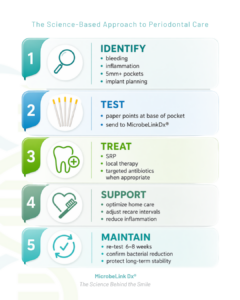
The Science-Based Approach to Periodontal Care

The Science-Based Approach to Periodontal Care

Modern periodontal care is evolving from guesswork to precision.

MicrobeLink Dx® integrates easily into the clinical workflow, helping identify the bacteria contributing to inflammation so treatment can be more personalized and predictable.

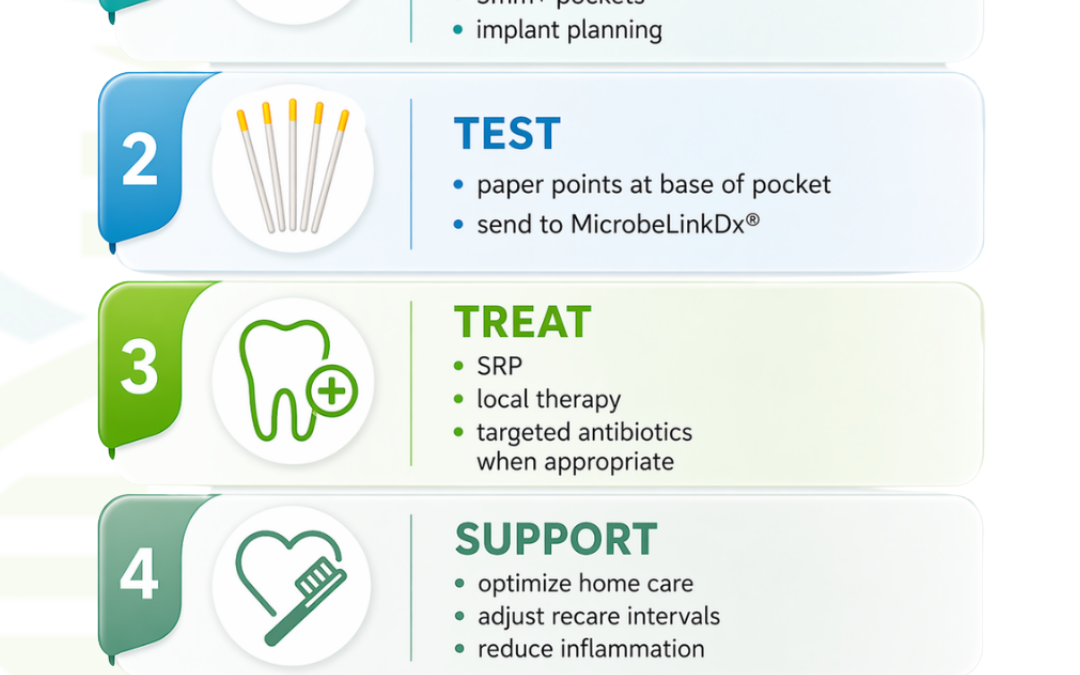
A Simple 5-Step Approach

1. Identify
Recognize inflammation, bleeding, deep pockets, or implant risk.

2. Test
Paper points collect bacteria directly from the base of the periodontal pocket — where damaging anaerobic pathogens live.

3. Treat
Target therapy based on clinical findings and bacterial profile.

4. Support
Optimize home care and recare intervals to reduce inflammation.

5. Maintain
Re-test to confirm bacterial reduction and support long-term stability.

Understanding the bacteria helps clinicians personalize care, improve communication, and support better patient outcomes.

MicrobeLink Dx®
The Science Behind the Smile

Getting Started with Periodontal Bacterial Testing: Quick Start Guide for Dental Teams

Getting Started with Periodontal Bacterial Testing: Quick Start Guide for Dental Teams

Starting bacterial testing doesn’t have to be complicated.
Our 3-minute Quick Start video walks you through exactly how to begin using MicrobeLinkDx® in your practice — from who to test, to how to collect a sample, to sending it to the lab.


Quick Start Guide to Microbelink Dx 

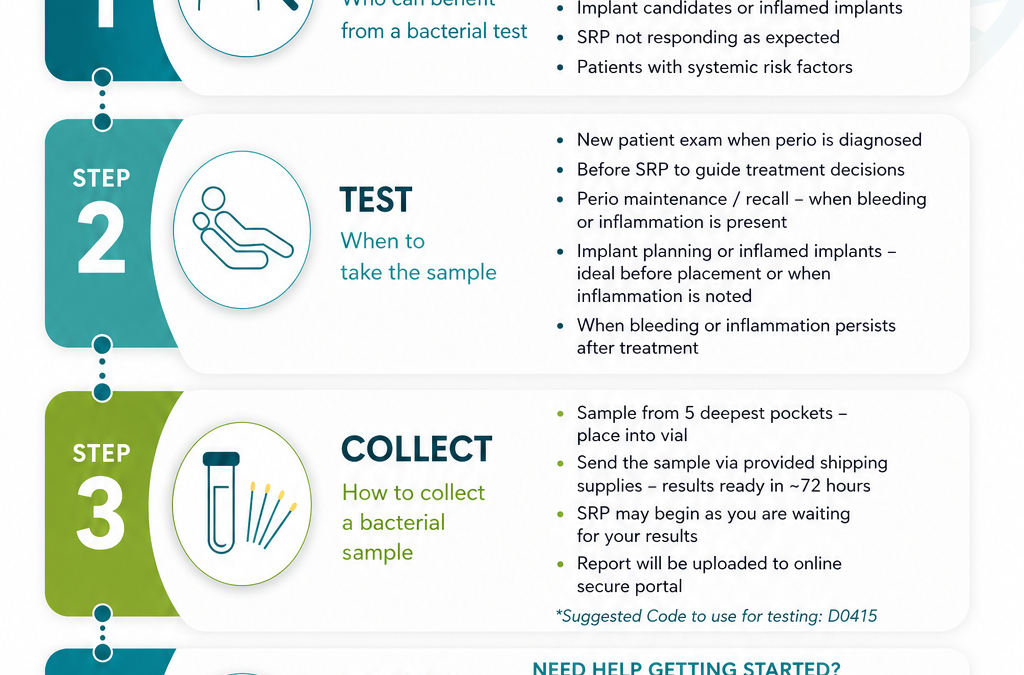
Who Should Be Tested for Periodontal Pathogens?

Patients who may benefit from bacterial testing include:

• new patients with bleeding or bone loss
• 5mm+ periodontal pockets
• bleeding during periodontal maintenance visits
• implant candidates or inflamed implants
• patients not responding to SRP
• patients with systemic health risk factors


When Should You Take a Sample?

Testing is commonly performed:

• during new patient exam when periodontal disease is diagnosed
• before scaling and root planing
• during periodontal maintenance visits when bleeding is present
• prior to implant placement or when inflammation is present around implants
• when inflammation or bleeding persists after treatment


How is a Sample Collected?

MicrobeLinkDx® uses sterile paper points to collect bacteria directly from the base of the periodontal pocket.

• sample 5 deepest periodontal pockets
• place paper points into collection vial
• place vial into FedEx return pouch
• send sample to lab using provided shipping materials

Results are typically available within about 72 hours after the lab receives the sample.


Why Bacterial Testing Matters

Periodontal pathogens have been linked to systemic inflammatory conditions including:

• cardiovascular disease
• diabetes
• pregnancy complications
• respiratory disease
• Alzheimer’s disease

Identifying pathogenic bacteria allows clinicians to personalize treatment decisions and monitor patient response to therapy.


Internal Links to include

Link to:

Sample report page
https://microbelinkdx.com/easy-to-read-reports/

Additional resources page
https://microbelinkdx.com/additional/

MicrobeLinkDx homepage
https://microbelinkdx.com

🔬 Update to MicrobeLink Dx® Antibiotic Guidance: What You Need to Know

🔬 Update to MicrobeLink Dx® Antibiotic Guidance: What You Need to Know

🔬 Updated Antibiotic Duration Guidance in Periodontal Therapy

As part of our ongoing commitment to evidence-based periodontal care, we have updated the antibiotic section of our clinical guide following a recent clinical and pharmacologic review.

This update reflects current published literature and national antibiotic stewardship guidance, which increasingly supports using the shortest effective antibiotic duration when clinically appropriate.


💊 Specific Update: Metronidazole Duration

The primary refinement within our updated guidance relates to metronidazole when used adjunctively in periodontal therapy.

Two prospective, controlled studies published in the Journal of Clinical Periodontology (Cosgarea et al., 2016; 2022) evaluated 3-day versus 7-day regimens of metronidazole combined with amoxicillin in the treatment of chronic periodontitis.

Both studies concluded that a 3-day regimen was non-inferior, meaning clinical and microbiological outcomes were comparable to longer treatment durations when appropriately prescribed.

These findings support the evolving understanding that longer antibiotic courses are not always necessary when the correct agents are selected and the patient is responding as expected.

Most other antibiotic selections remain consistent with previous guidance, though alternative options have been added where appropriate.


🛡 National Antibiotic Stewardship Guidance

The Centers for Disease Control and Prevention (CDC) and global health organizations encourage clinicians to prescribe the shortest effective duration of antibiotics to help reduce:

  • Antimicrobial resistance

  • Adverse drug reactions

  • Risk of Clostridioides difficile infection

  • Patient non-adherence

Source: CDC Antibiotic Stewardship Guidance
https://www.cdc.gov/antibiotic-use/


⚖ Clinical Judgment Remains Essential

Antibiotic prescribing decisions should always consider:

  • The patient’s medical history

  • Identified bacterial profile

  • Severity of infection

  • Clinical response

  • Drug interactions and contraindications

Certain antibiotics — such as clindamycin — require particular caution due to associated risks, including a black box warning for C. difficile infection. Their use should remain deliberate and clearly justified.


🧬 The Role of Bacterial Testing in Responsible Antibiotic Use

Antibiotic decisions in periodontal therapy should not be one-size-fits-all. Identifying specific periodontal pathogens through bacterial testing helps guide more precise treatment decisions, including whether systemic antibiotics are appropriate.

Targeted salivary-based bacterial testing supports:

  • Evaluation of infection severity

  • Identification of high-risk pathogens

  • Evidence-based prescribing

  • Reduced unnecessary antibiotic exposure


🔗 Updated Antibiotic Options Resource

The MicrobeLink Dx® Antibiotic Options Guide has been updated to reflect these evidence-based refinements in treatment duration and stewardship considerations.

👉 View the Updated Antibiotic Options Guide


📚 References

Cosgarea R, et al. Journal of Clinical Periodontology, 2016.
J Clinic Periodontology – 2022 – Cosgarea – Clinical microbiological and immunological effects of 3 or 7day systemic-1.pdf
CDC Shortest Effective Antibiotic Duration Poster
WHO Antibiotic Stewardship Guidance

Clinical Workflow for Periodontal Bacterial Testing | MicrobeLink Dx®

Clinical Workflow for Periodontal Bacterial Testing | MicrobeLink Dx®

Clinical Workflow for Periodontal Bacterial Testing

When to Test • How to Treat • When to Re-Test

Understanding when to use bacterial testing — and what to do next — can be confusing for dental teams. This periodontal bacterial testing workflow was created to help dental teams confidently identify infection and guide treatment decisions.

The MicrobeLink Dx® workflow is infection-based, practical, and designed for real-world use in the operatory.


Who This Workflow Is For

This guide is designed for dentists and hygienists treating patients with:

  • Periodontal disease

  • Bleeding or inflamed tissues

  • Refractory cases not responding to SRP

  • Implant candidates or failing implants

  • “Not-a-prophy” 6-month recare patients

  • Medically high-risk patients


What This Guide Covers

✔ When to collect a bacterial sample
✔ How to interpret severity and risk
✔ When SRP alone is sufficient
✔ When to consider adjunctive systemic antibiotics
✔ How to approach implant cases
✔ When and why to re-test

This workflow does not replace clinical judgment — it supports it with objective microbial data.


Why Bacterial Testing Matters

Periodontal disease is an infection, not just inflammation. Identifying the specific pathogens driving disease allows clinicians to:

  • Move beyond “one-size-fits-all” treatment

  • Target therapy more effectively

  • Improve outcomes in refractory and implant cases

  • Support patients with systemic health risks

MicrobeLink Dx® uses paper-point DNA-PCR testing to sample bacteria directly from the base of the periodontal pocket — where anaerobic pathogens live.


Download the Clinical Workflow Guide

This printable PDF is designed for chairside reference and team training.

👉 [Download the MicrobeLink Dx® Clinical Workflow Guide (PDF)

Perfect for hygienists, dentists, and onboarding new team members.

🔥 Inflammation Starts in the Mouth-🎥

🔥 Inflammation Starts in the Mouth-🎥

🔥 Inflammation Starts in the Mouth

Featuring medical commentary from Dr. Michael Roizen (Cleveland Clinic) and excerpts from the documentary Say Ahh: A Film About Oral Health

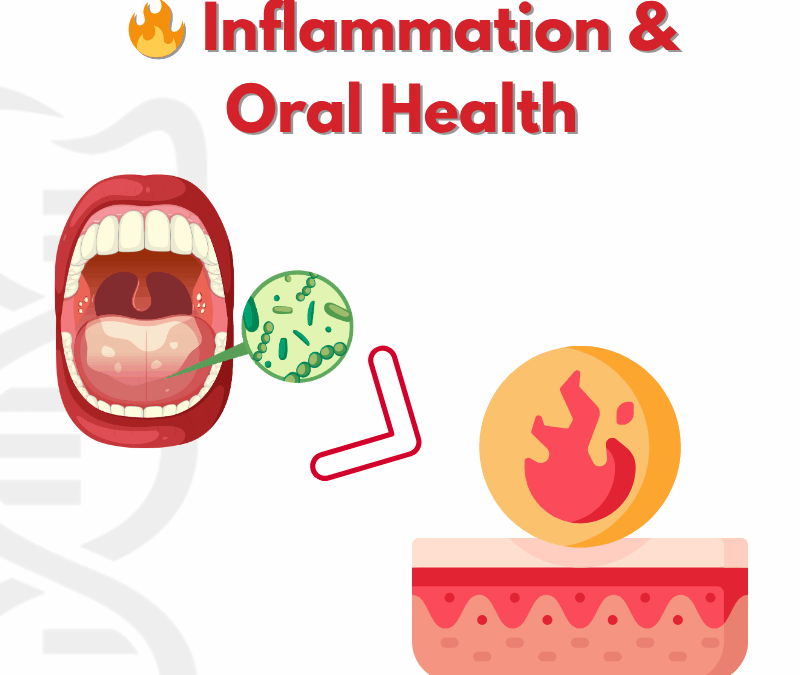
How oral bacteria ignite whole-body inflammation

Chronic inflammation is the hidden driver behind many systemic diseases — including heart disease, stroke, diabetes, preterm birth, and even cognitive decline.
One of the most overlooked sources of this inflammation is oral infection.

High-risk periodontal pathogens living deep in the gum pockets can enter the bloodstream, elevate inflammatory markers, and contribute to systemic illness.

This short medical video explains how inflammation begins, how it spreads, and why controlling inflammatory triggers is essential for long-term health.

🎥 Watch the Inflammation Video

🧬 Evidence: Inflammation & Oral Health Research

Explore three clinically supported inflammation resources:

1️⃣ High-Risk Oral Pathogens & Cardiovascular Inflammation

Bale–Doneen & Vigerust (2016)
https://pubmed.ncbi.nlm.nih.gov/26782880/

2️⃣ Periodontal Inflammation & Preterm Birth Risk

Periodontal disease & pregnancy outcomes
https://pubmed.ncbi.nlm.nih.gov/31606345/

3️⃣ Reducing Oral Infection Lowers Systemic Inflammation

Periodontal therapy reduces CRP
https://pubmed.ncbi.nlm.nih.gov/15153866/

These articles support what we see every day:
👉 inflammation often begins in the mouth — but it doesn’t stay there.


💡 Why This Matters

Identifying high-risk bacteria early with MicrobeLink Dx® allows dental teams to reduce inflammatory load at the source.
This approach strengthens periodontal therapy and supports whole-body health.

👉 Download our free patient inflammation flyer