
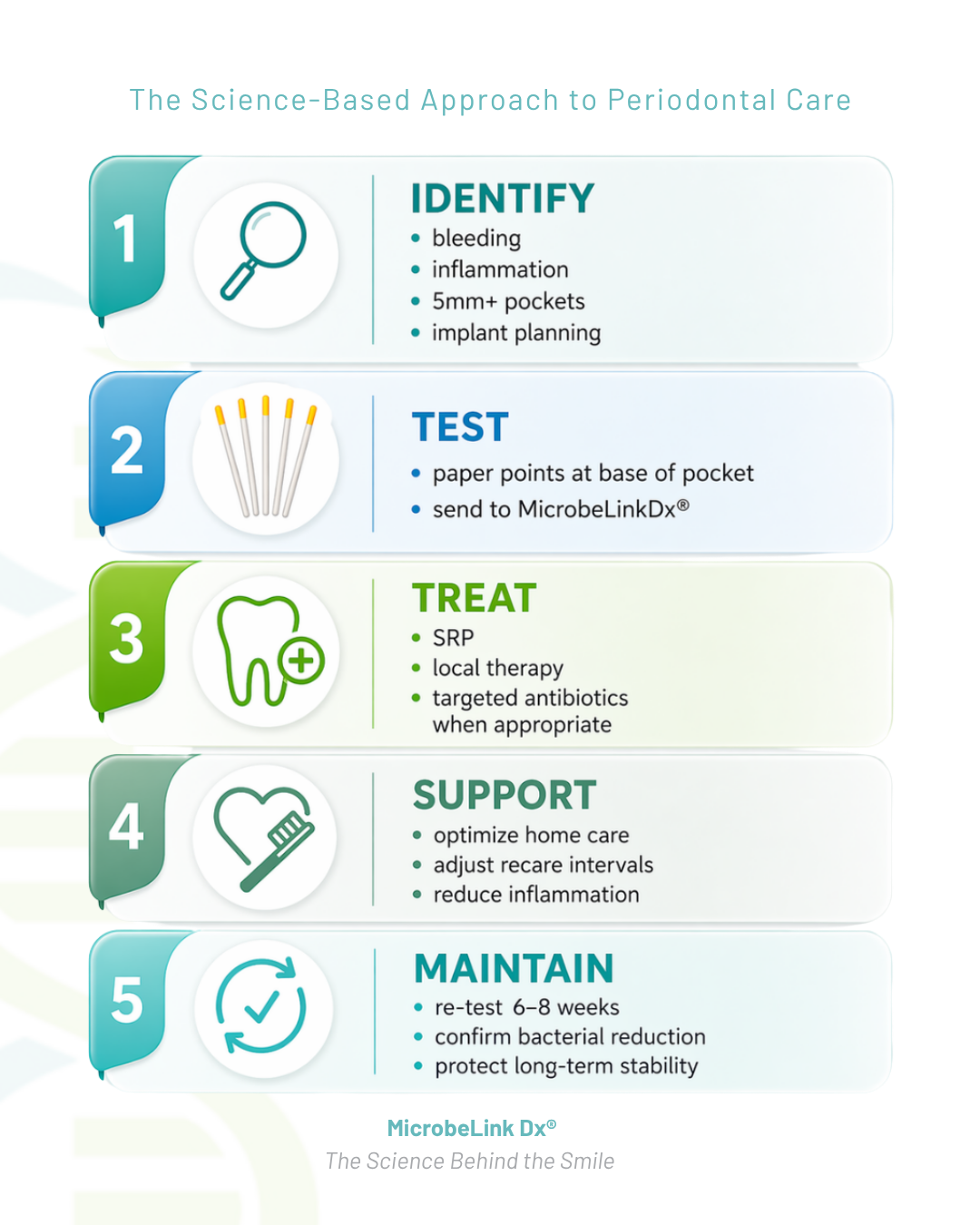
The Science-Based Approach to Periodontal Care

Apr 21, 2026 | Practice Resources

Modern periodontal care is evolving from guesswork to precision.

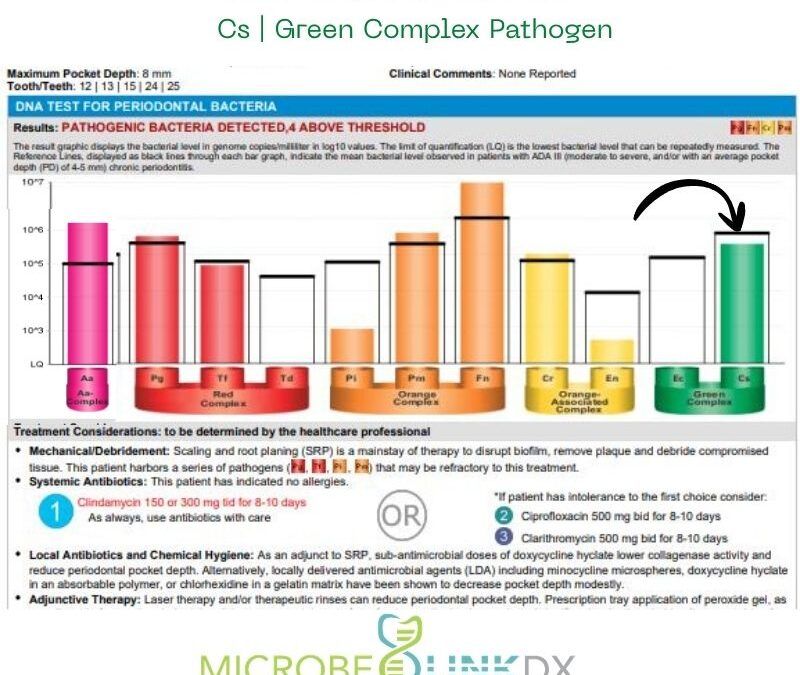
MicrobeLink Dx® integrates easily into the clinical workflow, helping identify the bacteria contributing to inflammation so treatment can be more personalized and predictable.
A Simple 5-Step Approach

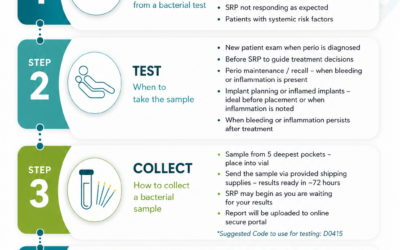
1. Identify
Recognize inflammation, bleeding, deep pockets, or implant risk.

2. Test
Paper points collect bacteria directly from the base of the periodontal pocket — where damaging anaerobic pathogens live.

3. Treat
Target therapy based on clinical findings and bacterial profile.

4. Support
Optimize home care and recare intervals to reduce inflammation.

5. Maintain
Re-test to confirm bacterial reduction and support long-term stability.

Understanding the bacteria helps clinicians personalize care, improve communication, and support better patient outcomes.

MicrobeLink Dx®
The Science Behind the Smile

You may also like…

The Latest

Who Should Be Tested with MicrobeLink Dx®? | 11-Microbes DNA-PCR Test

Who Should Be Tested with MicrobeLink Dx®? | 11-Microbes DNA-PCR Test

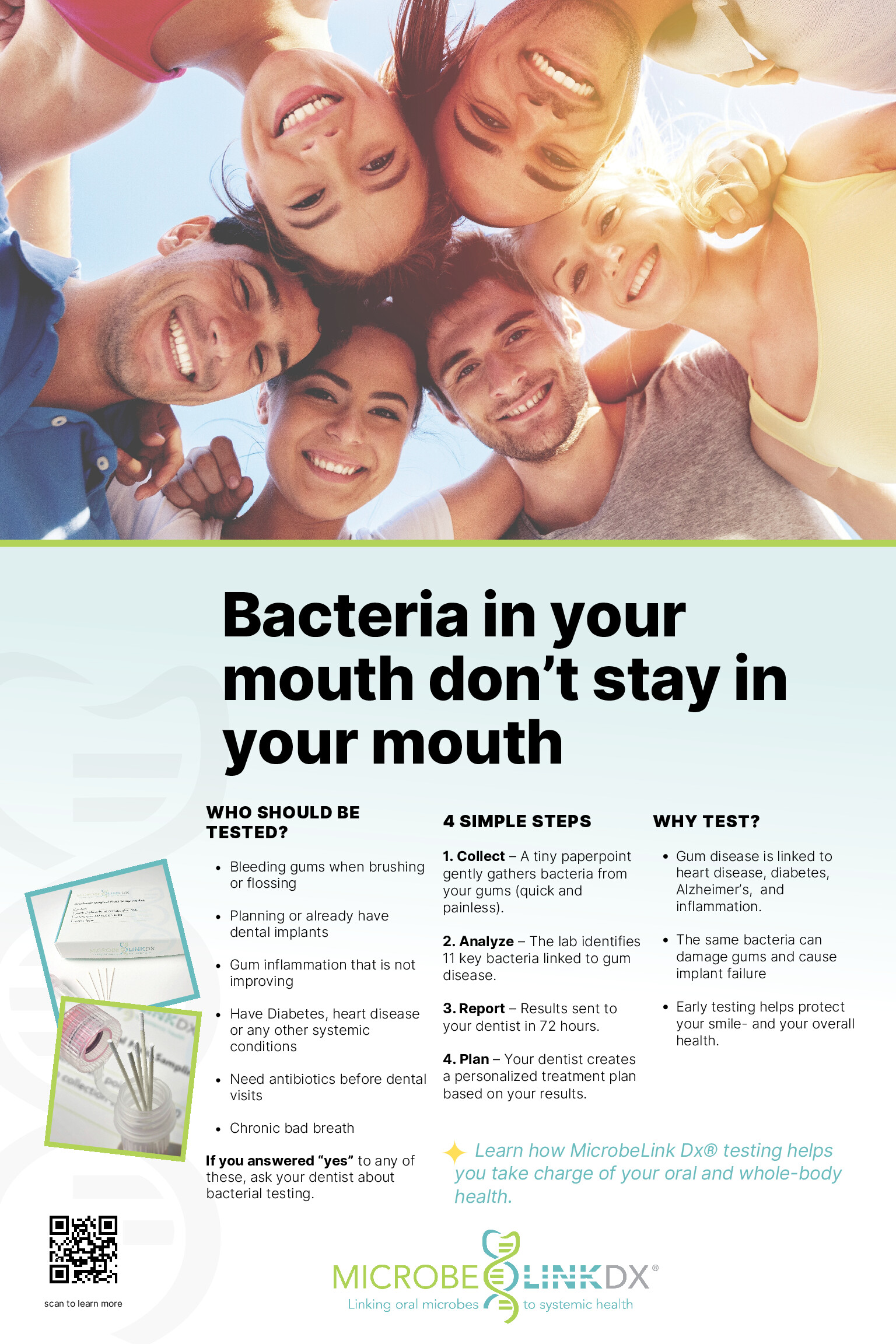
🦠 Not every patient needs bacterial testing… but the right ones do.With MicrobeLink Dx®, you can identify the patients most at risk—catching infection early and preventing bigger problems down the road. Who should be tested?✔️ Patients with bleeding gums (an early...

The Oral-Systemic Link: How Gum Disease Impacts Heart Health

The Oral-Systemic Link: How Gum Disease Impacts Heart Health

Your Gums and Your Heart Are More Connected Than You Think For years, gum disease was thought to stay in the mouth.Today, research continues to show something very different. Oral bacteria don’t just live in the gums—they can enter the bloodstream and impact the...

Multiple Sclerosis and Oral Bacteria: What the Research Is Showing

Multiple Sclerosis and Oral Bacteria: What the Research Is Showing

What Do Oral Bacteria Have to Do with Multiple Sclerosis? For years, gum disease was thought to stay in the mouth.But research continues to show something very different. Certain oral bacteria—especially Fusobacterium nucleatum (Fn)—are now being studied for their...