
Welcome to the Blog

Updates and News

AGD PACE Articles

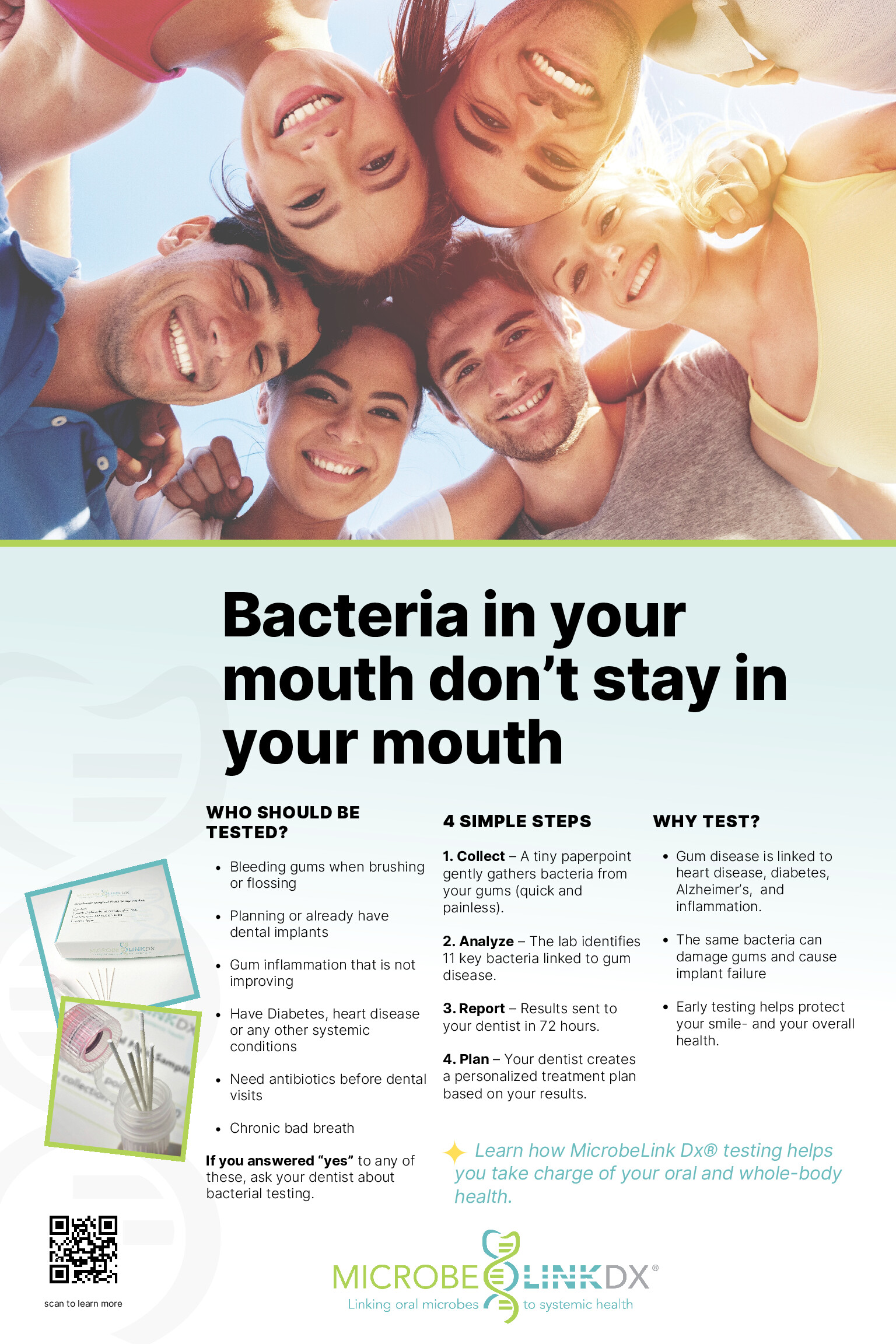
Bacteria in Your Mouth Don’t Stay in Your Mouth — Free Printable Poster for Dental Offices

Bacteria in Your Mouth Don’t Stay in Your Mouth — Free Printable Poster for Dental Offices

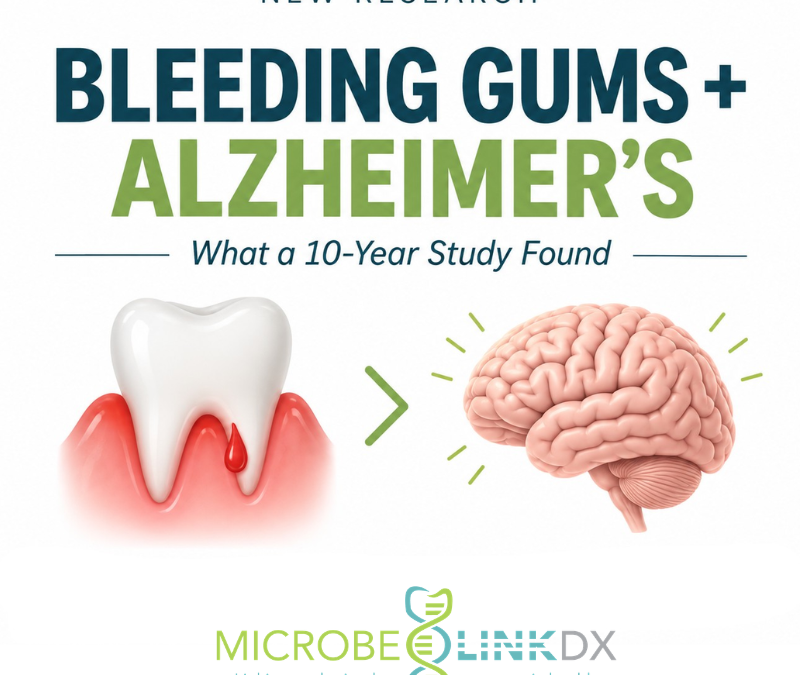
Bacteria that cause gum disease don’t just stay in your mouth — they can travel through inflamed tissues into the bloodstream and affect the rest of your body.
This educational poster helps your patients visualize how oral health connects to systemic health. It’s perfect for your operatory, consultation room, or waiting area.

🖨️ How to Print This Poster

You can easily print this high-quality poster through Staples Custom Printing:
👉 Order through Staples Custom Posters

Recommended print options:

  • Size: 12×18 (if you want bigger reach out!)

  • Finish: Gloss or Satin

  • Mounting: Foam board (optional but professional-looking)

Simply upload the file below, choose your local Staples store, and you can usually pick it up the same day.

Want It Customized?

We can personalize this poster with your office logo and contact information at no extra cost for MicrobeLink Dx® testing offices.
Just email jennifer@microbelinkdx.com with your logo file, and we’ll send back a customized print-ready version.

📎 Download the Poster File Here

💬 About MicrobeLink Dx®

MicrobeLink Dx® helps dental professionals identify the 11 key pathogens linked to gum disease and systemic inflammation using paper-point bacterial sampling. Early detection means early treatment — before bone loss and before bacteria spread systemically.

How to Collect a MicrobeLink Dx® Bacterial Sample | Easy Step-by-Step Guide

How to Collect a MicrobeLink Dx® Bacterial Sample | Easy Step-by-Step Guide

Learn how simple it is to collect a bacterial sample with MicrobeLink Dx®! 🦠✨

With just a few quick steps, you can gather samples directly from the periodontal pocket using sterile paper points. Our 11-Microbes® DNA-PCR test detects the exact bacteria driving gum disease—helping you personalize treatment and protect not only your patients’ smiles but also their overall health.

What you’ll see in this video:
✅ How to prepare the site
✅ Proper paper point insertion technique
✅ How to package and return samples
✅ Why bacterial testing matters for oral & systemic health

📦 Free test kits | 💻 72-hour results online | 📊 Simple, color-coded reports

📅 Book a free Zoom walkthrough: https://calendly.com/microbelinkdx/30

Who Should Be Tested with MicrobeLink Dx®? | 11-Microbes DNA-PCR Test

Who Should Be Tested with MicrobeLink Dx®? | 11-Microbes DNA-PCR Test

🦠 Not every patient needs bacterial testing… but the right ones do.
With MicrobeLink Dx®, you can identify the patients most at risk—catching infection early and preventing bigger problems down the road.

Who should be tested?
✔️ Patients with bleeding gums (an early warning sign)
✔️ Those with pocket depths of 5mm+
✔️ Implant patients (to ensure a bacteria-free foundation)
✔️ Patients with systemic health conditions like diabetes or heart disease
✔️ Patients resistant to therapy or with persistent issues

MicrobeLink Dx® makes testing simple, affordable, and precise. Collect samples directly from the pocket with paper points and get clear, color-coded results within 72 hours.

📊 Early detection = better treatment outcomes.
📦 Free kits | 💻 Online reports | 🚀 Results in 72 hours

🌐 Learn more or request your free kits at: www.microbelinkdx.com
📅 Book a free Zoom walkthrough: https://calendly.com/microbelinkdx/30

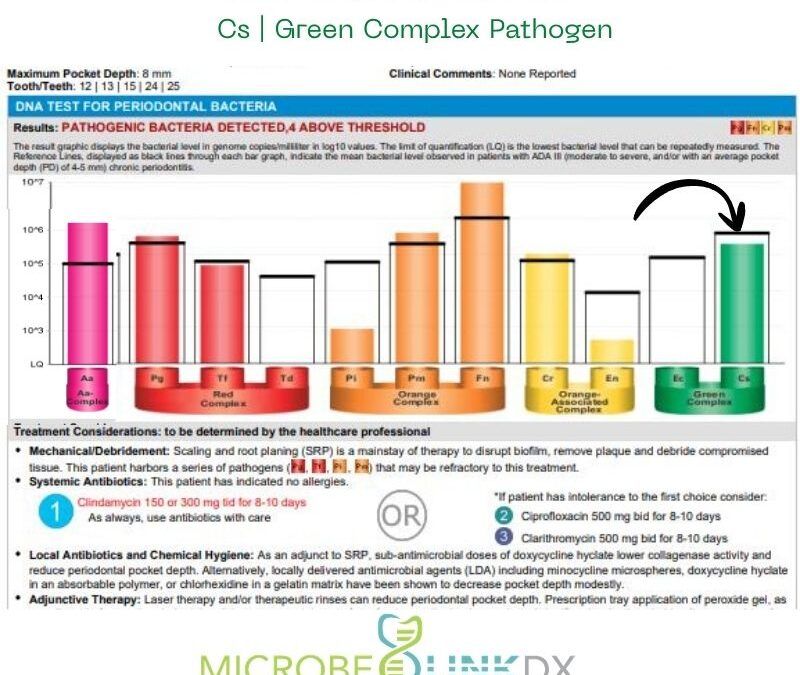
Capnocytophaga sp. (Cs): The Immune Watcher

Capnocytophaga sp. (Cs): The Immune Watcher

Meet Cs: The Immune Watcher 👀

Immune-Response Associated | Green Complex

Capnocytophaga species — or Cs — can be present at low levels in the mouth, but the amount matters.

Think of Cs as “The Immune Watcher.”

Cs is associated with gum inflammation and may become more relevant in patients experiencing changes in immune response. When levels are elevated, Cs may contribute to ongoing gum irritation or difficulty healing.

Quick way to remember Cs:

🟢 Green Complex
👀 The Immune Watcher
🦠 Can be present at low levels
🛡️ Think changes in immune response
🌡️ Elevated levels may contribute to ongoing irritation
🩹 Think difficulty healing

Seeing Cs on a MicrobeLinkDx® Report?

This is a great example of why the bacterial level matters. Don’t look only at whether Cs is present—look at the amount detected, the other bacteria present, and what’s happening clinically.

Interpreting My Results →

Cs Research & Updates

We’ll continue adding new research, oral-systemic findings, clinical information, and resources related to Cs as they become available.

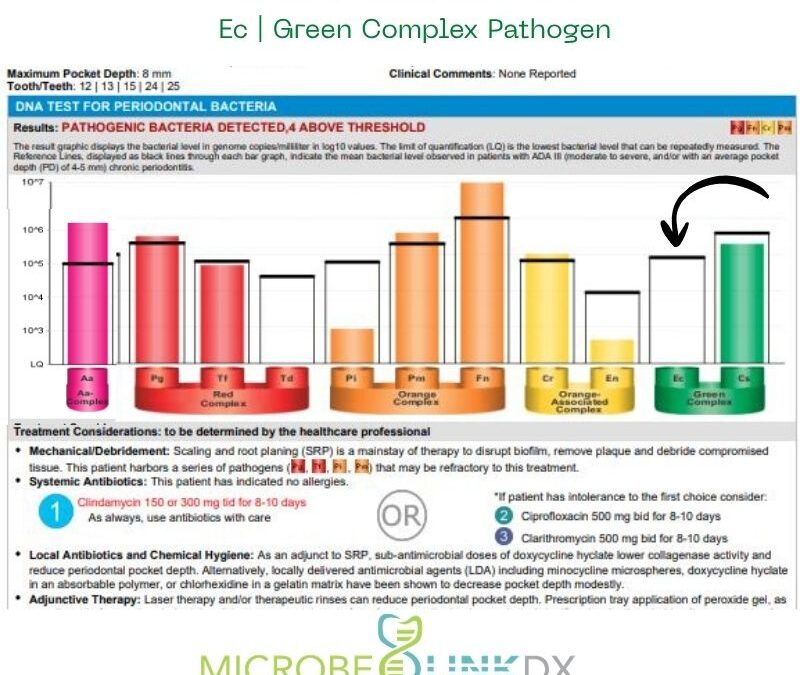
Eikenella corrodens (Ec): The Opportunist

Eikenella corrodens (Ec): The Opportunist

Meet Ec: The Opportunist 🦠

Opportunistic Pathogen | Green Complex

Eikenella corrodens — or Ec — is a little different from some of the other bugs we’ve met.

Think of Ec as “The Opportunist.”

Ec is usually found alongside other bacteria and may become more significant in patients with medical conditions or immune challenges.

It can contribute to persistent gum inflammation and is sometimes associated with mixed infections involving dental implants.

Quick way to remember Ec:

🟢 Green Complex
👀 The Opportunist
👥 Usually found with other bacteria
🩺 May be more significant with medical or immune challenges
🌡️ Think persistent inflammation
🦷 Can be associated with mixed implant infections

Seeing Ec on a MicrobeLinkDx® Report?

With an opportunistic pathogen like Ec, look at the whole picture—the bacterial level, what other pathogens are present, and what’s happening clinically.

Interpreting My Results →

Ec Research & Updates

We’ll continue adding new research, oral-systemic findings, clinical information, and resources related to Ec as they become available.

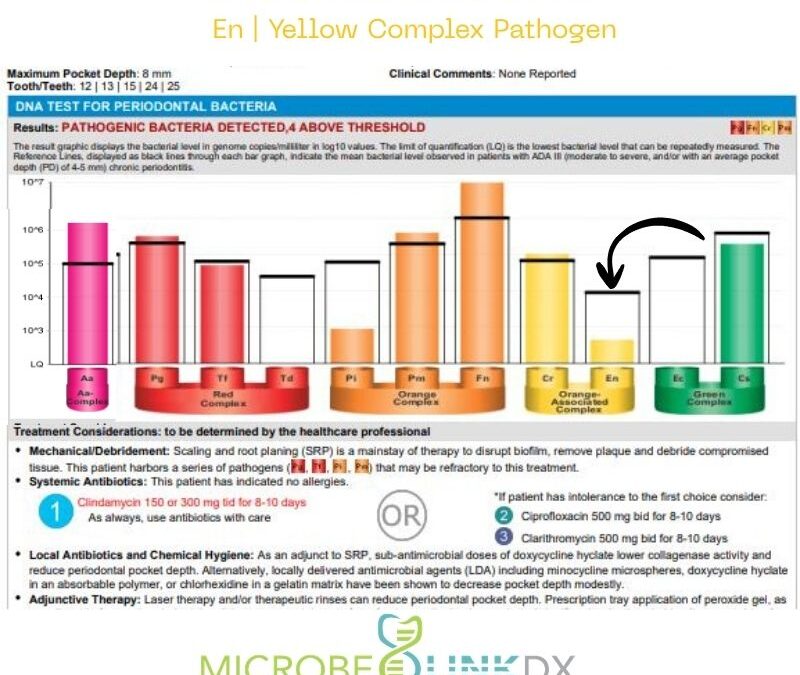
Eubacterium nodatum (En): The Long-Hauler

Eubacterium nodatum (En): The Long-Hauler

Meet En: The Long-Hauler 🦠

Immune-Response Associated Pathogen | Yellow Complex

Eubacterium nodatum — or simply En — is typically found in more advanced periodontal disease and often shows up alongside other high-risk bacteria.

Think of En as “The Long-Hauler.”

When En is present, it may be another clue that we’re dealing with a more severe or long-standing periodontal infection—especially when the rest of the bacterial profile and clinical findings tell the same story.

Quick way to remember En:

🟡 Yellow Complex
The Long-Hauler
🦠 Immune-response associated pathogen
📈 Think more advanced disease
👥 Often found with other high-risk bacteria
⏳ May point toward a more severe or long-standing infection

Seeing En on a MicrobeLinkDx® Report?

En shouldn’t be interpreted by itself. Look at its level, the other bacteria detected, and the patient’s clinical findings to understand the overall picture.

Interpreting My Results →

En Research & Updates

We’ll continue adding new research, oral-systemic findings, clinical information, and resources related to En as they become available.

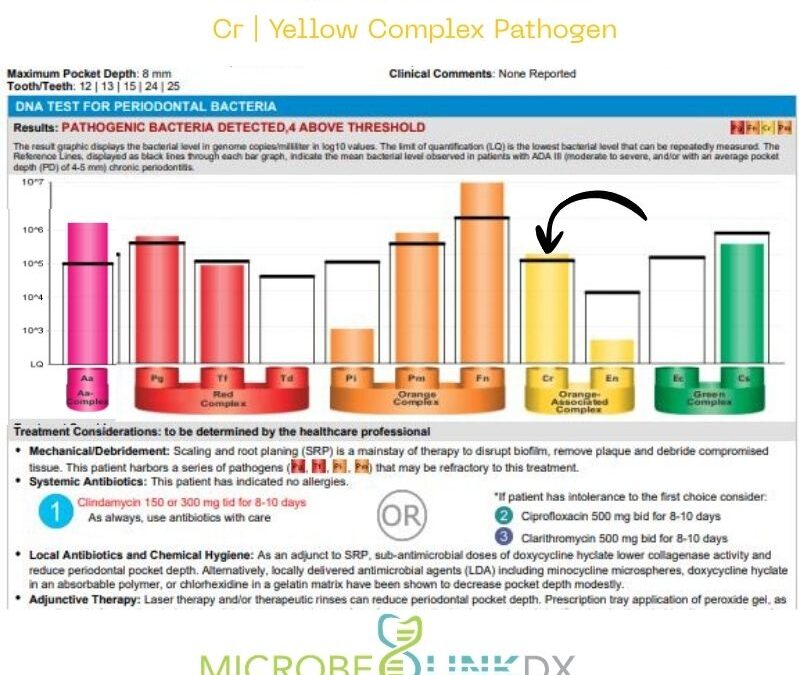
Campylobacter rectus (Cr): The Persistent Mover

Campylobacter rectus (Cr): The Persistent Mover

Meet Cr: The Persistent Mover 🏃

Motile Periodontal Pathogen | Yellow Complex

Campylobacter rectus — or Cr — is a motile periodontal pathogen associated with ongoing inflammation and disease progression.

Think of Cr as “The Persistent Mover.” It’s more commonly detected in advanced periodontal disease and may contribute to tissue breakdown when infection continues.

Cr has also been linked with inflammation around dental implants. When periodontal infection persists or isn’t responding as expected, Cr may be another piece of the bacterial puzzle.

Quick way to remember Cr:

🟡 Yellow Complex
🏃 The Persistent Mover
🦠 Motile periodontal pathogen
🌡️ Think ongoing inflammation
📈 More commonly detected in advanced periodontal disease
🦷 Associated with implant inflammation
🔄 May be present when infection persists or doesn’t respond as expected

Seeing Cr on a MicrobeLinkDx® Report?

Look at the Cr level along with the other bacteria detected and the patient’s clinical findings to understand the overall microbial picture.

Interpreting My Results →

Cr Research & Updates

We’ll continue adding new research, oral-systemic findings, clinical information, and resources related to Cr as they become available.

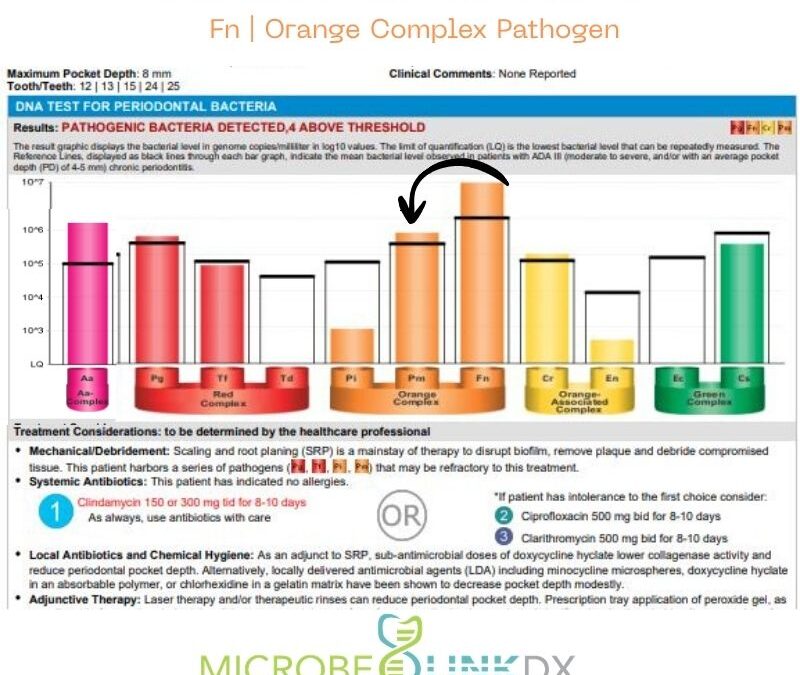
Fusobacterium nucleatum (Fn): The Bridge Builder

Fusobacterium nucleatum (Fn): The Bridge Builder

Meet Fn: The Bridge Builder 🌉

Bridge Organism | Orange Complex

Fusobacterium nucleatum — or Fn — has a pretty interesting job in the periodontal biofilm.

Think of Fn as “The Bridge Builder.” 🌉

Fn helps other bacteria stick together, creating a bridge that allows more complex bacterial communities to form. As that biofilm develops, the infection can become more difficult to manage.

Fn is commonly found in advanced periodontal disease and is also frequently associated with inflammation around dental implants.

Quick way to remember Fn:

🟠 Orange Complex
🌉 The Bridge Builder
🦠 Helps other bacteria stick together
🔗 Helps more complex biofilms form
🦷 Commonly found in advanced periodontal disease
⚠️ Frequently associated with implant inflammation

Seeing Fn on a MicrobeLinkDx® Report?

Fn is one part of the microbial picture. Its level, the other bacteria detected, and the patient’s clinical findings all provide important context.

Interpreting My Results →

Fn Research & Updates

We’ll continue adding new research, oral-systemic findings, clinical information, and resources related to Fn as they become available.

Parvimonas micra (Pm): The Troublemaker That Lingers

Parvimonas micra (Pm): The Troublemaker That Lingers

Meet Pm: The Troublemaker That Lingers 🦠

Advanced Disease Marker | Orange Complex

Parvimonas micra — or simply Pm — is a bacterium we often think about when periodontal disease is deeper, more advanced, or just isn’t going away as expected.

Pm is linked with deeper periodontal infections and periodontal abscesses. It’s often found in advanced or persistent periodontal disease, and its presence may point toward a higher level of inflammation.

Pm is also increasingly recognized in peri-implant infections and harder-to-treat cases.

Quick way to remember Pm:

🟠 Orange Complex
⚠️ Advanced Disease Marker
🦷 Think deep infection + periodontal abscesses
🔄 Think persistent or harder-to-treat disease
🌡️ May indicate a higher level of inflammation
🦷 Also seen in peri-implant infections

Seeing Pm on a MicrobeLinkDx® Report?

Don’t look at Pm in isolation. Its level, the other bacteria detected, and the patient’s clinical presentation all help tell the story.

Interpreting My Results →

Pm Research & Updates

We’ll continue adding new research, oral-systemic findings, clinical information, and resources related to Pm as they become available.