
Your Gums and Your Heart Are More Connected Than You Think
For years, gum disease was thought to stay in the mouth.
Today, research continues to show something very different.
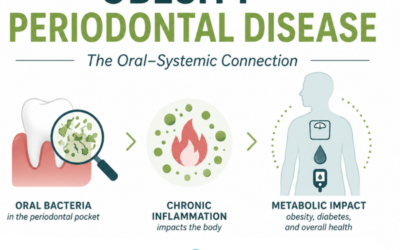
Oral bacteria don’t just live in the gums—
they can enter the bloodstream and impact the cardiovascular system.
Inflamed gum tissue creates an entry point for bacteria to enter circulation.
Once in the bloodstream, periodontal pathogens can:
- Attach to arterial walls
- Contribute to plaque formation
- Trigger systemic inflammation
This is where oral health becomes whole-body health.
🔬 What the Research Shows
A growing body of research supports the link between periodontal disease and cardiovascular conditions.
Recent findings continue to show that oral pathogens—especially bacteria like:
- Porphyromonas gingivalis (Pg)
- Tannerella forsythia (Tf)
- Treponema denticola (Td)
are associated with inflammation and cardiovascular risk.
👉 A recent study published in PubMed (2025) highlights how periodontal bacteria contribute to systemic inflammation and may play a role in the development and progression of cardiovascular disease:
https://pubmed.ncbi.nlm.nih.gov/41817867/
🔬 Why This Matters
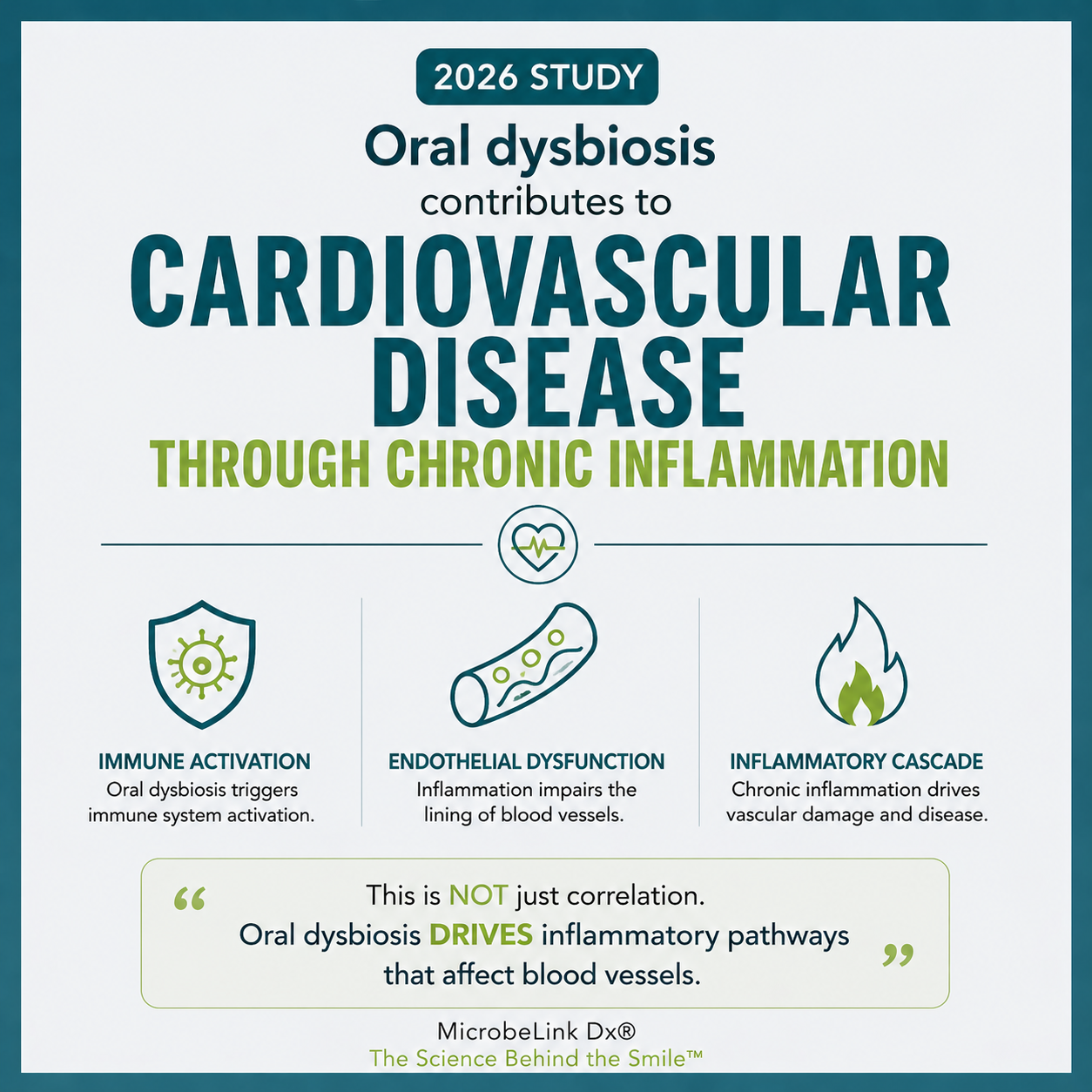
Cardiovascular disease is driven in part by chronic inflammation.
Periodontal infection adds to that inflammatory burden—often silently.
Patients may not feel symptoms in their gums, but the impact can extend far beyond the mouth.
🧪 Why Identifying the Bacteria Matters
Not all bacteria carry the same level of risk.
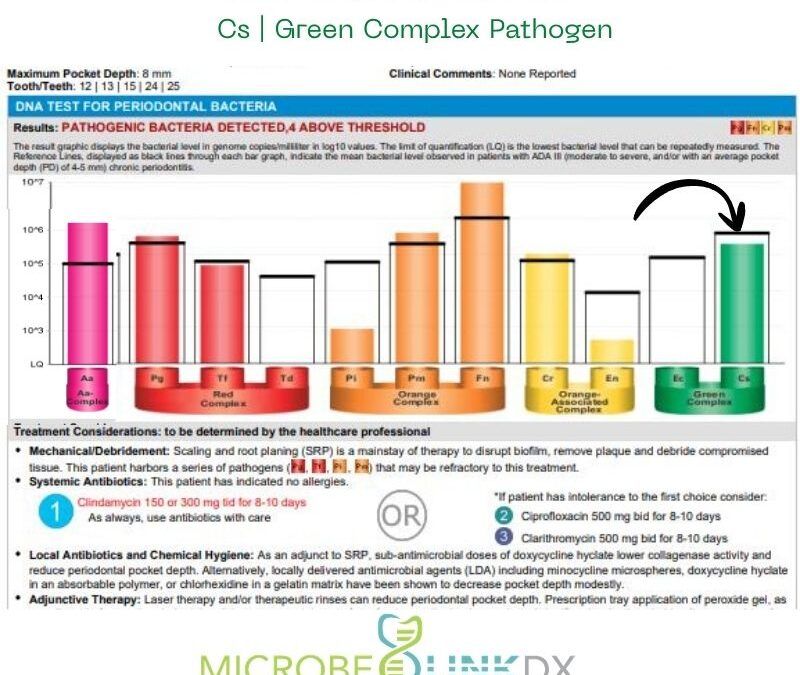
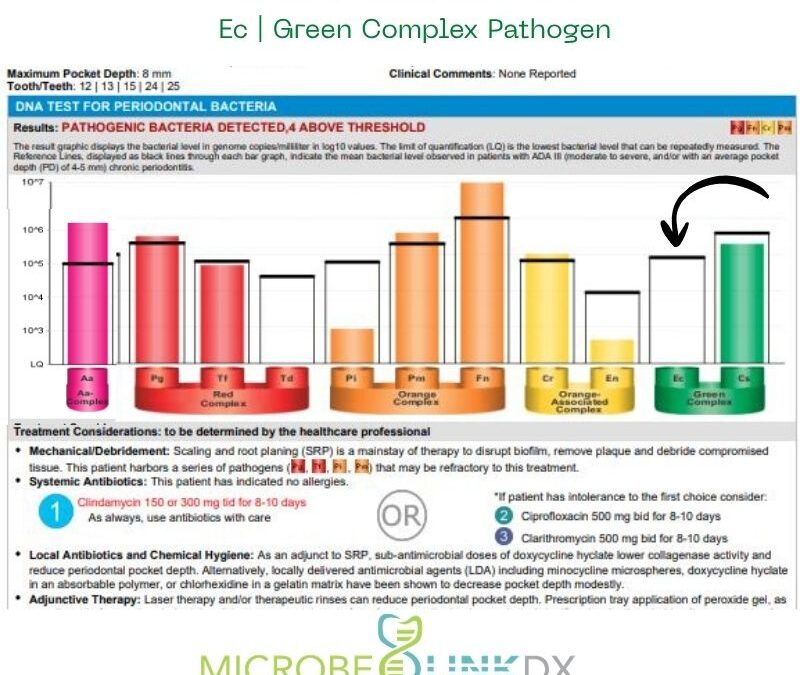
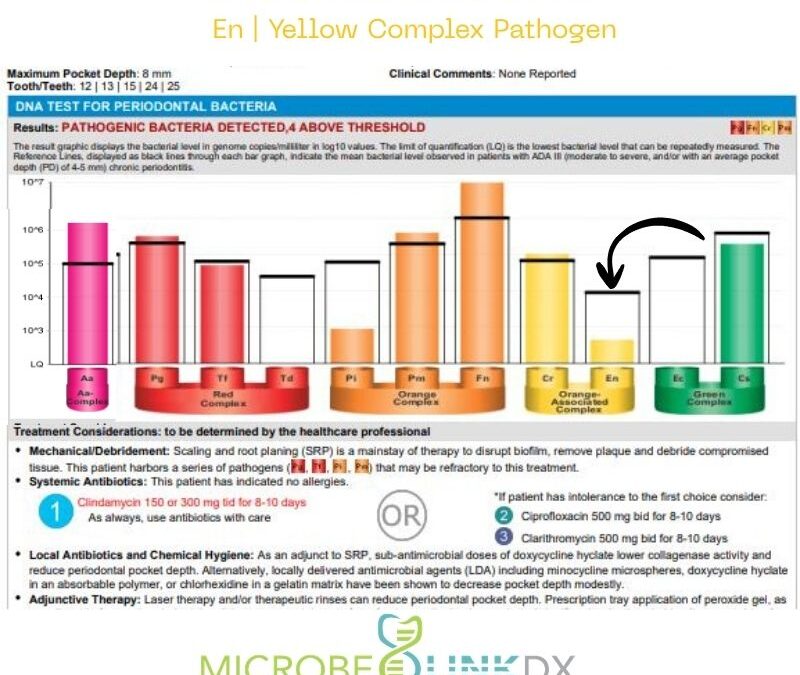
MicrobeLink Dx® identifies 11 key periodontal pathogens using qPCR technology from the base of the pocket—where harmful anaerobic bacteria thrive.
This allows clinicians to better understand infection and make more informed treatment decisions.
🔚 Conclusion:
The connection between gum disease and heart disease is no longer theoretical—it is supported by growing scientific evidence.
Understanding which bacteria are present is a critical step in reducing inflammation and improving patient outcomes.
📚 References:
- Bale BF, Doneen AL, Vigerust DJ. High-risk periodontal pathogens contribute to cardiovascular disease. 2016
- Haraszthy VI et al. Identification of periodontal pathogens in atheromatous plaques. J Periodontol, 2000
- Recent study: https://pubmed.ncbi.nlm.nih.gov/41817867/