
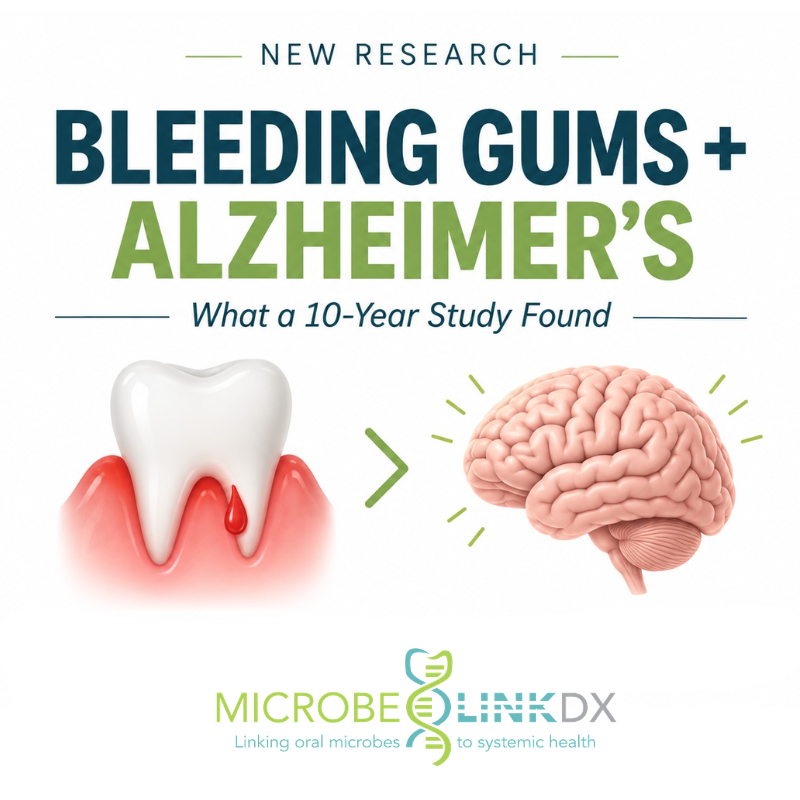
Bleeding Gums & Alzheimer’s: What a New 10-Year Study Found
Could bleeding gum tissue tell us something about more than oral health?
A new 2026 study published in the Journal of Clinical Periodontology followed 1,396 adults age 60 and older for 10 years to examine whether periodontal health was associated with the development of dementia.
The researchers evaluated three familiar periodontal measurements:
- Probing pocket depth (PPD)
- Clinical attachment level (CAL)
- Bleeding on probing (BOP)
During the 10-year follow-up, 267 participants developed dementia, including 194 cases of Alzheimer’s disease and 51 cases of vascular dementia.
🧠 What Did Researchers Find?
Compared with participants in the lowest groups, those in the highest quartiles at baseline had:
72% higher relative risk associated with deeper probing depths
59% higher relative risk associated with greater clinical attachment loss
56% higher relative risk associated with greater bleeding on probing
Most interestingly, increasing levels of bleeding on probing were also significantly associated with Alzheimer’s disease risk.
These are relative comparisons between groups — they do not mean that a patient with bleeding gum tissue has a 56% chance of developing dementia.
🦷 Why Does Bleeding Matter?
Bleeding on probing is something dental professionals see every day, but it shouldn’t be dismissed as simply “normal bleeding.”
It is a clinical sign of inflammation.
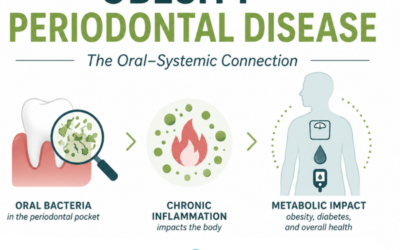
Periodontal disease is a chronic inflammatory condition involving a complex interaction between the host immune response and the microbial community below the gumline.
Research continues to investigate how chronic periodontal inflammation and periodontal pathogens may connect with systemic health.
This study doesn’t prove that periodontal disease causes dementia or Alzheimer’s disease. What it does show is an important long-term association between poorer periodontal health and subsequent dementia risk in this population.
🔬 Where Does Bacterial Testing Fit?
Bleeding tells us inflammation is present.
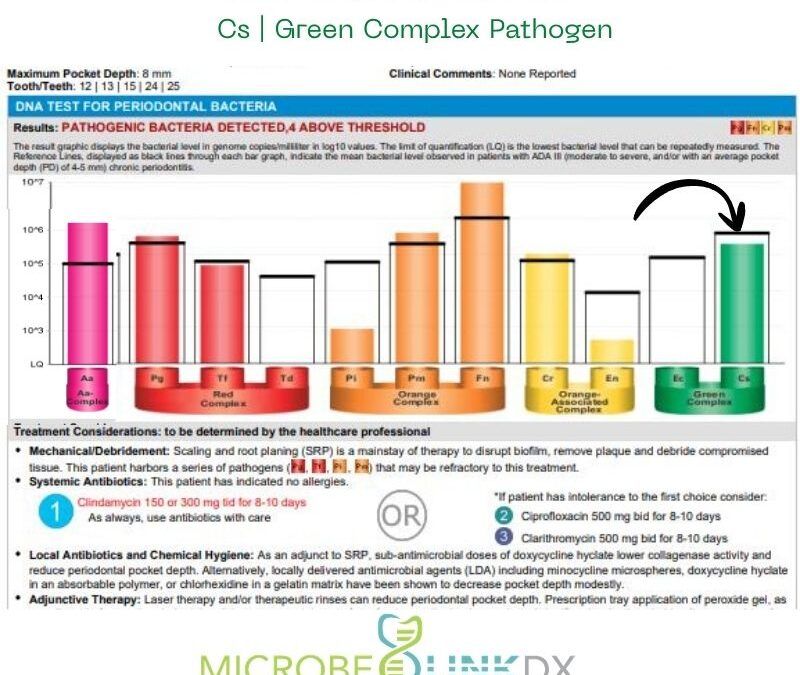
Bacterial testing can provide another piece of the clinical picture by helping identify and quantify the periodontal pathogens present.
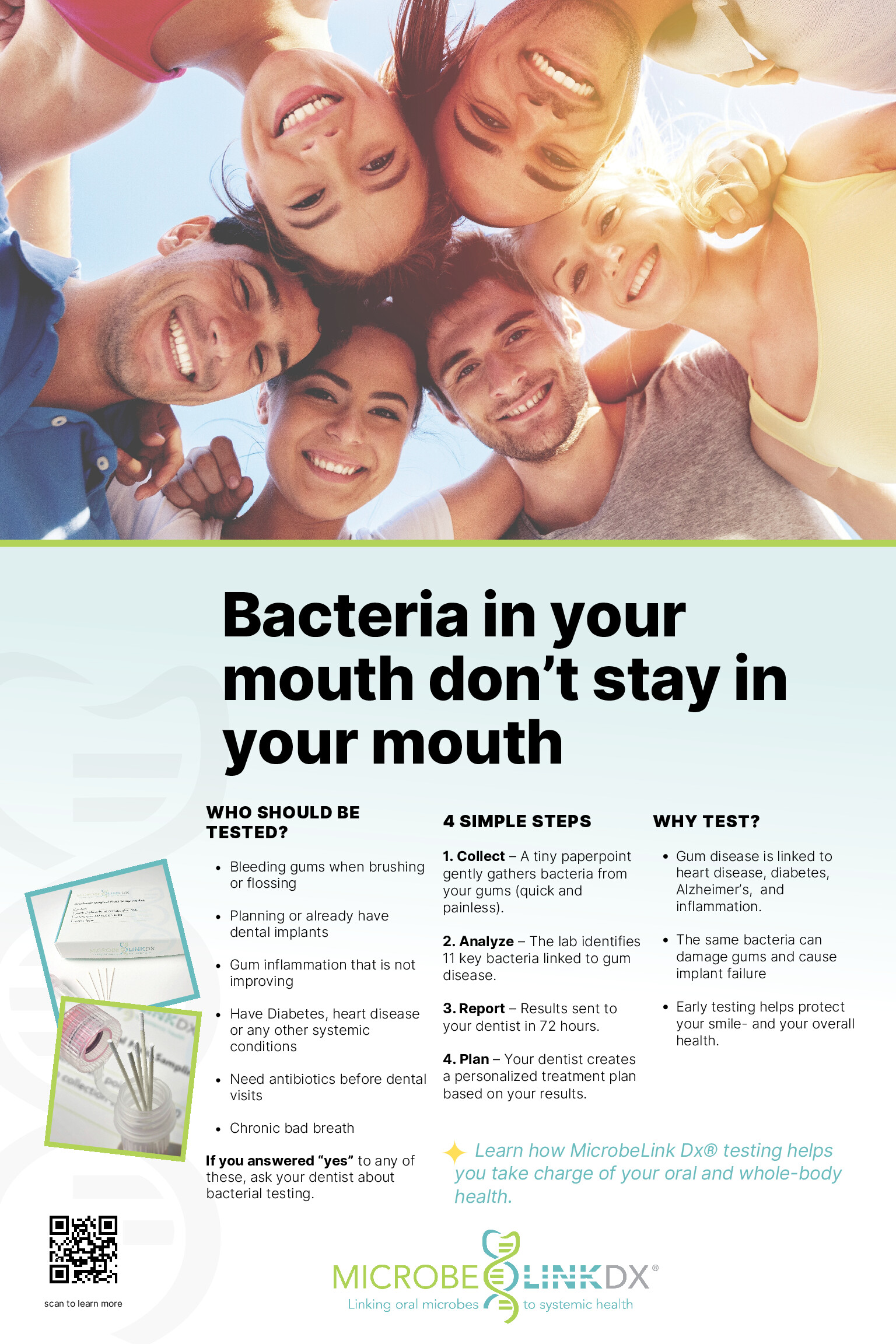
MicrobeLink Dx® uses paper points collected from periodontal pockets and qPCR to identify 11 key periodontal pathogens, providing clinicians with additional information to use alongside probing depths, bleeding, radiographs, medical history and clinical judgment.
🎥 Watch: Bleeding Gums & Alzheimer’s
In this short video, Jennifer Seider, RDH, breaks down the new research and explains why bleeding gum tissue deserves our attention.
The Takeaway
Bleeding is information.
This study adds to a growing body of research examining the relationship between periodontal health, chronic inflammation and brain health.
For dental professionals, it’s another reason to identify periodontal inflammation early, determine what’s driving the disease and help patients understand why periodontal health is about much more than their teeth.
Questions about incorporating bacterial testing into your periodontal protocol?
Contact MicrobeLink Dx® or ask about a complimentary team Zoom.