
Welcome to the Blog

Updates and News

Microbe Library Articles

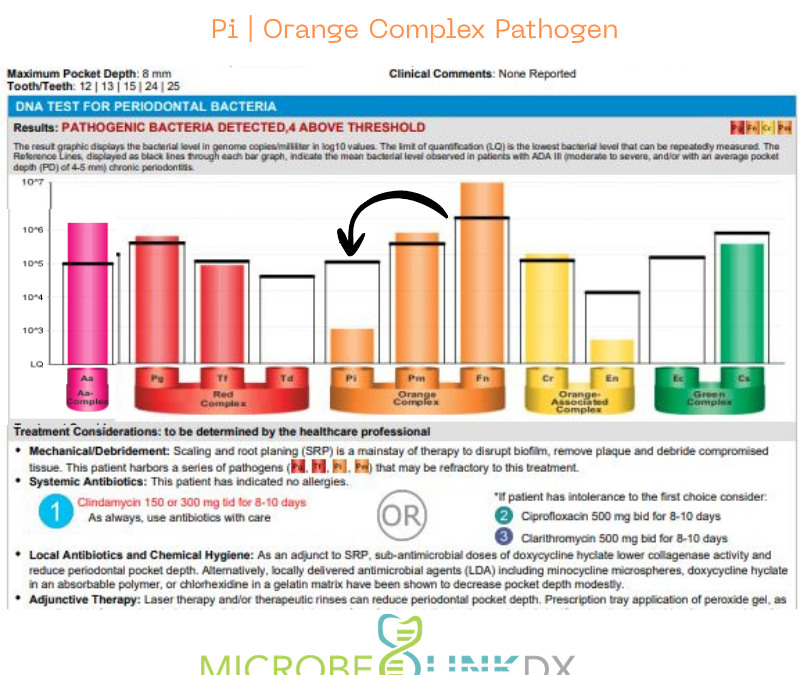
Prevotella intermedia (Pi): The Hormone-Sensitive Inflamer

Prevotella intermedia (Pi): The Hormone-Sensitive Inflamer

Meet Pi: The Hormone-Sensitive Inflamer 🔥

Anaerobic Inflammatory Pathogen | Orange Complex

Prevotella intermedia — or Pi — is strongly associated with inflammation, swollen tissues, and bleeding gums.

But here’s what makes Pi particularly interesting: its levels may increase during hormonal changes, including pregnancy.

Pi is commonly found in inflamed periodontal tissues and can contribute to continued irritation and inflammation around both teeth and dental implants.

Quick way to remember Pi:

🟠 Orange Complex
🔥 The Hormone-Sensitive Inflamer
🩸 Think bleeding + inflammation
🤰 Levels may increase during hormonal changes and pregnancy
🦷 May contribute to inflammation around teeth and implants

Seeing Pi on a MicrobeLinkDx® Report?

The amount detected, other bacteria present, and the patient’s clinical findings all matter when interpreting the microbial picture.

Interpreting My Results →

Pi Research & Updates

We’ll continue adding new research, oral-systemic findings, clinical information, and resources related to Pi as they become available.
Treponema denticola (Td): The Deep Diver

Treponema denticola (Td): The Deep Diver

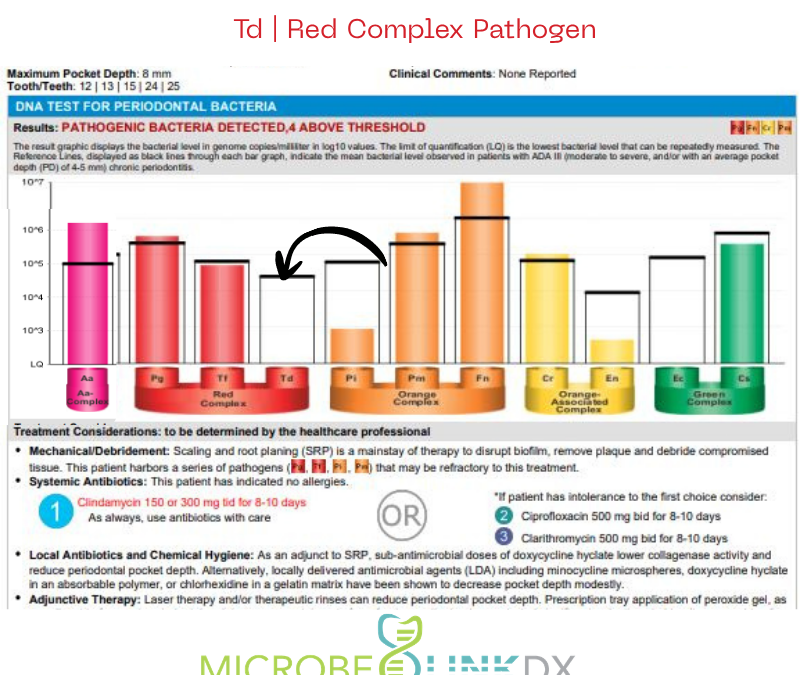
Meet Td: The Deep Diver 🦠

Tissue-Invasive Spirochete | Red Complex

Treponema denticola — or Td — is a highly mobile, tissue-invasive bacterium.

Think of Td as “The Deep Diver.” It can move into gum tissue and is associated with bleeding, deep periodontal pockets, and rapid disease progression.

Td is also often seen when periodontal disease isn’t improving as expected with routine treatment and is commonly found in peri-implant infections.

Quick way to remember Td:

🔴 Red Complex
🏊 The Deep Diver
🦠 Tissue-invasive spirochete
📍 Think deep pockets + bleeding
📈 Associated with rapid disease progression
🔄 May be seen in disease that isn’t responding as expected
🦷 Commonly found in peri-implant infections

Seeing Td on a MicrobeLinkDx® Report?

The level of Td, other bacteria present, and the patient’s clinical findings all help provide context when interpreting the result.

Interpreting My Results →

Td Research & Updates

We’ll continue adding new research, oral-systemic findings, clinical information, and resources related to Td as they become available.

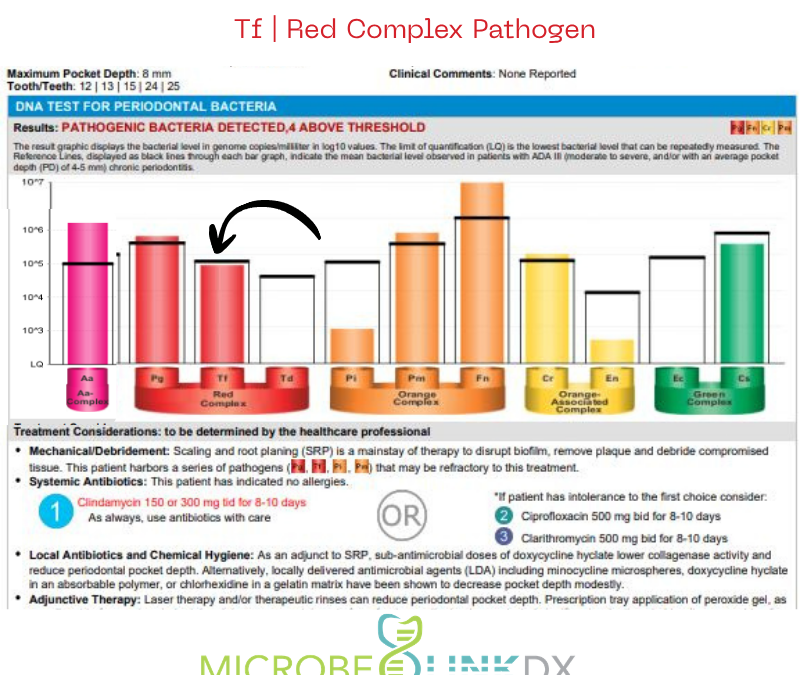
Tannerella forsythia (Tf): The Deep-Pocket Partner

Tannerella forsythia (Tf): The Deep-Pocket Partner

Meet Tf: The Deep-Pocket Partner 🦠

Red Complex Pathogen

Tannerella forsythia — or simply Tf — likes company.

Tf is commonly found in deeper periodontal pockets and often appears alongside other harmful bacteria. When present at higher levels, Tf is associated with more advanced gum inflammation and tissue breakdown.

Tf is also frequently detected in peri-implant disease, where inflammation is present around dental implants.

Quick way to remember Tf:

🔴 Red Complex
🦠 The Deep-Pocket Partner
📍 Think deeper periodontal pockets
👥 Often found with other harmful bacteria
📈 Higher levels = more advanced inflammation & tissue breakdown
🦷 Also associated with peri-implant disease

Seeing Tf on a MicrobeLinkDx® Report?

Tf is only one piece of the patient’s overall microbial picture. The bacterial level, other pathogens present, and clinical findings all help provide context.

Interpreting My Results →

Tf Research & Updates

We’ll continue adding new research, oral-systemic findings, clinical information, and resources related to Tf as they become available.

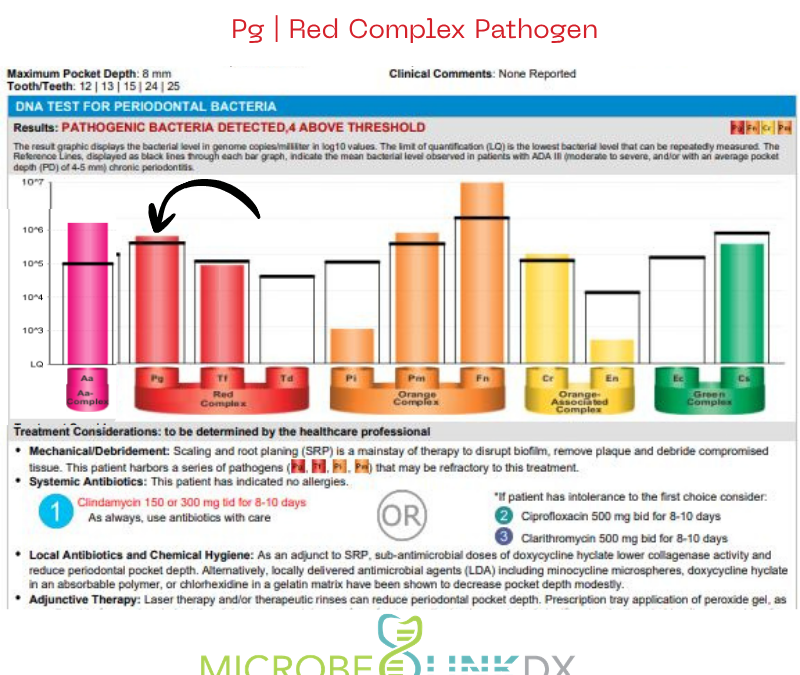
Porphyromonas gingivalis (Pg): The Arsonist

Porphyromonas gingivalis (Pg): The Arsonist

Meet Pg: The Arsonist 🔥

Keystone Pathogen | Red Complex

Porphyromonas gingivalis is a mouthful, so we’ll call it Pg.

Think of Pg as “The Arsonist.” 🔥

Pg is one of the best-known bacteria associated with periodontal disease and bone loss. What makes this bug especially interesting is its ability to disrupt the body’s immune response, helping inflammation continue and making the infection harder to control.

Pg is often found in more advanced periodontal disease and may also be found around dental implants when inflammation is present.

Quick way to remember Pg:

🔴 Red Complex
🔥 The Arsonist
🦠 Keystone pathogen
🦷 Think advanced periodontal disease + bone loss
🌡️ Think persistent inflammation

Seeing Pg on a MicrobeLinkDx® Report?

The bacterial level and the entire microbial profile matter—not simply whether Pg is present.

Interpreting My Results →

Pg Research & Updates

We’ll continue adding new research, oral-systemic findings, clinical information, and resources related to Pg

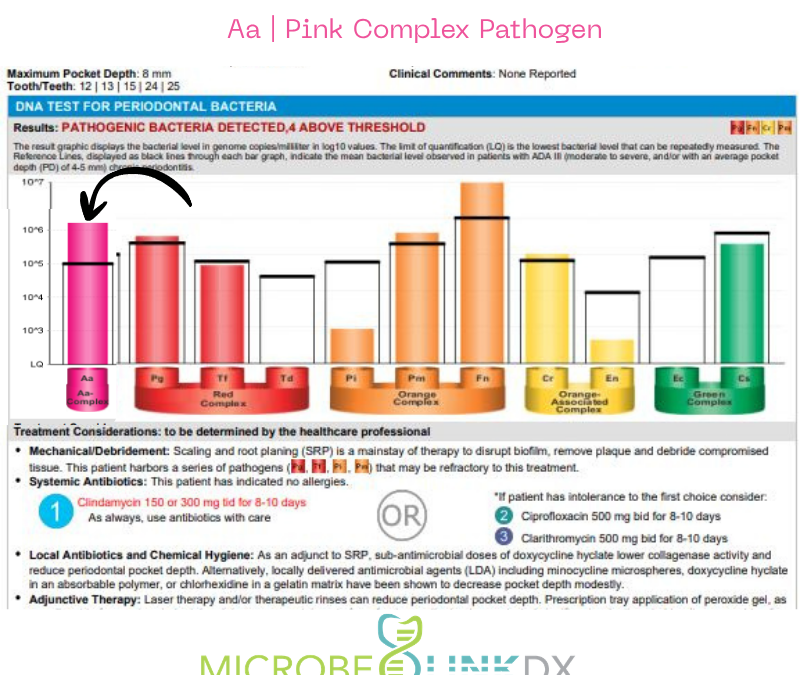
Aggregatibacter actinomycetemcomitans (Aa): The Wrecking Ball

Aggregatibacter actinomycetemcomitans (Aa): The Wrecking Ball

Meet Aa: The Wrecking Ball 🩷

Aggressive Disease Pathogen

Aggregatibacter actinomycetemcomitans is quite a name—so we’ll just call it Aa.

Think of Aa as “The Wrecking Ball.” This is a bacterium that gets our attention because it’s associated with more aggressive forms of periodontal disease and can contribute to rapid bone loss around teeth.

Aa produces toxins that can damage immune cells, making it easier for the infection to progress. And here’s something important to remember: Aa may be clinically significant even when it’s detected at lower levels. It’s also sometimes seen in younger patients with periodontal concerns.

Quick way to remember Aa:
🩷 Pink Complex
💥 The Wrecking Ball
🦷 Think aggressive disease + rapid bone loss
⚠️ Don’t automatically dismiss it just because the level is lower.

Seeing Aa on a MicrobeLinkDx report?

Your bacterial results are just one part of the clinical picture. Head over to Interpreting My Results for help understanding bacterial levels, complexes, and the rest of your report.

Interpreting My Results →

Aa Research & Updates

We’ll continue adding new research, clinical information, and resources about Aa