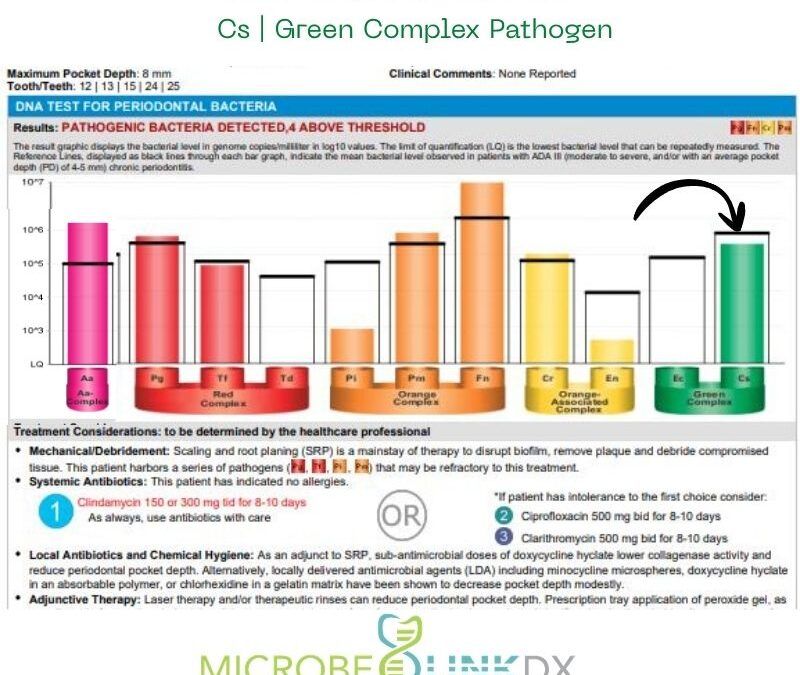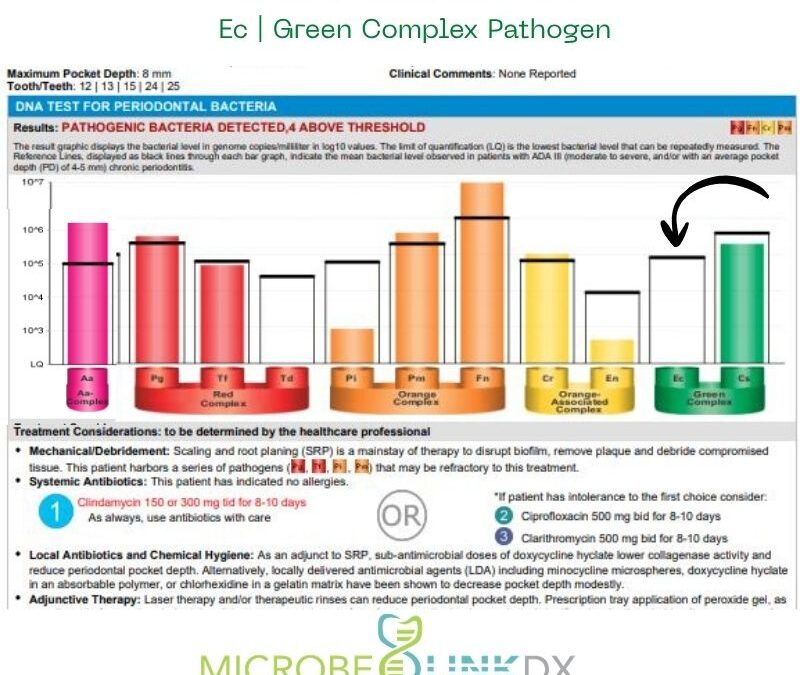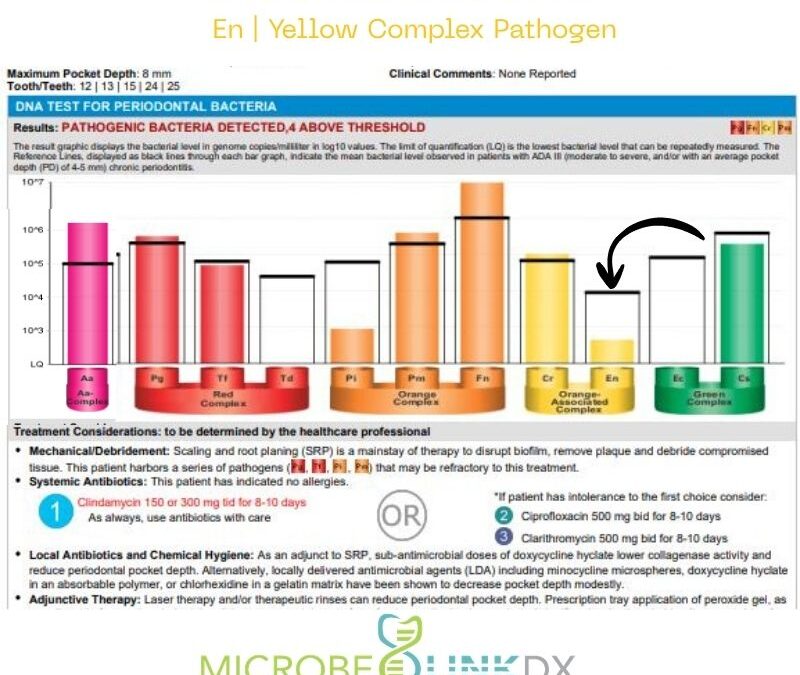


Implant Failure & Bacterial Testing: What the Latest Research Shows
Dental implants can fail for many reasons — but one of the most overlooked is bacterial imbalance.
New research shows that the same microbes driving gum disease can also cause implant failure, making bacterial testing a key step in prevention.
🧫 The Top 5 Pathogens Linked to Failing Implants
Recent studies have identified five key pathogens that show up again and again in peri-implant infections:
Porphyromonas gingivalis (Pg), Tannerella forsythia (Tf), Prevotella intermedia (Pi), Treponema denticola (Td), and Fusobacterium nucleatum (Fn). These bacteria don’t just live on the surface — they invade tissue, disrupt healing, and trigger inflammation that can lead to bone loss and implant mobility. If your patient tests positive for one or more of these microbes, it’s important to treat aggressively and early to protect both the implant and surrounding structures.
📚 What the Research Says
Here’s a look at three recent studies confirming the strong link between peri-implantitis and these bacteria:
1️⃣ Meta-Analysis: Key Pathogens in Peri-Implantitis (2022)
Archilla & Palma-Casiano, Journal of Inflammatory Diseases
Read the full study →
This review found peri-implantitis sites were 2–3× more likely to contain Pg, Tf, Pi, Td, and Fn compared to healthy implants.
💡 The same pathogens our MicrobeLink Dx® test identifies.
3️⃣ Longitudinal Study: Microbiome Shifts in Peri-Implantitis (2025)
Anuntakarun et al., Journal of Dentistry
Read the full study →
This six-month study tracked implants before and after treatment. Sites with peri-implantitis showed high levels of Prevotella, Fusobacterium, Pg, Tf, and Td that decreased once therapy began — proving that controlling these pathogens supports healing.
💡 When the bacteria improve, so does the outcome.
💚 How to Sample for Implant Testing
When testing around implants or before placement:
1️⃣ Use our provided paper points for testing
2️⃣ Place them in the deepest pockets, or around the implant in question.
3️⃣ For surgical planning, sample the area where the implant will be placed.
4️⃣ Send the paper points back to the lab using our free UPS 2-Day Air shipping — results are ready in about 72 hours after lab receipt.
✨ Why MicrobeLink Dx®
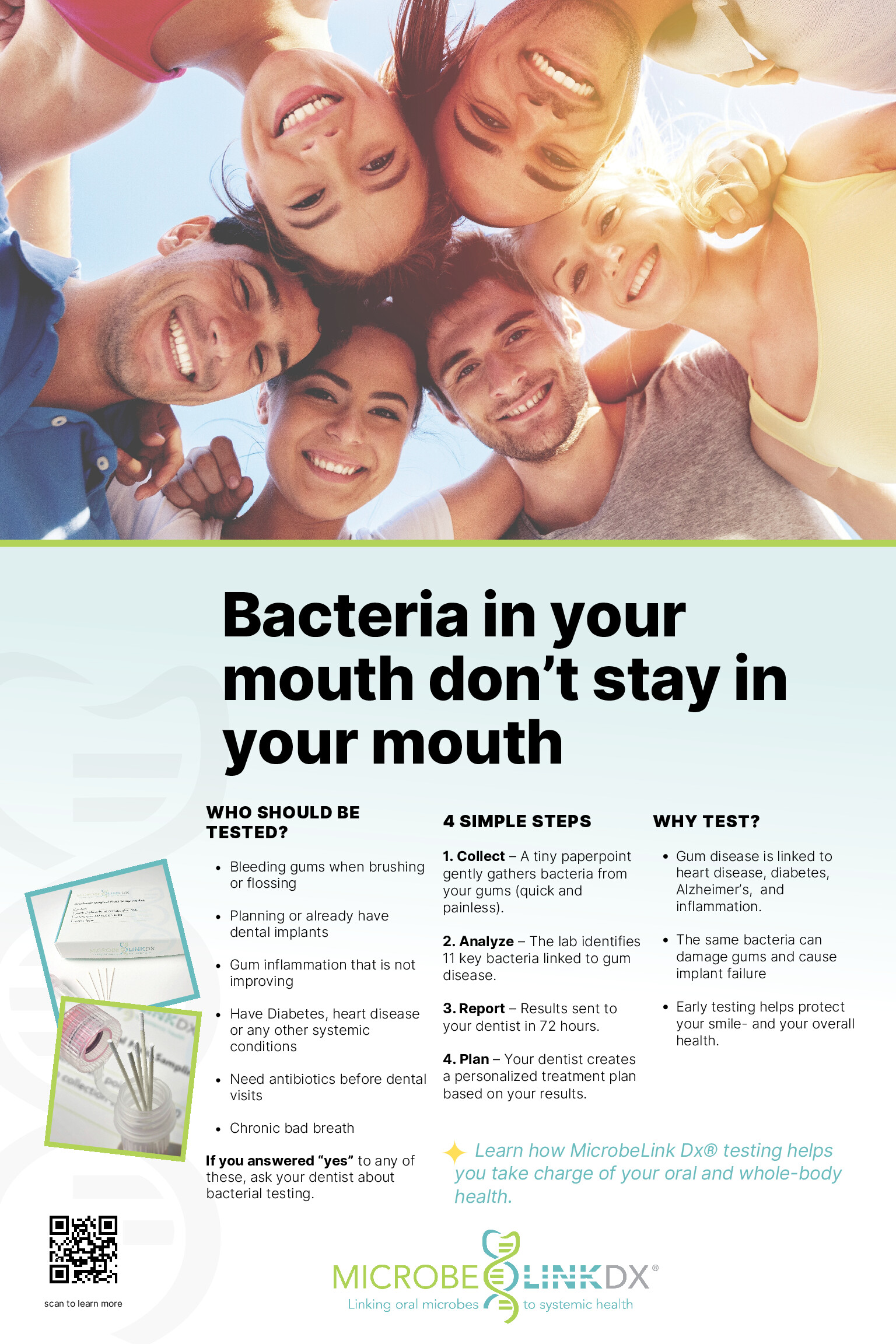
MicrobeLink Dx® identifies 11 key bacteria linked to periodontal and peri-implant disease.
We provide:
- Free kits and prepaid shipping
-
Fast turnaround
-
A color-coded, easy-to-read report
-
And personalized customer support — our team walks you through every step
Because the science is powerful — but our support makes it personal. 💚
🔗 Download & Share
📎 Download the “Bacteria Behind Failing Implants” Flyer (PDF)
Use it in your practice, add it to patient education materials, or share it with your implant team.
🧬 MicrobeLink Dx® — The Science Behind the Smile
Learn more at www.microbelinkdx.com