
Oral Bacteria Linked to Alzheimer’s Disease: Understanding the Role of Porphyromonas gingivalis

Nov 3, 2025 | Oral-Systemic info, Research & Publications

🧠 Oral Bacteria Linked to Alzheimer’s Disease

The Mouth–Brain Connection

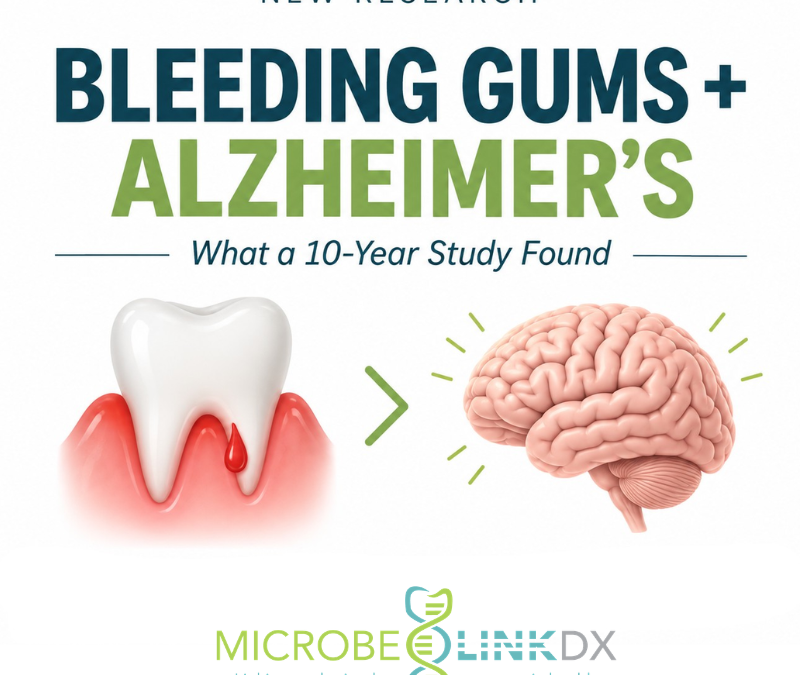
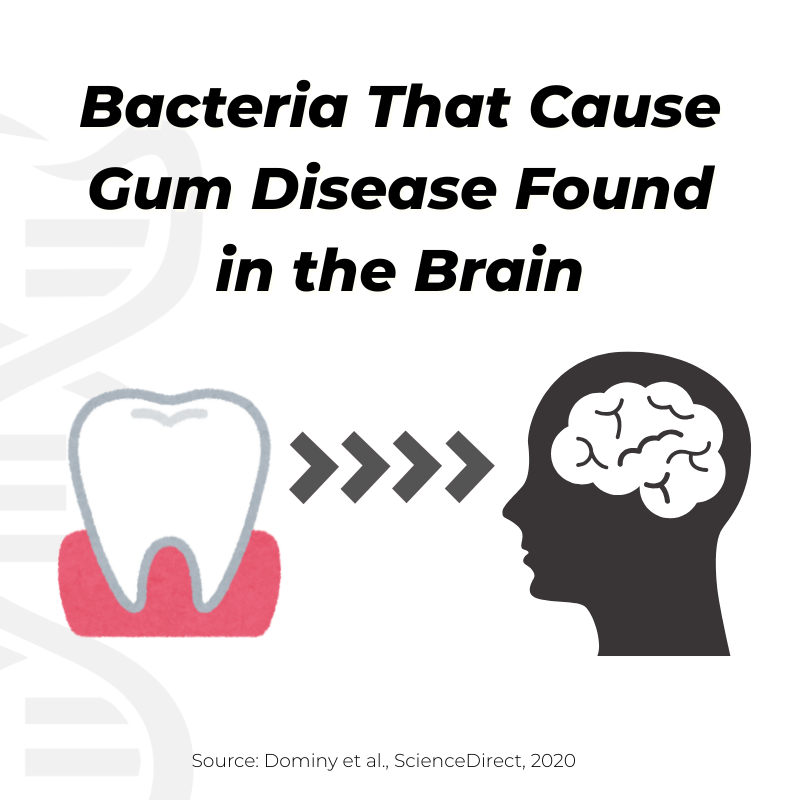
A 2020 study published in Frontiers in Cellular and Infection Microbiology found something surprising: the same bacteria that cause gum disease were discovered in the brains of people with Alzheimer’s disease.

The bacteria, called Porphyromonas gingivalis (P. gingivalis), release toxins that can damage brain cells and trigger inflammation. Over time, that inflammation may play a role in memory loss and Alzheimer’s disease.

👉 Read the full study on PubMed Central

What This Means

Gum disease isn’t just a mouth problem — it’s an infection. When harmful bacteria live under the gums, they can enter the bloodstream and travel to other parts of the body, including the brain.

Researchers believe this mouth-to-brain connection may be one reason why people with long-term gum infections have a higher risk for Alzheimer’s disease.

How to Catch These Bacteria Early

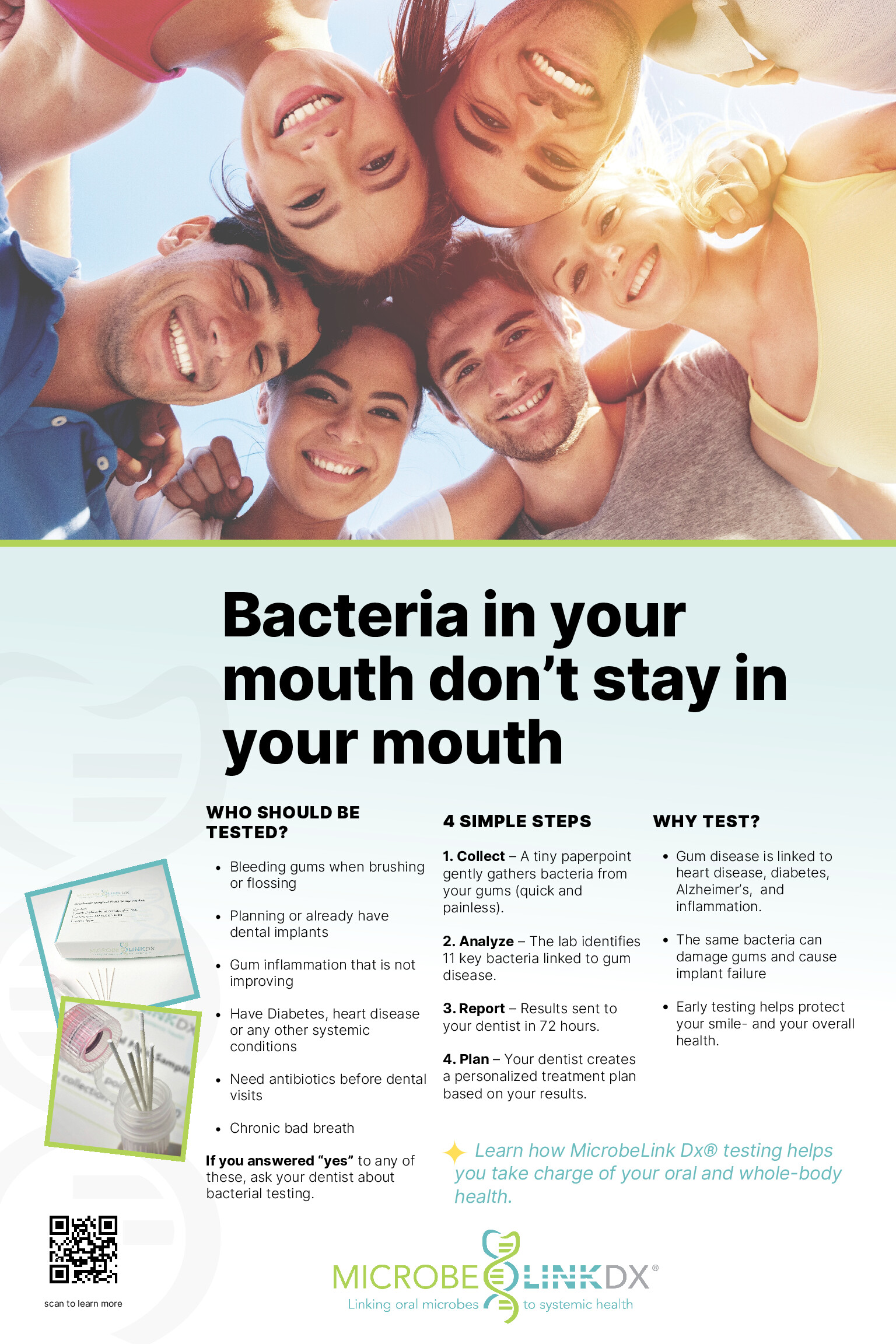
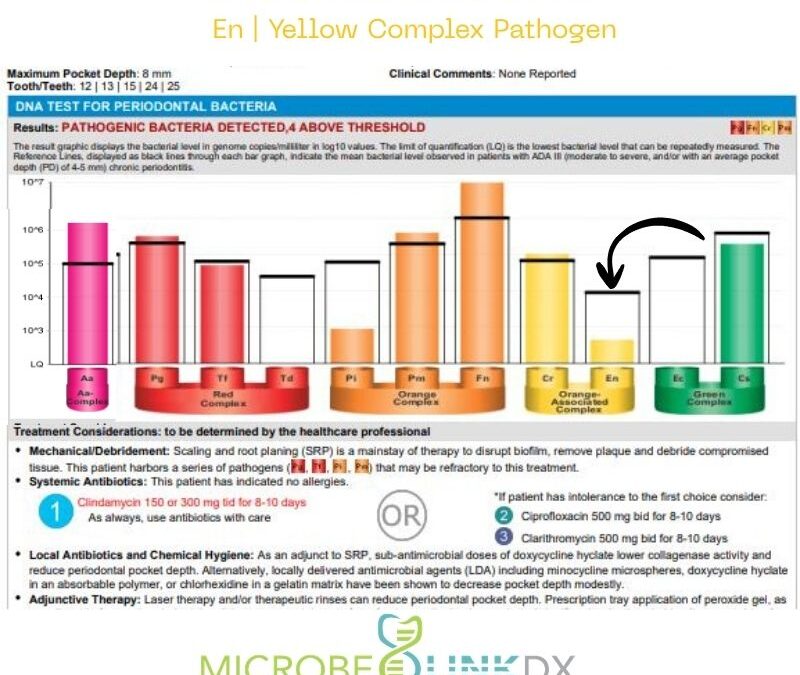
With the MicrobeLink Dx’s 11-Microbes Test, dental providers can find out if high-risk bacteria like P. gingivalis are active in your mouth.

This simple test uses paper points to collect bacteria from the base of the gums — where infection starts. Detecting the bacteria early allows for targeted treatment before they spread.

Protecting More Than Your Smile

Healthy gums don’t just help your teeth — they may also help protect your brain, heart, and overall health.

Ask your dental provider if bacterial testing is right for you, or visit www.microbelinkdx.com to learn more.
You may also like…

The Latest

Who Should Be Tested with MicrobeLink Dx®? | 11-Microbes DNA-PCR Test

Who Should Be Tested with MicrobeLink Dx®? | 11-Microbes DNA-PCR Test

🦠 Not every patient needs bacterial testing… but the right ones do.With MicrobeLink Dx®, you can identify the patients most at risk—catching infection early and preventing bigger problems down the road. Who should be tested?✔️ Patients with bleeding gums (an early...

Capnocytophaga sp. (Cs): The Immune Watcher

Capnocytophaga sp. (Cs): The Immune Watcher

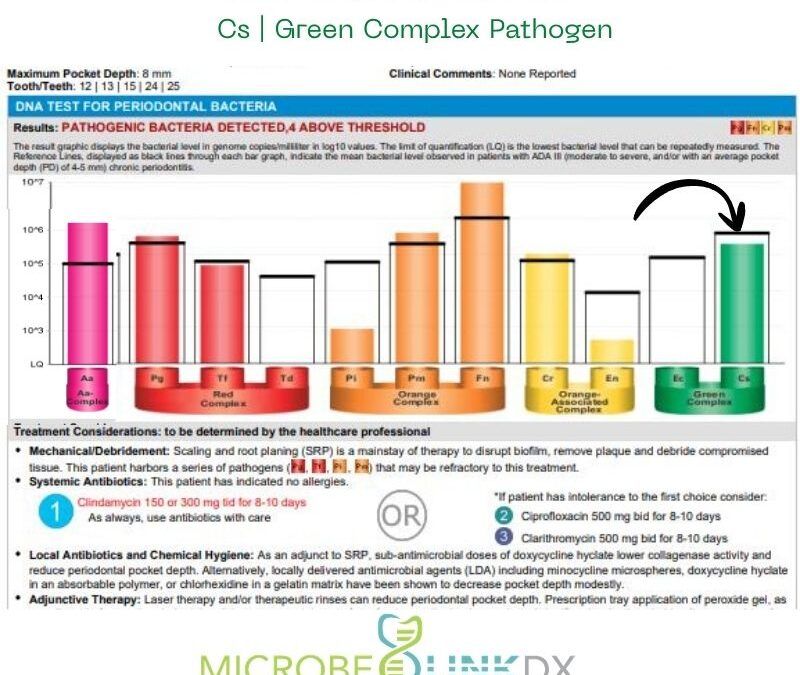
Meet Cs: The Immune Watcher 👀 Immune-Response Associated | Green Complex Capnocytophaga species — or Cs — can be present at low levels in the mouth, but the amount matters. Think of Cs as “The Immune Watcher.” Cs is associated with gum inflammation and may become more...

Eikenella corrodens (Ec): The Opportunist

Eikenella corrodens (Ec): The Opportunist

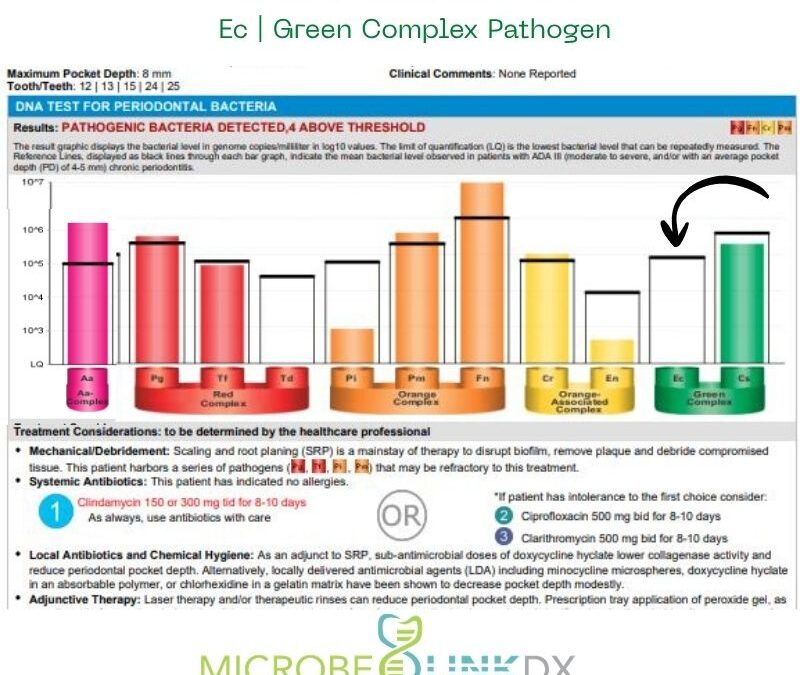
Meet Ec: The Opportunist 🦠 Opportunistic Pathogen | Green Complex Eikenella corrodens — or Ec — is a little different from some of the other bugs we've met. Think of Ec as “The Opportunist.” Ec is usually found alongside other bacteria and may become more significant...

Eubacterium nodatum (En): The Long-Hauler

Eubacterium nodatum (En): The Long-Hauler

Meet En: The Long-Hauler 🦠 Immune-Response Associated Pathogen | Yellow Complex Eubacterium nodatum — or simply En — is typically found in more advanced periodontal disease and often shows up alongside other high-risk bacteria. Think of En as “The Long-Hauler.” When...

Campylobacter rectus (Cr): The Persistent Mover

Campylobacter rectus (Cr): The Persistent Mover

Meet Cr: The Persistent Mover 🏃 Motile Periodontal Pathogen | Yellow Complex Campylobacter rectus — or Cr — is a motile periodontal pathogen associated with ongoing inflammation and disease progression. Think of Cr as “The Persistent Mover.” It's more commonly...