
Welcome to the Blog

Updates and News

gum disease Articles

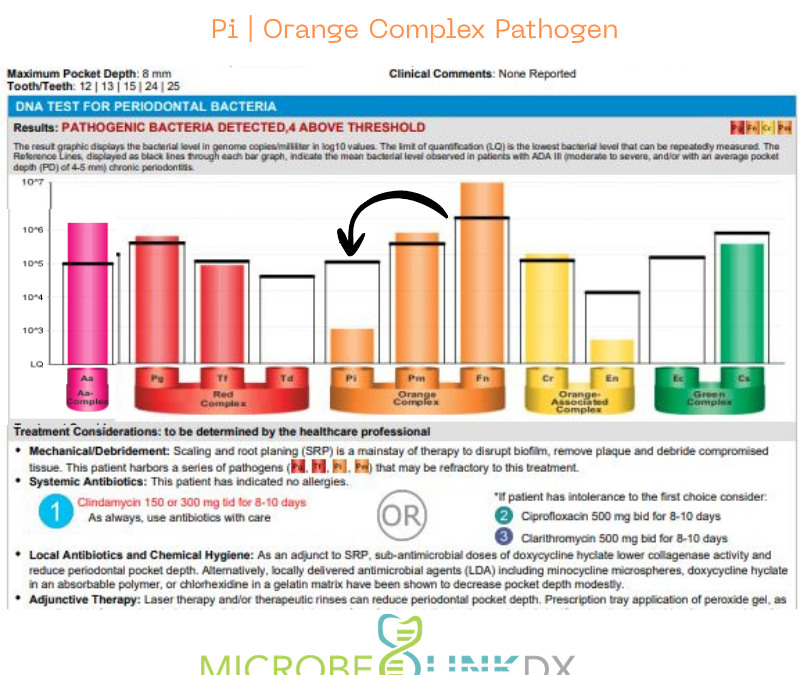
Prevotella intermedia (Pi): The Hormone-Sensitive Inflamer

Prevotella intermedia (Pi): The Hormone-Sensitive Inflamer

Meet Pi: The Hormone-Sensitive Inflamer 🔥

Anaerobic Inflammatory Pathogen | Orange Complex

Prevotella intermedia — or Pi — is strongly associated with inflammation, swollen tissues, and bleeding gums.

But here’s what makes Pi particularly interesting: its levels may increase during hormonal changes, including pregnancy.

Pi is commonly found in inflamed periodontal tissues and can contribute to continued irritation and inflammation around both teeth and dental implants.

Quick way to remember Pi:

🟠 Orange Complex
🔥 The Hormone-Sensitive Inflamer
🩸 Think bleeding + inflammation
🤰 Levels may increase during hormonal changes and pregnancy
🦷 May contribute to inflammation around teeth and implants

Seeing Pi on a MicrobeLinkDx® Report?

The amount detected, other bacteria present, and the patient’s clinical findings all matter when interpreting the microbial picture.

Interpreting My Results →

Pi Research & Updates

We’ll continue adding new research, oral-systemic findings, clinical information, and resources related to Pi as they become available.

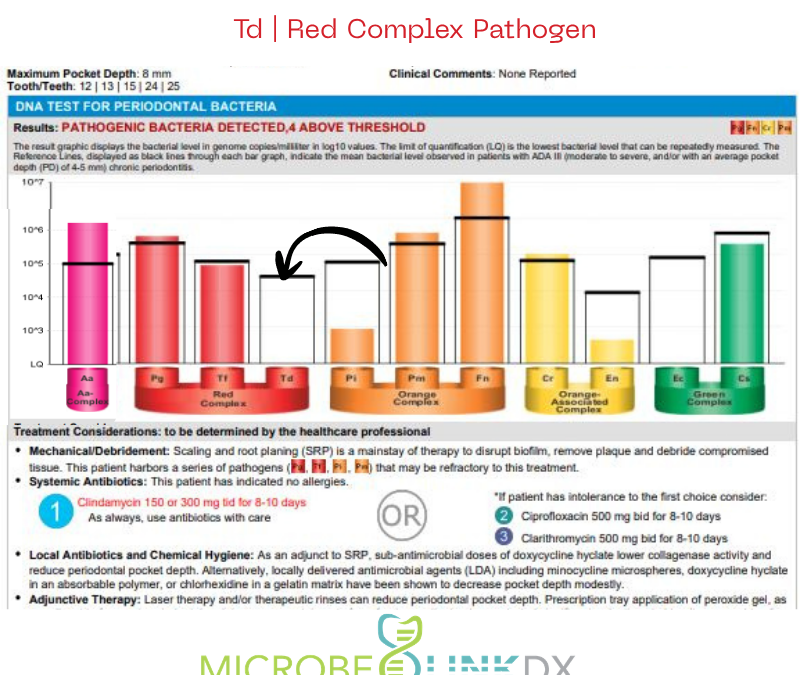
Treponema denticola (Td): The Deep Diver

Treponema denticola (Td): The Deep Diver

Meet Td: The Deep Diver 🦠

Tissue-Invasive Spirochete | Red Complex

Treponema denticola — or Td — is a highly mobile, tissue-invasive bacterium.

Think of Td as “The Deep Diver.” It can move into gum tissue and is associated with bleeding, deep periodontal pockets, and rapid disease progression.

Td is also often seen when periodontal disease isn’t improving as expected with routine treatment and is commonly found in peri-implant infections.

Quick way to remember Td:

🔴 Red Complex
🏊 The Deep Diver
🦠 Tissue-invasive spirochete
📍 Think deep pockets + bleeding
📈 Associated with rapid disease progression
🔄 May be seen in disease that isn’t responding as expected
🦷 Commonly found in peri-implant infections

Seeing Td on a MicrobeLinkDx® Report?

The level of Td, other bacteria present, and the patient’s clinical findings all help provide context when interpreting the result.

Interpreting My Results →

Td Research & Updates

We’ll continue adding new research, oral-systemic findings, clinical information, and resources related to Td as they become available.

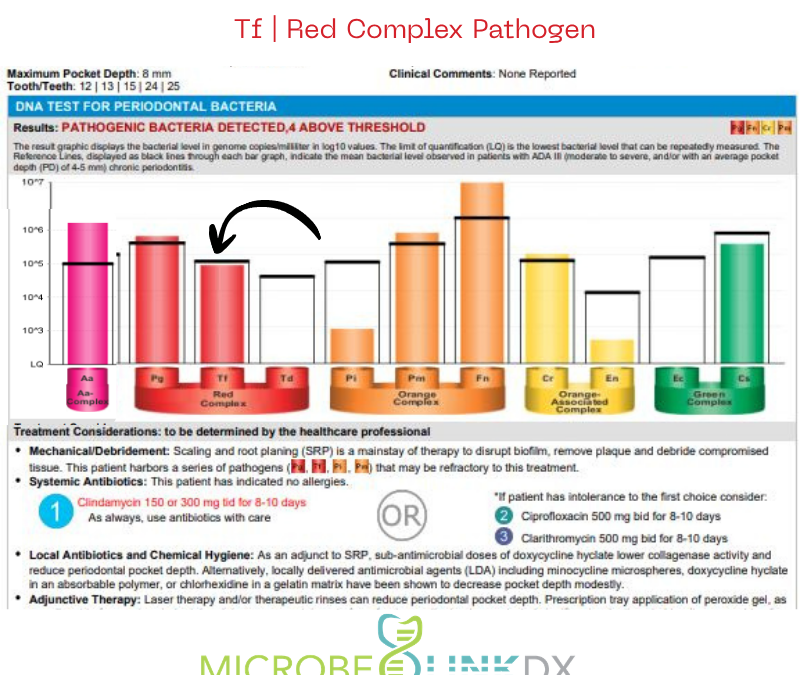
Tannerella forsythia (Tf): The Deep-Pocket Partner

Tannerella forsythia (Tf): The Deep-Pocket Partner

Meet Tf: The Deep-Pocket Partner 🦠

Red Complex Pathogen

Tannerella forsythia — or simply Tf — likes company.

Tf is commonly found in deeper periodontal pockets and often appears alongside other harmful bacteria. When present at higher levels, Tf is associated with more advanced gum inflammation and tissue breakdown.

Tf is also frequently detected in peri-implant disease, where inflammation is present around dental implants.

Quick way to remember Tf:

🔴 Red Complex
🦠 The Deep-Pocket Partner
📍 Think deeper periodontal pockets
👥 Often found with other harmful bacteria
📈 Higher levels = more advanced inflammation & tissue breakdown
🦷 Also associated with peri-implant disease

Seeing Tf on a MicrobeLinkDx® Report?

Tf is only one piece of the patient’s overall microbial picture. The bacterial level, other pathogens present, and clinical findings all help provide context.

Interpreting My Results →

Tf Research & Updates

We’ll continue adding new research, oral-systemic findings, clinical information, and resources related to Tf as they become available.

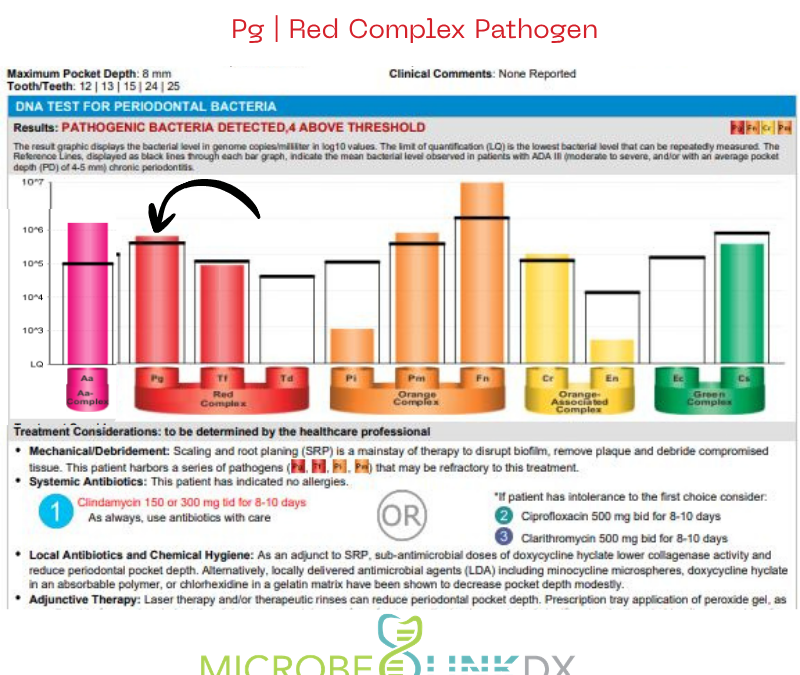
Porphyromonas gingivalis (Pg): The Arsonist

Porphyromonas gingivalis (Pg): The Arsonist

Meet Pg: The Arsonist 🔥

Keystone Pathogen | Red Complex

Porphyromonas gingivalis is a mouthful, so we’ll call it Pg.

Think of Pg as “The Arsonist.” 🔥

Pg is one of the best-known bacteria associated with periodontal disease and bone loss. What makes this bug especially interesting is its ability to disrupt the body’s immune response, helping inflammation continue and making the infection harder to control.

Pg is often found in more advanced periodontal disease and may also be found around dental implants when inflammation is present.

Quick way to remember Pg:

🔴 Red Complex
🔥 The Arsonist
🦠 Keystone pathogen
🦷 Think advanced periodontal disease + bone loss
🌡️ Think persistent inflammation

Seeing Pg on a MicrobeLinkDx® Report?

The bacterial level and the entire microbial profile matter—not simply whether Pg is present.

Interpreting My Results →

Pg Research & Updates

We’ll continue adding new research, oral-systemic findings, clinical information, and resources related to Pg

Aggregatibacter actinomycetemcomitans (Aa): The Wrecking Ball

Aggregatibacter actinomycetemcomitans (Aa): The Wrecking Ball

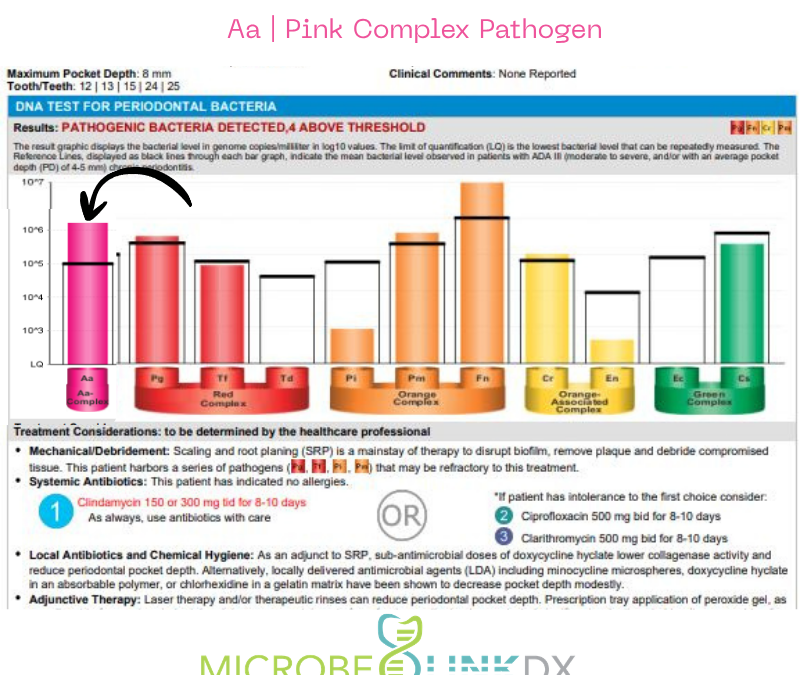
Meet Aa: The Wrecking Ball 🩷

Aggressive Disease Pathogen

Aggregatibacter actinomycetemcomitans is quite a name—so we’ll just call it Aa.

Think of Aa as “The Wrecking Ball.” This is a bacterium that gets our attention because it’s associated with more aggressive forms of periodontal disease and can contribute to rapid bone loss around teeth.

Aa produces toxins that can damage immune cells, making it easier for the infection to progress. And here’s something important to remember: Aa may be clinically significant even when it’s detected at lower levels. It’s also sometimes seen in younger patients with periodontal concerns.

Quick way to remember Aa:
🩷 Pink Complex
💥 The Wrecking Ball
🦷 Think aggressive disease + rapid bone loss
⚠️ Don’t automatically dismiss it just because the level is lower.

Seeing Aa on a MicrobeLinkDx report?

Your bacterial results are just one part of the clinical picture. Head over to Interpreting My Results for help understanding bacterial levels, complexes, and the rest of your report.

Interpreting My Results →

Aa Research & Updates

We’ll continue adding new research, clinical information, and resources about Aa

Obesity and Your Perio Patients: Three Studies Worth Knowing About

Obesity and Your Perio Patients: Three Studies Worth Knowing About

Obesity and periodontal disease may be more closely connected than many patients realize.

Recent research is continuing to uncover relationships among periodontal bacteria, chronic inflammation, obesity, metabolic health and even GLP-1 pathways.

For dental professionals, these findings add another layer to the oral-systemic conversation — and another reason to pay attention to periodontal infection in patients with metabolic risk.

Here are three recent studies worth knowing about.

🦠 Study 1: Periodontal Bacteria, Obesity & Systemic Inflammation

A 2026 study published in The FASEB Journal evaluated patients with severe obesity with and without periodontitis.

Researchers found that patients with periodontitis had oral microbiota dysbiosis, including higher levels of red- and orange-complex periodontal bacteria. Periodontitis was also associated with changes in gut microbiota, inflammatory markers, lipid profiles and inflammation and oxidative stress within visceral adipose tissue.

What caught our attention at MicrobeLink Dx®

Researchers collected periodontal pocket fluid and used qPCR to evaluate periodontal bacteria.

Nine of the pathogens evaluated —

Aa • Pg • Tf • Td • Pi • Fn • Pm • Cr • Ec

— are also included in the MicrobeLink Dx® 11-Microbes™ panel.

That’s especially interesting because the researchers went directly to the periodontal environment to evaluate the bacterial component of disease.

The takeaway: Periodontal infection in patients with obesity may be part of a much larger inflammatory and metabolic picture.

Read the FASEB Journal study

⚖️ Study 2: Obesity Associated With 31% Higher Odds of Periodontitis

Here’s a number worth remembering.

A 2026 systematic review and meta-analysis in Obesity Reviews included 19 studies and more than 41,000 patients.

Researchers found that individuals with obesity had 31% higher odds of periodontitis (OR 1.31; 95% CI 1.22–1.41).

The researchers discussed systemic inflammation — including inflammatory mediators such as IL-6 and TNF — as one potential contributor to the relationship. They also emphasized the need for additional longitudinal and interventional research to better understand causality.

The takeaway: Obesity deserves consideration when we’re looking at a patient’s overall periodontal risk and inflammatory burden.

Read the Obesity Reviews study

💉 Study 3: Periodontitis & GLP-1 — An Emerging Connection to Watch

This one is especially timely.

A 2025 scoping review from researchers at Tufts University examined 52 studies looking at the relationship between periodontal disease and GLP-1 pathways.

The researchers found several potential connections involving inflammation, glucose regulation and periodontal health. Of particular interest, periodontal bacteria including Porphyromonas gingivalis may produce DPP-4-like enzymes capable of degrading GLP-1 and potentially affecting glucose regulation.

The review also found that certain GLP-1 receptor agonists demonstrated anti-inflammatory, bone-protective and regenerative effects in preclinical periodontal research.

This does not mean periodontal disease has been shown to interfere with medications such as Ozempic or Wegovy. Instead, it identifies an emerging biological connection between periodontal disease, GLP-1 signaling, obesity and diabetes that deserves further research.

The takeaway: As GLP-1 medications become increasingly common, the relationship between metabolic health and periodontal inflammation is an important area to watch.

Read the Frontiers GLP-1 review

🔬 What Does This Mean at the Chair?

Taken together, these studies reinforce something dental professionals are seeing more and more:

Periodontal health and systemic health don’t exist in separate silos.

Obesity, metabolic health, inflammation and periodontal disease appear to intersect through multiple pathways — including the microbiome and host inflammatory response.

For practices using bacterial testing, identifying and quantifying periodontal pathogens can provide another piece of information to consider alongside probing depths, bleeding, radiographs, medical history and other clinical findings.

MicrobeLink Dx® uses paper points collected from periodontal pockets and qPCR to identify 11 key periodontal pathogens. Our report identifies and quantifies those organisms to support the clinician’s overall assessment and treatment planning.

Interested in adding bacterial testing to your periodontal workflow?

We’re always happy to help — whether you’re new to testing or simply want a refresher.

Email Jennifer: jennifer@microbelinkdx.com
Or ask us about a complimentary Zoom training.

📚 References

  1. Thouvenot K, et al. Periodontitis in Patients With Severe Obesity: From the Oral and Gut Microbiota Dysregulation to the Visceral Adipose Tissue Inflammatory and Metabolic Disorders. The FASEB Journal. 2026;40(9):e71828. DOI: 10.1096/fj.202600054R.
  2. Esperouz F, et al. Is Obesity a Risk Factor for Periodontitis? A Systematic Review and Meta-Analysis. Obesity Reviews. 2026;27(2):e70020. DOI: 10.1111/obr.70020.
  3. Jeong N, Chuang L-H, Ho Y. Periodontitis and GLP-1 Pathways: A New Frontier in Oral-Systemic Health Connections—A Scoping Review. Frontiers in Clinical Diabetes and Healthcare. 2025;6:1679511. DOI: 10.3389/fcdhc.2025.1679511.