
Welcome to the Blog

Updates and News

oral bacteria Articles

Oral Dysbiosis Drives Diabetes: Understanding the Inflammatory Connection

Oral Dysbiosis Drives Diabetes: Understanding the Inflammatory Connection

Diabetes and oral health are more connected than most people realize.

New research continues to highlight how oral dysbiosis—an imbalance of bacteria in the mouth—can drive systemic inflammation and contribute to insulin resistance.

This relationship isn’t one-directional.
It’s bidirectional.

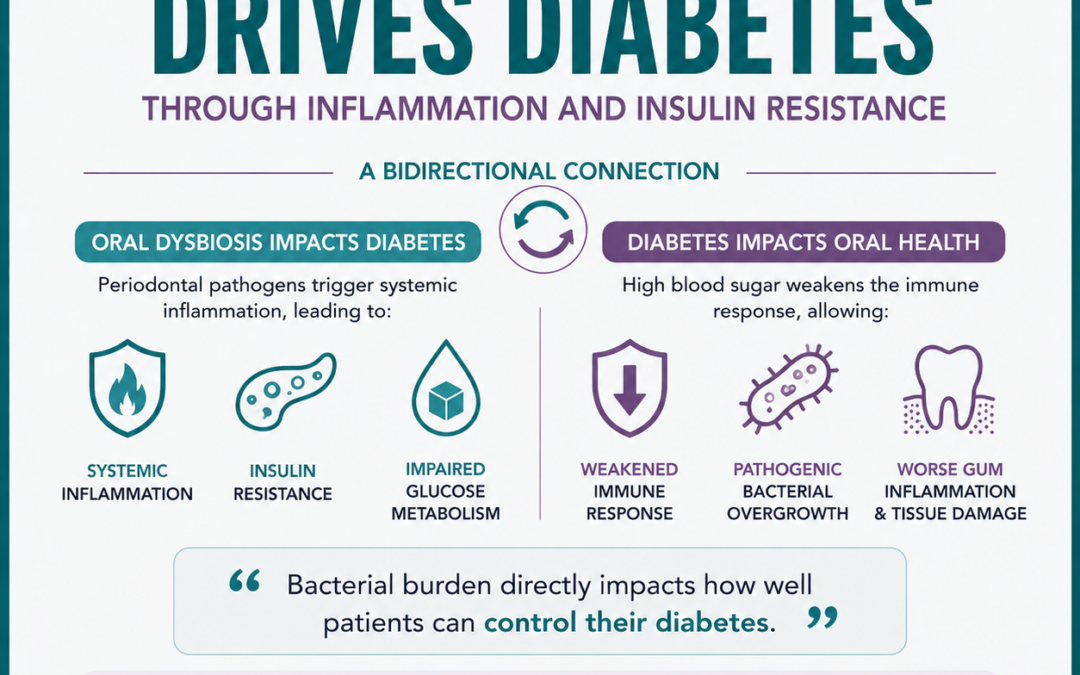
🔄 A Bidirectional Connection

🦠 Oral Dysbiosis Impacts Diabetes

Periodontal pathogens trigger systemic inflammation, leading to:

  • Increased inflammatory burden
  • Insulin resistance
  • Impaired glucose metabolism
🍬 Diabetes Impacts Oral Health

Elevated blood sugar levels weaken the immune response, allowing:

  • Pathogenic bacterial overgrowth
  • Increased inflammation
  • Tissue breakdown in the gums
🔬 Why Inflammation Is the Key

Inflammation is the bridge between oral bacteria and metabolic disease.

When harmful bacteria are present, they stimulate the release of inflammatory mediators that interfere with the body’s ability to regulate blood sugar.

👉 Bacterial burden directly impacts how well patients can control their diabetes.

🧪 Why Identifying the Bacteria Matters

Not all bacteria carry the same level of risk.

Some drive inflammation.
Some enable disease progression.
Others interfere with healing.

MicrobeLink Dx® identifies 11 key periodontal pathogens using qPCR technology from the base of the pocket—where harmful bacteria thrive.

This gives clinicians a clearer picture of infection and helps guide more targeted care.

💡 Clinical Takeaway

When oral bacteria are left unidentified, inflammation continues unchecked.

When we test, identify, and treat, we give patients a better chance at:

  • Reducing inflammation
  • Improving glycemic control
  • Supporting overall health
🔚 Conclusion:

Oral dysbiosis doesn’t just affect the gums.

It plays a measurable role in systemic health—especially in conditions like diabetes.

Understanding the bacteria is the first step toward improving outcomes.

Research continues to support a bidirectional relationship between periodontal disease and diabetes, with inflammation serving as the key link between oral infection and metabolic dysfunction.

The Oral-Systemic Link: How Gum Disease Impacts Heart Health

The Oral-Systemic Link: How Gum Disease Impacts Heart Health

Your Gums and Your Heart Are More Connected Than You Think

For years, gum disease was thought to stay in the mouth.
Today, research continues to show something very different.

Oral bacteria don’t just live in the gums—
they can enter the bloodstream and impact the cardiovascular system.

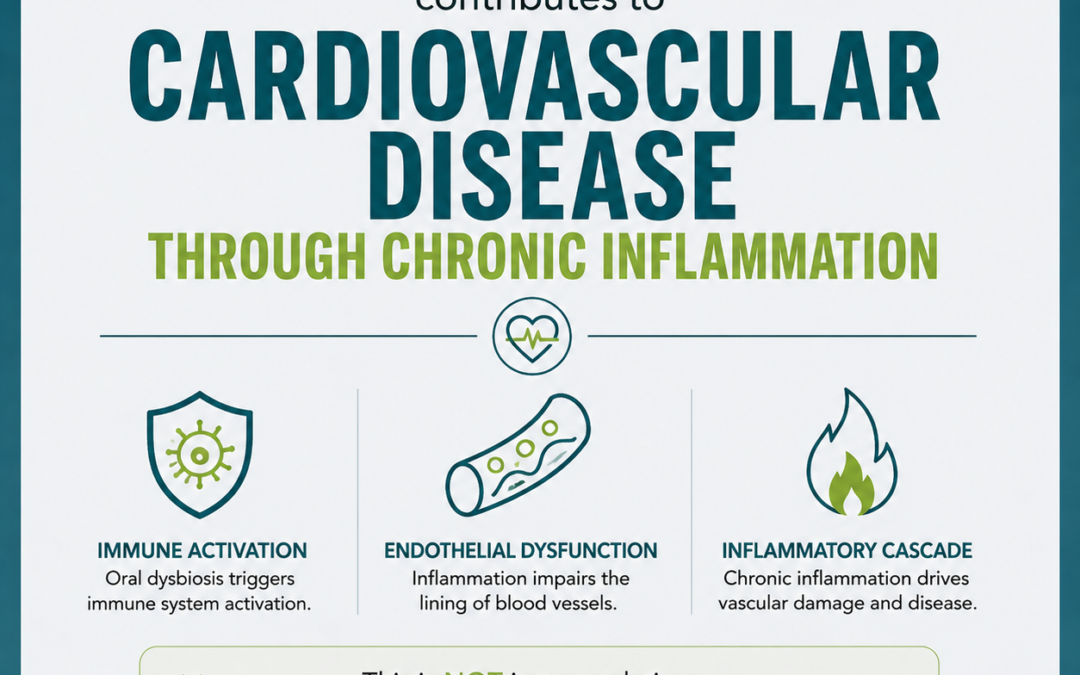
Inflamed gum tissue creates an entry point for bacteria to enter circulation.

Once in the bloodstream, periodontal pathogens can:

  • Attach to arterial walls
  • Contribute to plaque formation
  • Trigger systemic inflammation

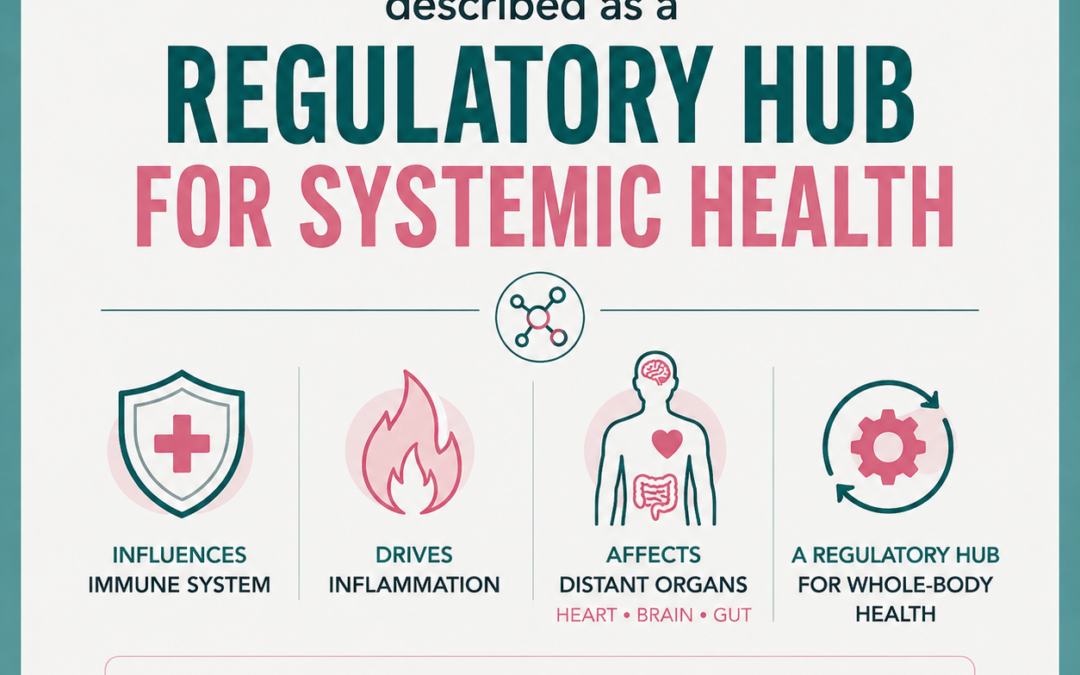
This is where oral health becomes whole-body health.

🔬 What the Research Shows

A growing body of research supports the link between periodontal disease and cardiovascular conditions.

Recent findings continue to show that oral pathogens—especially bacteria like:

  • Porphyromonas gingivalis (Pg)
  • Tannerella forsythia (Tf)
  • Treponema denticola (Td)

are associated with inflammation and cardiovascular risk.

👉 A recent study published in PubMed (2025) highlights how periodontal bacteria contribute to systemic inflammation and may play a role in the development and progression of cardiovascular disease:
https://pubmed.ncbi.nlm.nih.gov/41817867/


🔬 Why This Matters

Cardiovascular disease is driven in part by chronic inflammation.

Periodontal infection adds to that inflammatory burden—often silently.

Patients may not feel symptoms in their gums, but the impact can extend far beyond the mouth.

🧪 Why Identifying the Bacteria Matters

Not all bacteria carry the same level of risk.

MicrobeLink Dx® identifies 11 key periodontal pathogens using qPCR technology from the base of the pocket—where harmful anaerobic bacteria thrive.

This allows clinicians to better understand infection and make more informed treatment decisions.

🔚 Conclusion:

The connection between gum disease and heart disease is no longer theoretical—it is supported by growing scientific evidence.

Understanding which bacteria are present is a critical step in reducing inflammation and improving patient outcomes.

📚 References:
  • Bale BF, Doneen AL, Vigerust DJ. High-risk periodontal pathogens contribute to cardiovascular disease. 2016
  • Haraszthy VI et al. Identification of periodontal pathogens in atheromatous plaques. J Periodontol, 2000
  • Recent study: https://pubmed.ncbi.nlm.nih.gov/41817867/
Multiple Sclerosis and Oral Bacteria: What the Research Is Showing

Multiple Sclerosis and Oral Bacteria: What the Research Is Showing

What Do Oral Bacteria Have to Do with Multiple Sclerosis?


For years, gum disease was thought to stay in the mouth.
But research continues to show something very different.

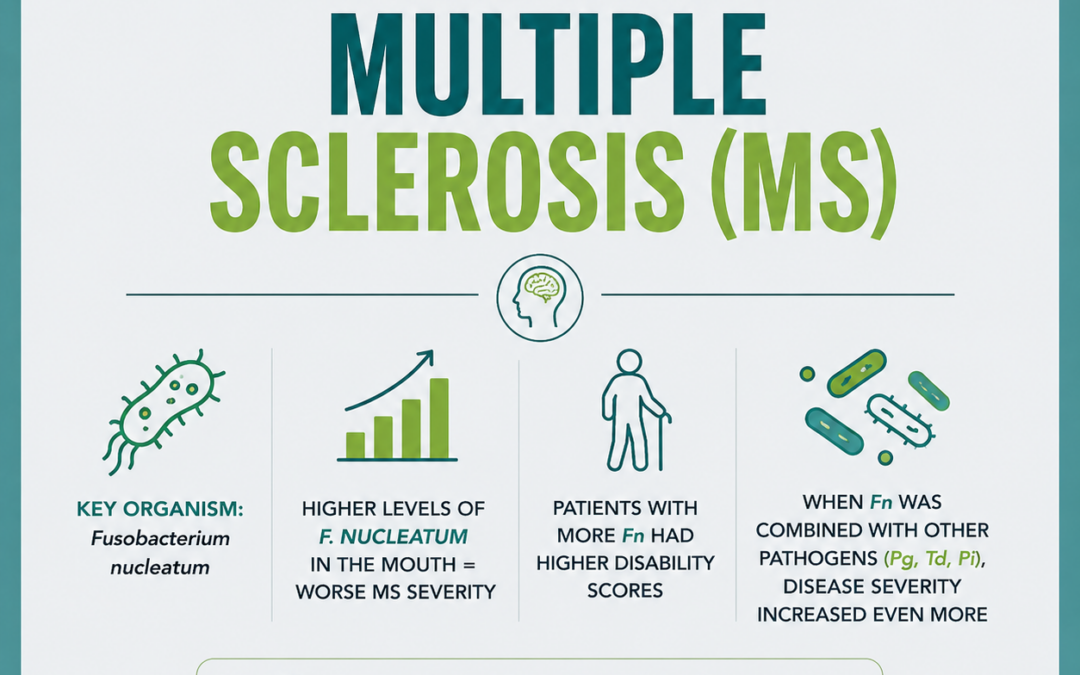
Certain oral bacteria—especially Fusobacterium nucleatum (Fn)—are now being studied for their potential role in neurological inflammation, including conditions like multiple sclerosis.

These bacteria don’t just sit in the gums.
They can enter the bloodstream, travel through the body, and contribute to systemic inflammation.


🔬 Why This Matters

Inflammation is a key driver in many chronic diseases—including MS.
When periodontal pathogens are present, they may:

  • Increase systemic inflammatory burden
  • Disrupt immune regulation
  • Contribute to disease progression

🦠 The Bigger Picture

At MicrobeLink Dx®, we test for 11 key periodontal pathogens using paper point sampling directly from the base of the pocket—where the most harmful bacteria live.

Because understanding which bacteria are present helps guide more targeted care.


📚 Study to Reference:

👉 Hiroshima University Study (2024)

  • Found Fusobacterium nucleatum in higher levels in MS patients
  • Suggested link between oral bacteria and disease severity

You already saved this one 👏
Use this link in your post:
UI study links multiple sclerosis with unique oral microbiome | Department of Pathology – Carver College of Medicine | The University of Iowa

The Science Behind the Smile | Dental Event in Cookeville, TN with Jennifer Seider, RDH

The Science Behind the Smile | Dental Event in Cookeville, TN with Jennifer Seider, RDH

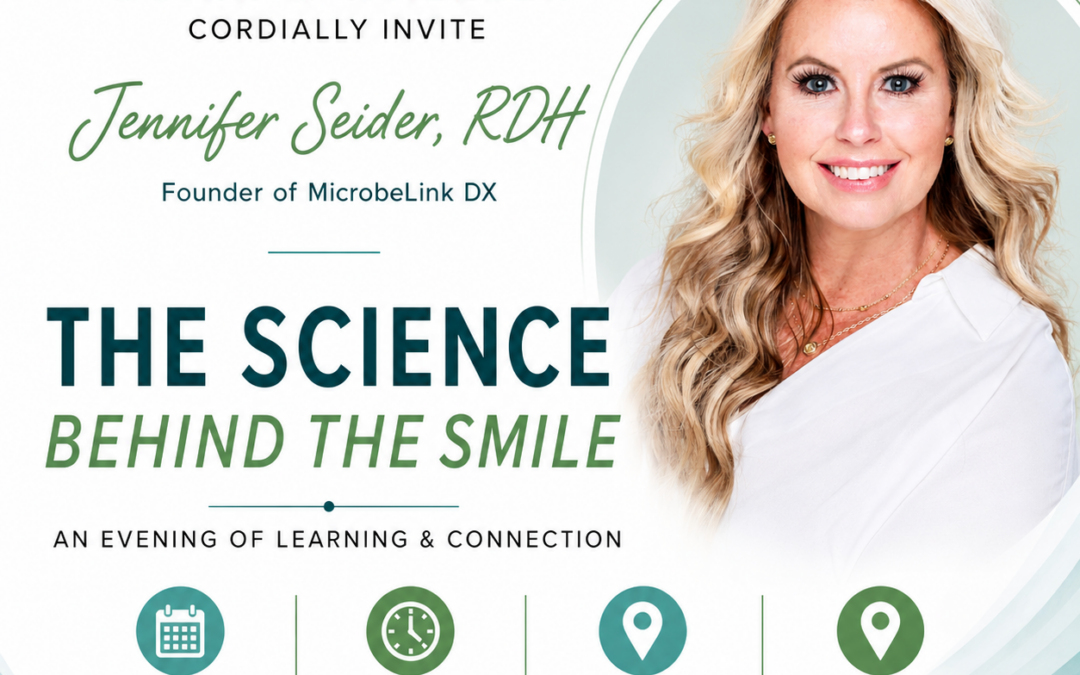
The Science Behind the Smile 🧬

We’re excited to be part of this special evening of learning and connection hosted by Quirk & Wheeler Orthodontics in Cookeville, Tennessee.

Join Jennifer Seider, RDH, founder of MicrobeLinkDx®, as she shares insights into the connection between oral microbes and systemic health—and how modern diagnostic tools are changing the way clinicians approach periodontal disease.


📍 Event Details

Date: Thursday, May 21, 2026
Time: 5:30 PM
Location: Fire & Vine Restaurant & Rooftop Bar
City: Cookeville, Tennessee


What You’ll Learn

✔️ The oral-systemic connection and why it matters
✔️ How bacteria drive periodontal disease
✔️ The role of salivary and crevicular diagnostics
✔️ How to move from guessing to data-driven treatment


Events like this are a great opportunity to connect with dental professionals and continue advancing patient care through science-based dentistry.

Inland Northwest Dental Conference | Katrina Sanders, RDH

Inland Northwest Dental Conference | Katrina Sanders, RDH

We’re proud to support the Inland Northwest Dental Conference in Spokane, Washington — a leading event bringing together dental professionals focused on advancing patient care and clinical excellence.

Katrina Sanders, RDH will be presenting:

💬 Getting Them to Ask for Treatment

This course focuses on helping dental professionals improve communication, increase case acceptance, and create stronger patient connections through confident, effective conversations.

💡 What This Course Highlights:

• How to guide patients toward understanding their condition
• Communication strategies that improve treatment acceptance
• Building trust through clarity and confidence
• Connecting clinical findings to patient motivation

📍 Location: Spokane, WA
🕘 Time: 9:00 – 10:30 AM


👉 View Conference Details: https://www.indc-spokane.com/
👉 View Course Info: https://www.indc-spokane.com/friday-schedule/getting-them-to-ask-for-treatment

🔬 Learn More About Bacterial Testing

MicrobeLink Dx® supports better patient conversations by identifying the bacteria behind periodontal disease — helping patients understand why treatment matters.

👉 info

Tennessee Dental Hygiene Association Annual Session | Featured Education

Tennessee Dental Hygiene Association Annual Session | Featured Education

We’re excited to highlight the Tennessee Dental Hygiene Association (TDHA) Annual Session, where leading voices in dental hygiene and periodontal care come together to share the latest in clinical education.

This event features Katrina Sanders, RDH, presenting two courses focused on modern periodontal therapy, inflammation, and the oral-systemic connection.

Her sessions emphasize:

• Understanding periodontal disease as a bacterial infection
• The role of inflammation in overall health
• Evidence-based clinical decision-making
• Practical strategies for improving patient outcomes

Events like TDHA continue to elevate the standard of care by bringing forward-thinking education to dental professionals across the country.


👉 View Full Schedule: https://tndha.com/schedule/
👉 View Speakers: https://tndha.com/speakers/